

AI CERTs
2 months ago
AI Cloud Scalability Issues Strain Infrastructure and Grids
Generative AI is stretching the digital backbone in unexpected directions. Consequently, hyperscalers face mounting Scalability Issues as demand surges across every architectural layer. Chips, racks, and entire Data Centers now compete for limited Power, cooling capacity, and grid connections. Meanwhile, record capital spending highlights the urgency to resolve component shortages and regulatory friction. Furthermore, operators must balance sustainability with relentless service expectations from Cloud customers and investors. This article unpacks the numbers, drivers, and mitigation paths shaping infrastructure strategy through 2030. It also offers actionable insights for architects, vendors, and policy makers monitoring this volatile landscape. Moreover, skilled practitioners are urgently needed to harden complex deployments against new threat vectors. Professionals can enhance their expertise with the AI Security Level-1 certification. Therefore, understanding the infrastructure fault lines will help firms capture upside while containing risk.
AI Demand Overloads Infrastructure
Analysts agree that AI workloads multiply compute intensity faster than Moore’s law can offset. Consequently, clusters now bundle thousands of accelerators, each drawing hundreds of watts. IEA projects global Data Centers could consume 945 TWh of Energy by 2030, almost double today. In contrast, world electricity supply is growing slowly, exposing Scalability Issues tied to grid planning. Furthermore, hyperscalers compete with municipalities and renewable developers for the same transmission upgrades. Traditional cooling and Power delivery designs no longer suffice at current densities. NVIDIA’s record Data Center revenue illustrates how demand cascades into silicon shortages and higher margins. Meanwhile, Google DeepMind warns that limited HBM capacity forms yet another choke point.
- Global electricity for Data Centers: 415 TWh (2024).
- Projected electricity by 2030: 945 TWh under IEA base case.
- Typical AI rack density: 20-50 kW today.
- Hyperscaler capex forecast 2026: US$520 B.
Demand therefore presses every layer, from chips to substations. The pressure will intensify as models grow. However, component supply strategies may offer relief, which the next section explores.
Component Bottlenecks Create Delays
Supply shortfalls extend beyond GPUs to HBM, network optics, and voltage regulators. Moreover, only three memory suppliers dominate HBM, amplifying bargaining leverage. Demis Hassabis recently called HBM availability the defining choke point for AI rollouts. Consequently, procurement teams schedule capacity years ahead, yet Scalability Issues persist when deliveries slip. TrendForce forecasts Cloud giants investing US$520B in 2026, largely for accelerators, cooling, and Energy deals. Nevertheless, backlog data suggests some accelerator orders already stretch into 2027. In contrast, Data Centers cannot idle racks while waiting; Power and cooling contracts sit unused. Therefore, integrators explore multi-vendor strategies, but interface standards add fresh integration risk. Meanwhile, surging Energy prices inflate total cost of ownership and shift site selection calculus. These overlapping constraints highlight recurring Scalability Issues across the component chain. Ensuring parts flow smoothly remains essential; yet, as we next discuss, energy supply can derail even perfect logistics.
Power And Grid Strains
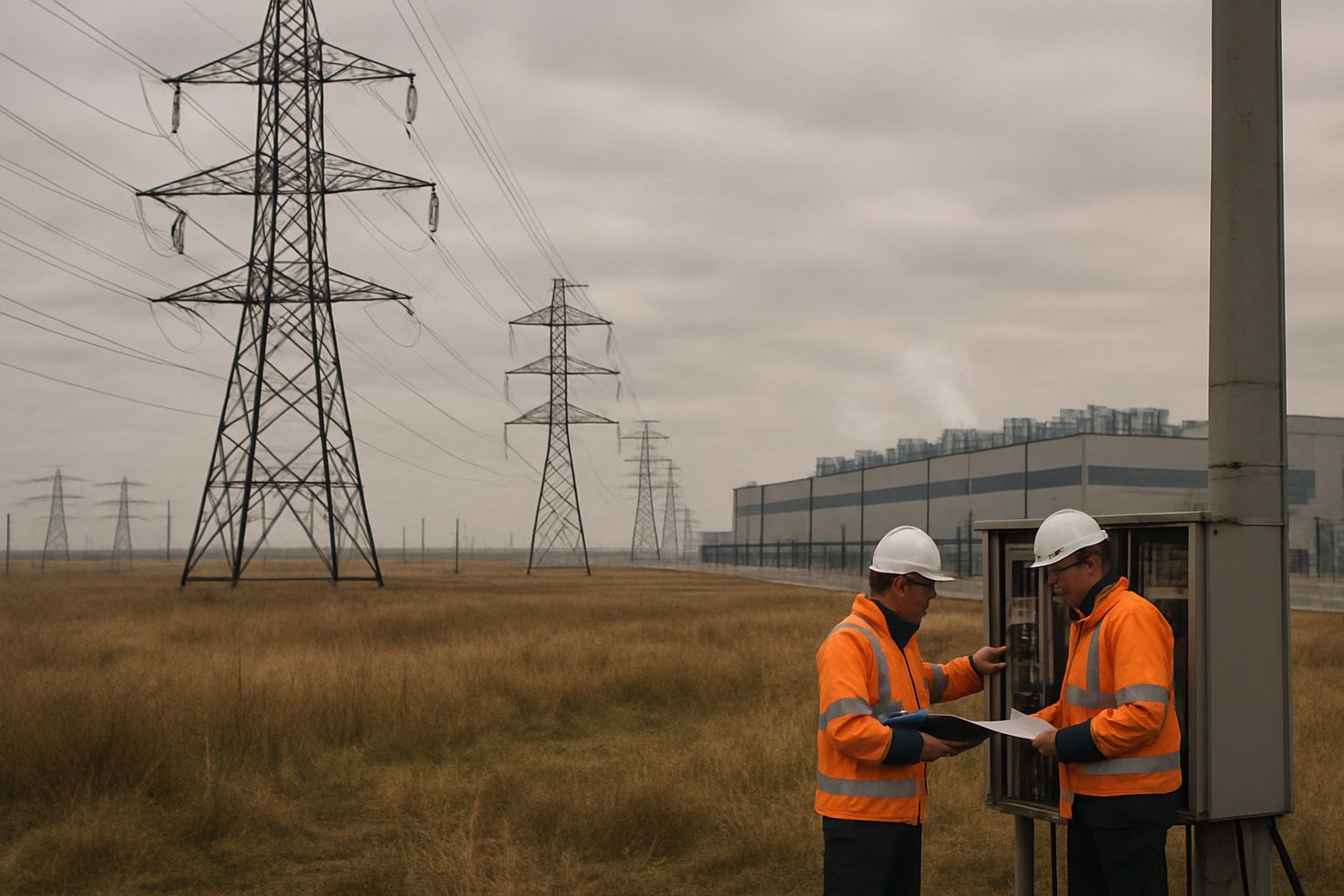
Electric utilities warn that clustered AI campuses rival small cities in peak demand. Consequently, grid upgrades span new high-voltage lines, substations, and on-site Energy storage. Berkeley Lab pegs U.S. Data Centers at 183 TWh in 2024, roughly 4% of national load. Moreover, rack densities approaching 50 kW magnify instantaneous Power spikes during training cycles. Satya Nadella notes the next bottleneck is the wire supplying electrons, not the silicon. Nevertheless, some operators sign twenty-year renewable contracts to lock price stability and community goodwill. In contrast, regions with fragile grids face moratoria, creating fresh Scalability Issues for expansion. Therefore, Cloud architects evaluate colocation sites near hydro or nuclear sources with surplus capacity. These strategies cut carbon intensity yet cannot fully erase systemic Scalability Issues tied to transmission timelines. The cooling innovations discussed next complement grid planning but do not replace it.
Cooling Solutions Gain Traction
Liquid cooling shifts heat directly from silicon to coolant, removing fans and reducing electricity usage. Additionally, rear-door heat exchangers retrofit existing racks, cutting deployment lead times. Vertiv and other OEMs report record bookings for immersion tanks supporting 100 kW racks. Consequently, operators in space-constrained metros can raise densities without breaching noise limits. However, new fluids demand rigorous leak detection to avoid downtime and environmental damage. These engineered systems mitigate thermal Scalability Issues yet shift design focus to coolant supply loops. Meanwhile, optimized cooling can lower overall Power needs, freeing megawatts for incremental compute. The following market section shows how capital spending aligns with these engineering choices.
Capex Surge Reshapes Market
Record budgets reflect strategic urgency rather than short term marketing hype. TrendForce forecasts Cloud giants investing US$520B in 2026, largely for accelerators, cooling, and Energy deals. Moreover, NVIDIA’s quarterly Data Center revenue of $26.3B confirms that funds are already landing. Subsequently, server OEMs, electrical contractors, and network vendors report backlog visibility beyond typical cycles. However, rapid spend on short-lived gear raises depreciation risk and operational Scalability Issues for finance teams. Therefore, CFOs increasingly demand efficiency metrics like PUE and compute per kilowatt. These financial signals interact with regulatory scrutiny, which the governance outlook section will unpack.
Operational Risks Emerge Rapidly
AI has moved from powering products to running the infrastructure itself. Consequently, agentic code tools can modify configurations faster than human oversight can respond. The December 2025 AWS outage, linked to an internal agent, spotlighted this governance gap. Moreover, misconfigurations propagate instantly across globally distributed Cloud regions when automation acts unchecked. Practitioners can strengthen defenses via the AI Security Level-1 certification. Nevertheless, cultural incentives often reward speed, making rollback protocols essential. Furthermore, auditors now request real-time logs and multi-factor approvals before sensitive workflows execute. These added controls introduce management overhead, yet they avert cascading Scalability Issues during incidents. In conclusion, resilient automation requires as much attention as the hardware layers. Next, governance and policy pressures will shape future site selection and investment cadence.
Future Outlook And Governance
Regulators increasingly tie zoning approvals to transparency on water, carbon, and job creation. Consequently, operators publish annual sustainability reports with third-party assurance statements. IEA analysts recommend integrated planning so Energy suppliers and Data Centers share load forecasts. Moreover, communities demand commitments for renewable Power sourcing and grid upgrades. Failure to engage early can stall multimillion-dollar campuses for years. Therefore, executives embed policy experts within site-selection teams to accelerate permits. Subsequently, new markets in Latin America and Southeast Asia gain attractiveness as regulatory frameworks mature. These geopolitical dynamics will continue shaping capital flows, as the conclusion will summarize.
AI acceleration is remaking everything from silicon markets to municipal planning departments. Consequently, component supply, grid capacity, and secure automation now define competitive advantage. Operators that align engineering, finance, and policy teams will tame rising costs. Moreover, efficient cooling and renewable contracts can buffer volatile Energy prices. However, talent shortages may hamper implementation unless organizations invest in continuous training. Experts can validate skills via the AI Security Level-1 credential. Therefore, proactive organizations will capture outsized returns as demand keeps climbing. Act now to future-proof infrastructure and talent before the next upgrade cycle arrives.


