

AI CERTS
2 hours ago
Why AI Capital Expenditure Will Hit $400B by 2026
Additionally, it highlights skills pathways for professionals seeking relevance during the boom. Every observation relies on disclosed data and reputable research houses. In contrast, speculative hype is excluded to maintain rigor for decision makers. Prepare to examine numbers, strategy, and policy shaping the largest corporate build program in Tech history.
Why Spending Rapidly Accelerates
Forecasts from Bank of America place 2025 hyperscaler outlays at $414 billion. Goldman Sachs lifts 2026 expectations toward $527 billion, revising estimates upward each quarter. Moreover, Omdia projects global data-center Capex near $700 billion during 2025. Drivers include exploding model sizes, scarce accelerator supply, and customer demand for lower latency. Consequently, companies race to secure GPUs before rivals. Furthermore, short hardware life cycles force frequent refreshes, inflating budgets and Investment needs.
Analyst Ryan Hammond notes previous forecasts consistently underestimated AI Capital Expenditure trends. Therefore, consensus now embeds aggressive double-digit growth through 2027. These elements explain the rapid acceleration. However, more context arises when examining individual companies.
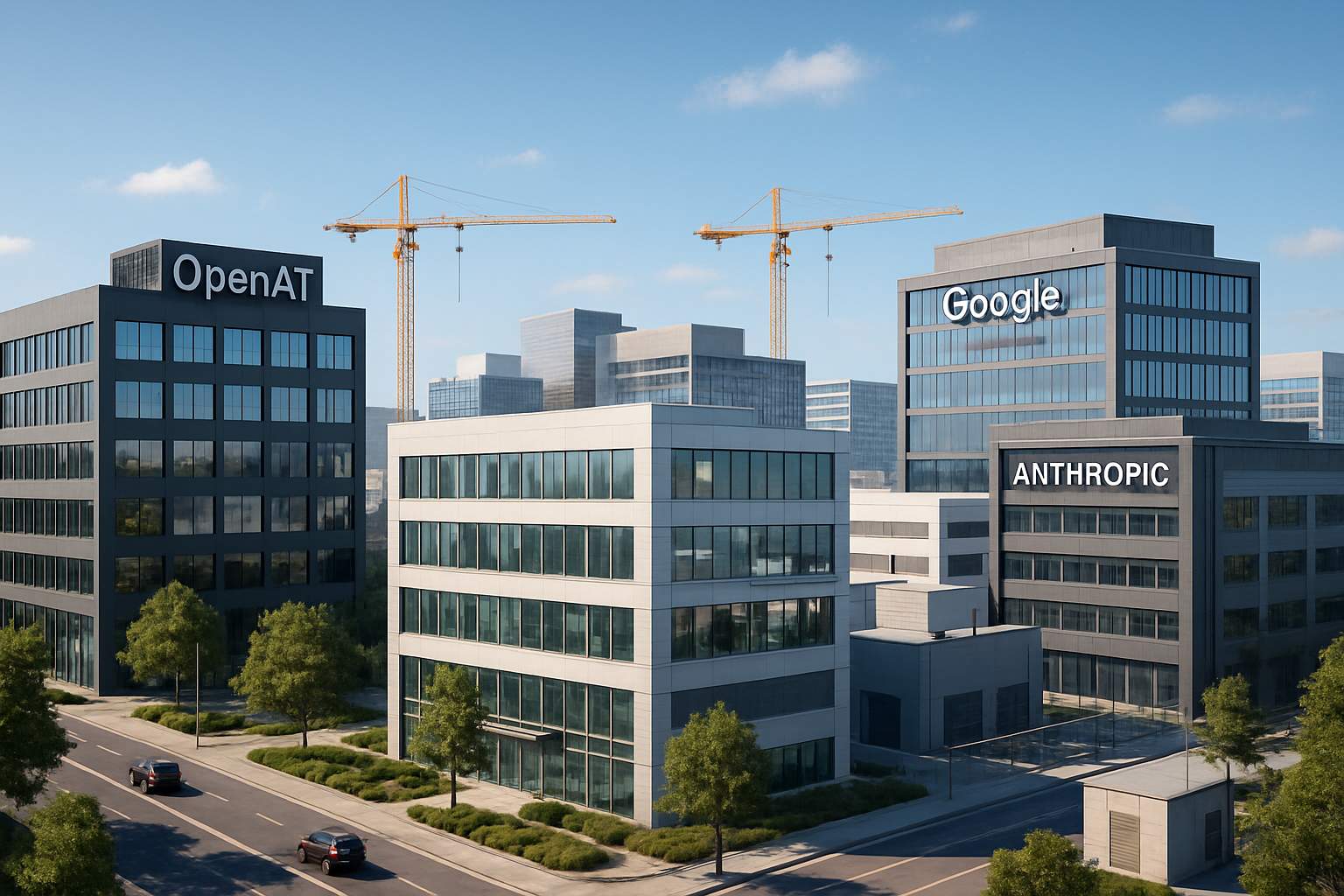
Spending rises because demand and hardware cycles reinforce each other. Consequently, budgets look set to expand again. The following section reviews which firms dominate that expansion.
Hyperscalers Lead Budget Surge
Amazon, Microsoft, Alphabet, Meta, and Oracle account for most incremental spending. Moreover, their disclosures reveal striking figures:
- Amazon plans roughly $200 billion 2026 capex, doubling 2025 levels.
- Microsoft signals higher fiscal-2026 outlays, with several quarters exceeding $25 billion.
- Alphabet targets infrastructure heavy expansions to support Gemini models.
- Meta lifted 2025 capex guidance to $72 billion and hints larger 2026 bills.
- Oracle eyes $50 billion for OCI growth.
Consequently, aggregate guidance compiled by Axios reaches $610 billion for 2026. Satya Nadella argues scale unlocks software efficiency, justifying the aggressive checks. Meanwhile, Andy Jassy frames AI Capital Expenditure as essential for leadership, not optional. These company narratives reinforce the bullish consensus. Nevertheless, financing such ambition introduces new stresses.
Record corporate promises highlight opportunity and obligation. Therefore, we must explore the funding mechanics sustaining the spree.
Financing And Debt Pressures
Big budgets require equally big financing. Furthermore, hyperscalers tapped bond markets at record scale during 2025. Morgan Stanley projects borrowing needs near $400 billion in 2026. Consequently, corporate debt ratios inch higher, even for cash-rich Tech giants. Goldman warns that any slowdown could jolt equity valuations. Investment grade spreads remain calm, yet private credit funds note tightening covenants. Moreover, free cash flow remains pressured because depreciation lags cash outlay. Therefore, credit analysts watch AI Capital Expenditure payback periods closely. These financing dynamics could determine strategic flexibility.
Rising debt underpins current expansion; however, it also magnifies risk. The supply ecosystem now feels the upside.
Winners Across Supply Chain
Suppliers enjoy historic order books. NVIDIA, AMD, and Broadcom headline beneficiaries, selling high-margin accelerators to leading Tech platforms. Additionally, memory vendors ship scarce HBM at record pricing. Infrastructure builders, including Equinix and Digital Realty, secure multiyear contracts. In contrast, legacy server vendors scramble to refit product lines for AI racks. Downstream, utility operators negotiate power purchase agreements to satisfy cavernous data-center loads. Consequently, regional economies near campuses capture construction jobs and tax revenue.
- Semiconductors: GPUs, ASICs, interconnects
- Memory: HBM, DDR5, NAND
- Physical infrastructure: cooling, switchgear, concrete
- Services: design, integration, maintenance
However, supply constraints remain real, lengthening lead times for cutting-edge components. These constraints feed back into higher AI Capital Expenditure, extending the boom.
Vendor profits soar, but bottlenecks persist. The next section explores energy consequences.
Energy IEA Sustainability Alarm
The IEA warns data-center electricity demand could double before 2030. Moreover, the agency models gigawatt jumps in several grid-constrained regions. Consequently, regulators question whether Infrastructure upgrades can keep pace. IEA scenarios show emissions rising unless renewable penetration accelerates. Microsoft and Google announce massive solar and wind purchases to counter scrutiny. However, local permitting delays threaten schedule certainty. Meanwhile, engineers pursue liquid cooling and waste-heat reuse to curb footprints. Investment in grid resilience becomes another layer of AI Capital Expenditure. Nevertheless, skeptics argue efficiency gains may not offset absolute growth.
Energy considerations add cost and complexity. Return economics therefore deserve closer inspection.
Return Risks And Skeptics
IBM's Arvind Krishna doubts every planned facility will earn adequate returns. Omdia models a scenario where capacity overshoots demand by 20% mid-decade. Consequently, depreciation could crush margins if utilization lags. Additionally, investors fear bubble parallels with early-2000s fiber gluts. Yet bullish voices cite accelerating enterprise adoption as reassurance. IEA energy costs and debt service amplify risk, forcing disciplined Investment committees. Therefore, Capex governance metrics, such as internal rate of return, gain prominence. AI Capital Expenditure remains a calculated gamble, not blind exuberance.
Skeptics emphasize utilization and cost of capital. Nonetheless, workforce opportunities are growing quickly.
Skills And Career Upside
Rising budgets translate into soaring demand for architects, project managers, and facility engineers. Moreover, recruiters flag premiums for professionals fluent in Infrastructure scaling and energy optimisation. Professionals can enhance their expertise with the AI Architect™ certification. Additionally, finance teams require analysts skilled in modeling AI Capital Expenditure scenarios. Therefore, continuous learning becomes essential across Tech domains tied to AI Capital Expenditure. Investment in talent complements physical Investment in hardware. Consequently, companies launch internal academies to upskill employees quickly.
Skill shortages could delay deployment timelines. Our final thoughts consolidate the insights.
AI Capital Expenditure is scaling faster than any previous digital wave. Hyperscalers lead this charge, while suppliers, financiers, and policymakers adapt in real time. However, energy constraints, debt pressures, and uncertain returns impose discipline. IEA forecasts remind stakeholders that sustainability must track growth. Therefore, rigorous governance and adaptive talent remain decisive success factors. Professionals should track budgets, monitor utilization metrics, and invest in continuous education. Consider pursuing the AI Architect™ certification to position yourself at the center of this transformation. Seize the moment and drive the next decade of intelligent Infrastructure.


