

AI CERTs
4 months ago
India’s AI-Amplified Content Risks: Legal Trouble for Advertisers
Indian advertisers are racing to confront AI-Amplified Content Risks. Draft rules now demand bold labels on synthetic videos and images. Consequently, the compliance calculus has changed overnight. Digital spend already nears ₹1.64 trillion, and programmatic systems amplify every misstep. Meanwhile, celebrity lawsuits are piling up against platforms for deepfakes. Marketers therefore face a tangled web of election directives, consumer law penalties, and proposed IT amendments. Synthetic Media Liability is no longer theoretical; fines and takedowns are arriving in real time. Moreover, Ad-Tech Governance pressures vendors to track every pixel in the supply chain. Understanding the moving parts is essential for budget forecasting and brand safety. This analysis maps the legal minefield and offers practical safeguards.
Managing AI-Amplified Content Risks
Scope drives risk. MeitY’s draft defines synthetic material as any AI-created or AI-altered content that looks authentic. Therefore, simple up-scales of images can fall inside the rule. Furthermore, the proposal mandates a visible label covering 10 percent of the frame and an immutable identifier. Platforms must also verify user declarations. Consequently, advertisers cannot rely solely on intermediary safe-harbour shields. They must confirm provenance before launching assets. Additionally, the Central Consumer Protection Authority can impose ₹10 lakh fines for misleading AI ads. These overlapping levers make AI-Amplified Content Risks multidimensional.
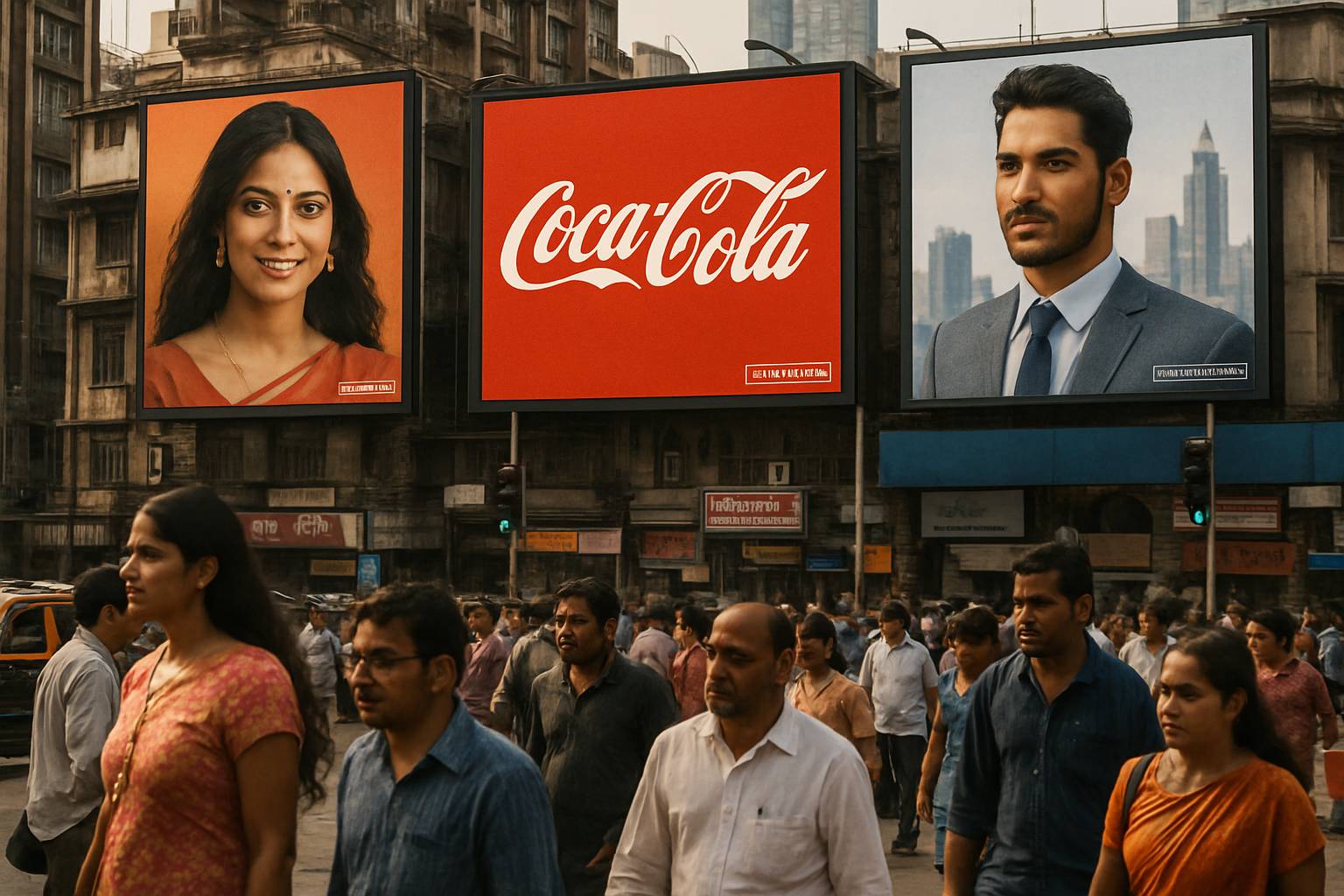
Transparency demands keep widening. However, early preparation can shrink exposure.
Regulation Tightens Rapidly
October 2025 marked an inflection point. MeitY released the labeling amendment, while the Election Commission issued matching poll guidance. Moreover, both documents insist on swift takedowns and record retention. Dhruv Garg called the 10 percent label “globally unique”. Industry bodies, including NASSCOM, urged machine-readable solutions instead of blunt watermarks. Nevertheless, regulators appear firm on visible cues. Safe-harbour clauses survive only when platforms act in “good faith”. Consequently, traceability duties could migrate downstream to brands and agencies.
Rules are not final yet. Nevertheless, timelines look aggressive.
Election Rules Intensify
Political ads carry extra heat. The Election Commission insists on “AI-generated” tags during the first 10 percent of every clip. Parties must store creator details and respond to takedown orders within three hours. Additionally, unlabelled content risks criminal liability under electoral law. Programmatic placements raise further Ad-Tech Governance headaches because creatives can be re-mixed automatically. Therefore, agencies must pre-clear all variants and monitor uploads in real time. Meanwhile, misinformation watchdogs will scrutinise influencer collaborations that blur paid and organic messaging.
Electoral season magnifies AI-Amplified Content Risks. Consequently, proactive labelling becomes non-negotiable.
Litigation Signals New Exposure
Bachchan v. YouTube showcases fresh Synthetic Media Liability claims. The actors seek removal of explicit deepfakes and a ban on training usage. Delhi High Court has already ordered link removals. Furthermore, plaintiffs target Google’s advertising programs for facilitating monetisation. Similar suits may soon test brand endorsements that use AI-cloned voices. Consequently, personality rights sit beside copyright and defamation in the AI risk stack. Courts will likely weigh platform conduct, but advertisers that financed offending spots could get dragged in.
Judicial momentum is rising. Therefore, settlement budgets should include AI litigation reserves.
Technical Labelling Choices Ahead
Visible watermarks can be cropped or blurred. In contrast, machine-readable provenance, such as C2PA, survives resizing. Industry coalitions therefore lobby MeitY to accept cryptographic metadata. Moreover, global campaigns already use mixed methods to satisfy EU standards. Implementing dual tracks raises costs yet offers resilience. Consequently, many agencies are piloting automated provenance pipelines. Professionals can deepen skills through the AI Marketing Strategist™ certification.
- 97 percent of recent ad violations occurred online, according to ASCI.
- GroupM forecasts ₹1.64 trillion Indian ad spend in 2025, with 60 percent digital.
- Programmatic buying may reach 70 percent of digital budgets by mid-decade.
Numbers show escalating stakes. However, robust metadata can future-proof assets.
Strategic Risk Mitigation Steps
First, embed contractual warranties covering dataset provenance. Moreover, demand indemnities from AI vendors against third-party claims. Second, maintain an internal audit trail for every creative asset. Additionally, institute human-in-the-loop review before publishing. Third, label voluntarily even if regulations remain in draft. Synthetic Media Liability diminishes when disclosure is prominent. Fourth, strengthen Ad-Tech Governance by configuring programmatic filters to reject unlabeled uploads. Finally, prepare crisis playbooks that outline takedown procedures and response timelines.
These steps build a defensible posture. Consequently, brands can innovate without paralysis.
Outlook And Next Moves
MeitY will finalise the amendment after reviewing submissions. Industry sources expect notification within months. Meanwhile, ASCI plans updated guidance aligning with the new rule. Furthermore, global standards bodies are racing to harmonise watermark and provenance frameworks. Advertisers should therefore monitor the Gazette closely, budget for tooling upgrades, and brief executive teams on scenario planning. Additionally, upcoming state elections will stress-test enforcement mechanisms. AI-Amplified Content Risks will evolve, yet disciplined governance will keep campaigns on track.
Regulatory momentum is undeniable. Nevertheless, early compliance delivers competitive advantage.
Conclusion
India is setting a precedent with quantifiable AI labels, intertwined election rules, and active consumer watchdogs. Consequently, AI-Amplified Content Risks demand board-level attention. Advertisers must master Synthetic Media Liability, upgrade Ad-Tech Governance, and deploy dual labelling methods. Moreover, litigation trends signal expanding exposure beyond platforms. Forward-leaning teams will secure certifications, refine contracts, and automate provenance checks. Therefore, invest now and convert compliance into trust. Explore the linked certification to fortify your AI marketing expertise today.
Disclaimer: Some content may be AI-generated or assisted and is provided ‘as is’ for informational purposes only, without warranties of accuracy or completeness, and does not imply endorsement or affiliation.


