

AI CERTS
3 months ago
Traza Raises $2.1M for AI Supply Chain Procurement Automation
The story matters because agent capacity finally meets complex physical operations. As Gartner notes, one-third of GenAI interactions will involve autonomous agents by 2028. Therefore, Traza’s raise offers an early signal of that shift. This article explains how the deal fits the broader AI Supply Chain landscape. Readers will learn the market drivers, technical approach, competitive context, and adoption risks. Additionally, we outline practical steps for buyers evaluating emerging Automation vendors. Professionals can validate their expertise through the linked certification later in the piece.
Funding Signals Market Shift
VentureBeat confirmed Traza closed the pre-seed round on April 15, 2026. Base10 led the syndicate, while Kfund, Clara Ventures, a16z scouts, and Masia Ventures joined. Furthermore, the $2.1 million sum may appear modest, yet it mirrors a broader early-stage resurgence. In contrast, later-stage funding for supply chain SaaS slowed through 2025. Investors now favor nimble agentic plays that promise shorter payback periods. Rexhi Dollaku, General Partner at Base10, stated that Procurement remains "underautomated in the Real Economy." He argued agents finally perform work, not just recommend it.
That claim resonates with executives who endured dashboard fatigue and manual follow-ups. The startup positions its workers as execution layers atop SAP Ariba, Coupa, and Oracle NetSuite. Consequently, buyers avoid rip-and-replace projects that often stall digital programs. The founders say clients deploy an initial workflow within one week. Early pilot reports cite cycle-time cuts of 30% and operational Savings near 25%. Those metrics, if sustained, could compound across billions in annual spend. Therefore, even a small investment can unlock significant enterprise value. Overall, the raise signals capital shifting toward targeted Automation outcomes. These dynamics set the stage for deeper market analysis next.
Agentic Workers Explained
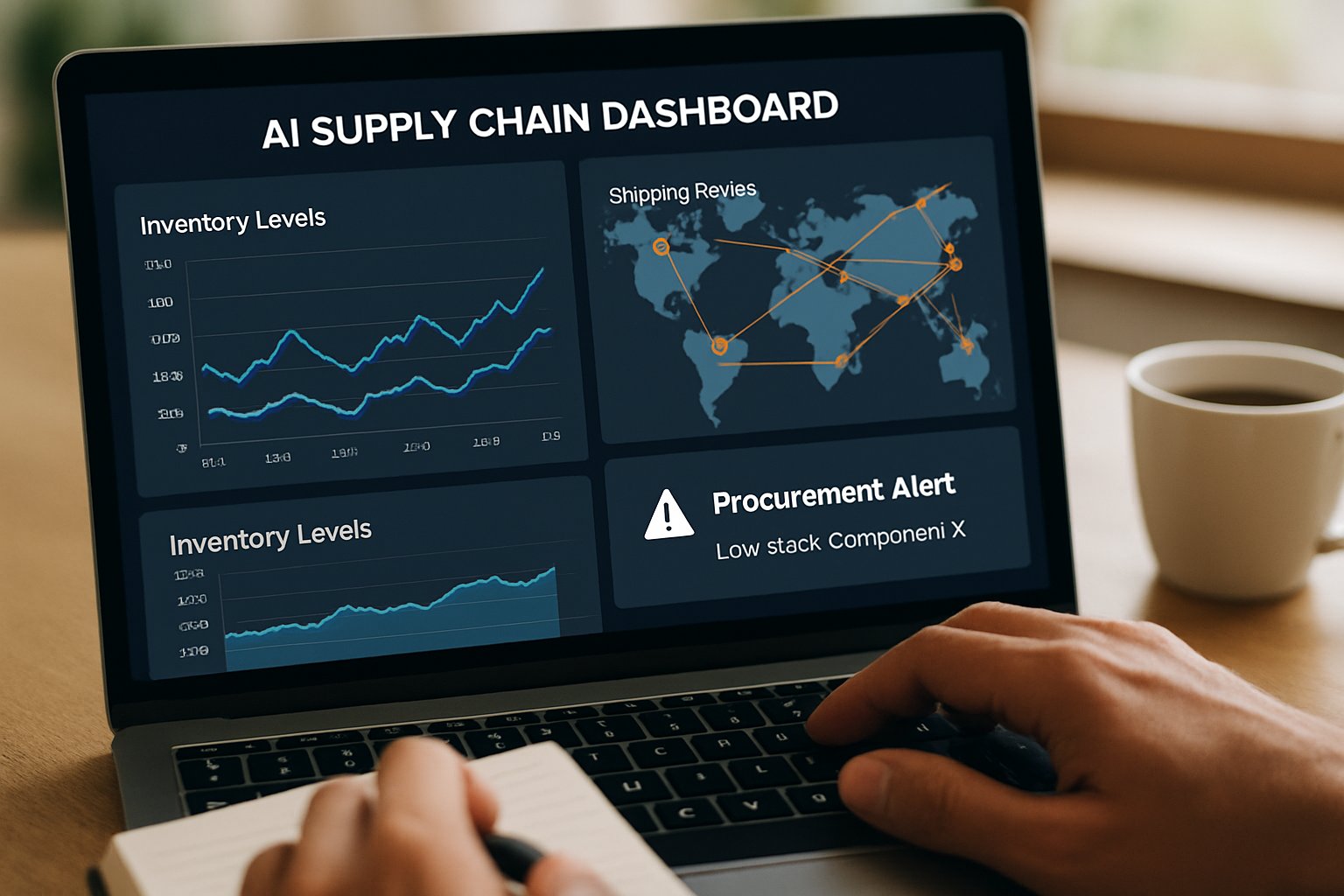
Agentic workers combine large language models, retrieval, and tool orchestration. They parse emails, query ERPs, draft RFQs, and reconcile invoices with minimal human input. However, Traza embeds approval gates so managers sign off on high-value POs. Each worker maintains memory, enabling multi-step campaigns like vendor onboarding. Moreover, over 200 integrations let the system read and write across Slack, Outlook, and DocuSign. The startup describes incumbent suites as "systems of record." Meanwhile, it brands its layer the operational "system of action." Procurement leaders often juggle ten disconnected tools; agents stitch those flows into a single runtime.
Gartner predicts action models will dominate user interactions within two years. Consequently, early adopters gain process speed and clearer audit trails. The linked AI Supply Chain certification helps teams upskill for such architectures. Understanding memory scopes, guardrails, and fallback logic reduces rollout friction. Ultimately, well-governed agents promise scalable Automation without bloated change-management plans. These technical underpinnings inform the coming market forecasts.
Market Growth Forecast
The procurement software market already sits at roughly $10 billion. Grand View Research expects the figure to exceed $21 billion by 2033. That projection implies a 10% compound annual growth rate. Additionally, Fortune Business Insights and others post similar double-digit forecasts. Growth drivers include supply shocks, ESG reporting, and reshoring policies. EY’s 2025 CPO Survey reveals 80% of leaders plan GenAI deployments within three years. Nevertheless, only 36% remain beyond pilot stage today. This gap offers fertile ground for vendors like the startup.
- $2.1M pre-seed raised by Traza in 2026
- 20-35% cost Savings reported in pilot Automation studies
- 10% CAGR forecast for procurement software through 2033
- 80% of CPOs targeting GenAI adoption by 2028
Consequently, buyers must weigh timing against technical maturity. Early movers could capture step-change efficiency advantages. Yet governance hurdles, examined later, may delay some programs. In sum, sustained growth appears likely across the AI Supply Chain segment. The next section dissects competitive dynamics shaping that race.
Competitive Landscape Snapshot
Legacy giants dominate enterprise footprints. SAP Ariba, Coupa, Oracle, and Ivalua bundle analytics, catalogs, and approval workflows. However, these platforms evolved as reporting hubs, not execution engines. Startups now exploit that architectural gap. The newcomer competes with Keelvar, Fairmarkit, Levelpath, and Procure AI. Each vendor touts tail-spend Automation and rapid integration. Levelpath, for instance, raised $55 million last year to scale its mobile-first suite. In contrast, the startup bets on narrow, agentic depth rather than broad UI overhaul. Investors diversify across these approaches to hedge platform risk. Base10’s participation underscores that thesis.
Moreover, incumbents are embedding co-pilots to defend share. Gartner warns incremental assistants rarely unlock transformational Savings. Consequently, buyers will test both native enhancements and stand-alone agents. Competitive pressure should accelerate experimentation across the AI Supply Chain. These rivalries influence benefits and barriers considered next.
Benefits And Barriers
Promised advantages attract attention. Traza advertises 30% cycle reduction in RFQ generation. Additionally, early customers cited 25% operational Savings after three months. Agents free professionals from spreadsheet maintenance and repetitive email follow-ups. Therefore, staff shift focus to supplier strategy and risk mitigation. However, obstacles persist. Poor master data, fragmented taxonomies, and brittle ERP customizations impede Automation performance. Compliance teams also fear unchecked spend approvals. Nevertheless, the platform installs tiered approval matrices and immutable audit logs.
The company pursues short proofs of value to surface integration gaps quickly. Moreover, staging deployments limits wasted engineering effort. EY notes many AI pilots collapse after 12 months due to unclear KPIs. Consequently, measurable milestones remain critical. Balanced planning anchors every AI Supply Chain transformation. The following section explores governance approaches addressing those risks.
Governance And Compliance
Strong governance enables sustainable agent adoption. Traza retains human-in-the-loop checkpoints for high-risk spend. Additionally, every action generates an auditable event trail. Security teams can replay decisions and override agents when anomalies emerge. Gartner recommends such kill-switch patterns for all autonomous workflows. Meanwhile, procurement regulations vary by geography and industry. The platform therefore allows policy templates reflecting ISO, ITAR, and OSHA requirements. Role-based access controls also restrict sensitive supplier information. In contrast, some incumbent co-pilots expose underlying ERP permissions to language models.
That architecture elevates leakage risk. Consequently, buyers should request architecture diagrams during vendor selection. They must test exception handling, versioning, and rollback processes. Governance safeguards underpin any durable AI Supply Chain strategy. With risks addressed, attention turns to practical next steps for buyers.
Practical Outlook For Buyers
Budget cycles tighten across manufacturing and construction sectors. Nevertheless, cost pressure forces renewed interest in tail-spend Automation. CPOs should shortlist vendors that integrate within existing ERP landscapes. Additionally, reference checks must verify live production throughput.
- Frame one measurable workflow target, such as invoice matching lead times.
- Pilot with clear guardrails and daily success metrics.
- Scale gradually while institutionalizing governance playbooks.
Professionals may deepen domain knowledge through the earlier linked certification. The vendor expects to funnel $1 billion in spend through its platform within three years. Should that milestone materialize, agentic adoption curves could steepen. Therefore, early adopters position themselves for compounding gains. A disciplined roadmap preserves optionality while capturing upside. This balanced stance concludes our exploration of the emerging AI Supply Chain era.
Traza’s raise highlights agent momentum within the AI Supply Chain. Moreover, rising budgets, proven Savings, and aggressive venture backing accelerate experimentation. EY data shows CPO intent aligning with Gartner’s agent adoption timeline. However, successful rollouts require disciplined governance, rich integrations, and continuous talent development. The AI Supply Chain will reward leaders who pilot fast, learn quickly, and scale responsibly. Consequently, readers should audit current workflows and draft phased adoption roadmaps now. Additionally, strengthening expertise through an AI Supply Chain certification builds internal confidence. Embrace data-driven execution and transform Procurement before competitors capture the final frontier of AI Supply Chain efficiency.
Disclaimer: Some content may be AI-generated or assisted and is provided ‘as is’ for informational purposes only, without warranties of accuracy or completeness, and does not imply endorsement or affiliation.


