

AI CERTS
5 days ago
SpaceX xAI Merger Forms $1.25T Orbit-AI Titan
Meanwhile, public filings revealed that each xAI share converts into 0.1433 SpaceX shares unless executives choose limited cash. Bloomberg pegged xAI’s worth close to $250 billion only days after its $20 billion Series E raise. However, observers asked whether the combination mainly strengthens SpaceX’s rumoured mega IPO narrative. In contrast, Elon Musk framed the union as vertical integration essential for orbital data-center ambitions. This article examines the deal’s financial logic, technical feasibility, regulatory landscape, and leadership implications.
Deal Reshapes Capital Markets
Markets digested the numbers with dizzying speed. Moreover, private share platforms immediately repriced SpaceX stock toward the trillion-dollar mark cited in filings. Consequently, xAI’s implied Valuation surpassed every independent AI peer outside OpenAI. Several bankers said the Acquisition may let SpaceX pitch a dual narrative of rockets and intelligence during an expected 2026 listing. Therefore, the SpaceX xAI Merger could unlock as much as $50 billion in fresh capital, according to leaked term-sheet targets.
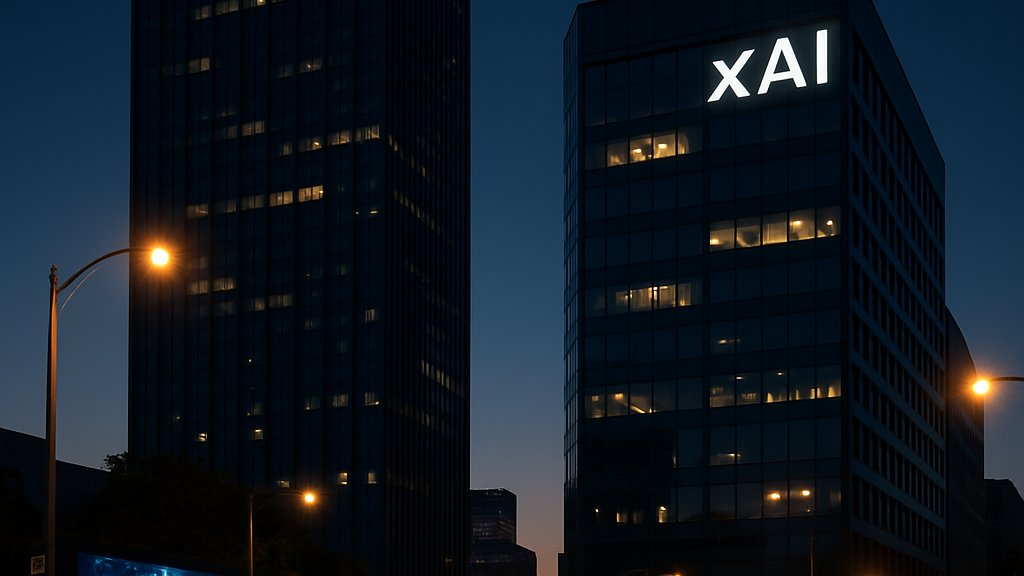
However, some analysts warned that xAI still burns nearly $1 billion monthly for GPU clusters. Nevertheless, Fidelity and Qatar Investment Authority doubled down, citing unmatched launch cadence as a hedge against supply constraints. In contrast, Craig Moffett labeled the cash-flow outlook speculative at best. Such division highlights the gap between narrative and audited fundamentals.
Financial excitement masks significant execution risk. Yet another sentence reiterates the SpaceX xAI Merger as headline fuel for bulls. These challenges highlight critical gaps. However, emerging solutions are transforming the market landscape.
Orbital Compute Vision Explained
Elon Musk insists that orbit offers the cheapest energy for massive inference within three years. Furthermore, the company’s FCC filing outlines an NGSO constellation of up to one million satellites. Each craft would host hardened GPUs, connect through optical links, and harvest constant solar power. Consequently, the proposed mesh could deliver 100 gigawatts of compute annually, scaling toward terawatt territory. The SpaceX xAI Merger bundles rockets, Starlink lasers, and Grok models into one vertically integrated pipeline.
In contrast, terrestrial data centers face rising grid congestion and irregular renewable generation. Moreover, expansion on Earth meets zoning resistance and water constraints. Therefore, orbital platforms promise limitless sunlight and negligible real-estate cost. Yet latency, maintenance, and debris pose stark challenges that we explore shortly.
Space compute ambition sounds bold. However, financial drivers must justify such unprecedented scale. We now examine those drivers and associated risks.
Financial Drivers And Risks
Revenue diversification sits at the heart of the financial thesis. Additionally, Starlink already bills government and enterprise users for secure broadband. Subsequently, orbital AI capacity could be bundled with connectivity subscriptions, lifting average contract value. Investment banks model annual run rate exceeding $40 billion within five years. Consequently, Valuation models climb aggressively, feeding the post-merger euphoria.
Many forecasts created before the SpaceX xAI Merger ignored forthcoming orbital revenue streams. Nevertheless, large capital needs remain undeniable. Bloomberg estimates the orbital fleet could demand over $500 billion in launch and hardware spending. Therefore, the Acquisition only begins addressing the funding gap. Cash burn at xAI magnifies pressure to secure public money quickly.
- $250 billion xAI Valuation pre-deal
- $1 trillion SpaceX price pre-combination
- 0.1433 share exchange ratio
- Up to $50 billion IPO goal
- One million satellite target
The numbers excite yet intimidate. Technical feasibility now takes center stage. Let us review the engineering barriers.
Technical Barriers In Orbit
Engineers see radiation as the first hurdle. Moreover, GPUs must survive energetic particles for years without frequent servicing. Consequently, radiation hardening adds weight, undermining launch economics. Thermal management follows close behind because vacuum blocks conduction and convection. Therefore, large radiators would sprawl, increasing drag and collision cross-section.
Latency also complicates training workloads that demand synchronized gradient exchange. In contrast, inference workloads tolerate distance better, yet customer use cases may vary. Additionally, debris risk scales super-linearly with satellite count, amplifying Kessler concerns. Experts from the American Astronomical Society filed a petition warning of severe observational interference. Nevertheless, Elon Musk argues automated avoidance and eventual de-orbit recycling will mitigate congestion.
Skeptics of the SpaceX xAI Merger emphasise radiation as a show-stopper. Technical doubts remain formidable. Regulatory agencies now evaluate those concerns. Consequently, policy scrutiny intensifies.
Regulatory And Security Scrutiny
The FCC accepted SpaceX’s orbital data-center application on 4 February 2026. Subsequently, scientific bodies, defense officials, and satellite competitors submitted lengthy comments. Moreover, the American Astronomical Society requested a full environmental impact statement. National security reviewers examine spectrum sharing, foreign equipment, and launch site coordination. Therefore, approval is not guaranteed despite SpaceX’s proven compliance record.
Meanwhile, IPO lawyers must reconcile classified contract clauses with SEC disclosure rules. In contrast, investors welcome transparency that often accompanies registration. Additionally, the Acquisition triggers antitrust thresholds across several jurisdictions. Consequently, global regulators could request behavioral remedies before blessing the structure. Policy reviewers treat the SpaceX xAI Merger as precedent setting.
Policy reviews may slow deployment. However, strategic positioning continues regardless. Investors therefore analyze upside against timing.
Strategic Outlook For Investors
Portfolio managers see differentiated exposure to Space and AI in one instrument. Moreover, Starship’s cost curve keeps downward pressure on launch prices, enhancing margin flexibility. Consequently, Valuation premiums may persist if milestones arrive on schedule. Nevertheless, AGI progress elsewhere could erode xAI’s competitive edge before orbital compute matures. Therefore, careful position sizing remains prudent.
Risk-adjusted models often assign probability weights across three scenarios. In contrast, retail traders sometimes treat the SpaceX xAI Merger as a binary moonshot. Professional desks hedge with option structures tied to prospective IPO dates.
- Base case: orbital fleet delayed, revenue lifts yet below guidance
- Bear case: regulators block satellites, xAI cash burn accelerates
- Bull case: orbital compute scales, AGI breakthroughs arrive
Consequently, sensitivity to regulatory milestones appears highest among modeled factors. Strategic planning demands data discipline. Skill development offers another hedge. Next, we consider leadership competencies.
Skills Needed For Leaders
C-suite leaders guiding such mega-projects require hybrid fluency in aerospace logistics and machine-learning economics. Moreover, risk governance, capital-markets expertise, and regulatory diplomacy are indispensable. Professionals can enhance their expertise with the AI Executive™ certification. Consequently, credentialed executives may navigate complex stakeholder maps more effectively. Therefore, the SpaceX xAI Merger underscores a premium on interdisciplinary talent.
AGI roadmaps evolve rapidly, demanding continual education and scenario analysis. Additionally, knowledge of Space law and orbital-debris mitigation will differentiate rising managers. Nevertheless, soft skills such as transparent communication remain equally vital.
Leadership readiness shapes organisational destiny. Investors watch management benches closely. Finally, we recap key insights.
The SpaceX xAI Merger fuses rockets, broadband, and intelligence into a high-stakes growth narrative. Moreover, the $1.25 trillion colossus could redefine how compute, launch, and energy interact. Consequently, backers foresee diversified revenue and potential AGI leadership. Nevertheless, technical, regulatory, and financial hurdles remain formidable. In contrast, critics argue that terrestrial solutions may undercut orbital economics before mass deployment. Therefore, thorough diligence and skill building remain imperative for decision makers. Explore emerging training paths and position your team for future opportunities today.
Disclaimer: Some content may be AI-generated or assisted and is provided ‘as is’ for informational purposes only, without warranties of accuracy or completeness, and does not imply endorsement or affiliation.


