

AI CERTS
56 minutes ago
Meta’s AI Surveillance Controversy Signals Why Ethical AI Training Is Becoming a Business Necessity
That question moved into the spotlight after reports revealed that Meta employees protested against an internal mouse-tracking tool designed to capture clicks, keystrokes, cursor movements, and screenshots to help train AI models. Workers expressed concerns around surveillance, privacy, workplace trust, and fears that such systems could eventually contribute to automating their own jobs.
The controversy highlights a much larger issue shaping the future of AI adoption: organizations urgently need professionals who understand not only how to build AI systems, but also how to deploy them responsibly.
The Real Problem Is Not AI Itself
AI tools are rapidly becoming more capable. Companies across industries are investing billions into AI infrastructure, autonomous systems, and intelligent workplace technologies. Meta itself has expanded its AI ecosystem aggressively, from smart glasses to AI assistants and advanced in-house AI chips.
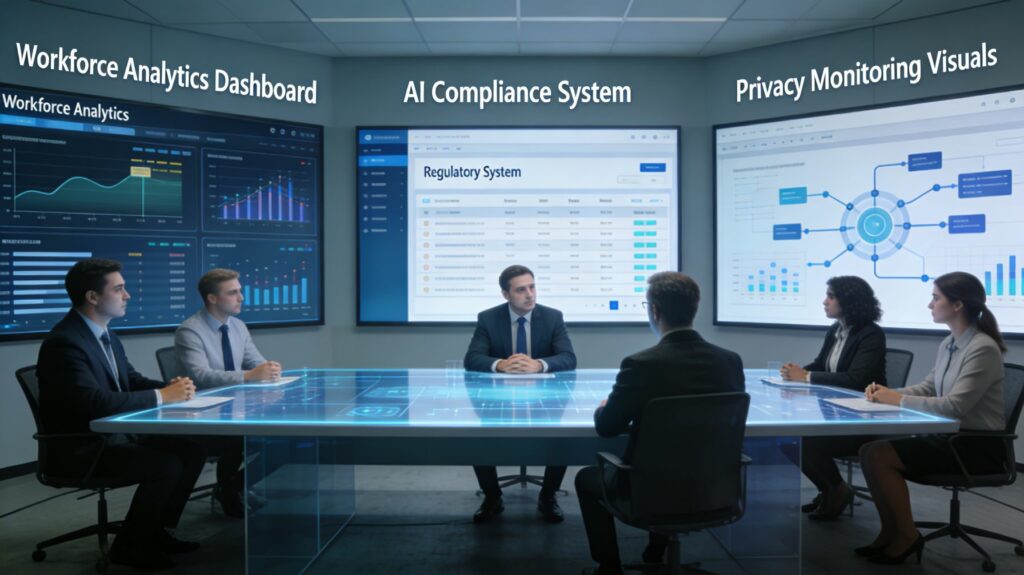
However, technological advancement without ethical understanding creates friction between innovation and human trust.
The employee backlash against Meta’s monitoring initiative reflects growing anxiety around AI-driven workplace surveillance. Many workers fear that AI systems trained on their behavioral data may eventually replace human roles or normalize invasive tracking practices.
This is where AI training becomes critical.
Organizations need leaders, developers, HR professionals, and decision-makers who understand the ethical, legal, operational, and human dimensions of AI adoption. Without that knowledge, companies risk damaging employee morale, brand reputation, and public trust.
Why Ethical AI Training Matters More Than Ever
The AI race is no longer just about building smarter models. It is about building responsible systems that balance innovation with transparency and accountability.
Many organizations still approach AI implementation from a purely technical perspective. They focus on speed, automation, and efficiency but overlook governance, privacy, and workforce concerns. The Meta controversy demonstrates how quickly this gap can become a public issue.
AI training helps organizations understand critical questions such as:
- How should employee data be collected ethically?
- What boundaries should exist around workplace monitoring?
- How can companies remain transparent about AI usage?
- What safeguards should protect privacy and sensitive information?
- How can organizations ensure AI supports employees rather than creating fear and distrust?
These are not simply technical questions. They are leadership questions.
Professionals who understand ethical AI frameworks are becoming increasingly valuable because they help organizations innovate without creating internal resistance or reputational crises.
AI Adoption Without Training Creates Organizational Risk
One of the biggest misconceptions in today’s market is that AI implementation is mainly a software challenge. In reality, the bigger challenge is organizational readiness.
Employees often resist AI initiatives when they do not understand how systems work or how their data is being used. Leaders who lack AI literacy may unintentionally introduce tools that damage workplace culture. Developers focused only on technical outcomes may overlook ethical consequences.
This creates operational risk.
The Meta incident is an example of how AI adoption without sufficient communication, governance, and trust-building can trigger backlash inside even the world’s largest technology companies.
Proper AI education equips organizations to handle these transitions more thoughtfully. It enables professionals to design AI strategies that prioritize transparency, responsible data usage, and long-term trust.
The Growing Demand for AI-Skilled Professionals
As AI becomes embedded into every business function, organizations are increasingly looking for professionals with verified AI expertise. But technical skills alone are no longer enough.
Businesses now need individuals who understand:
- AI ethics and governance
- Responsible AI implementation
- Data privacy and compliance
- AI risk management
- Human-centered AI strategies
- Workplace AI transformation
This is why structured AI certification and training programs are becoming essential across industries.
Companies are actively seeking professionals who can bridge the gap between innovation and responsible execution.
Why AI Training Is the Smartest Long-Term Investment
The future workplace will not belong to organizations that adopt AI the fastest. It will belong to organizations that adopt AI responsibly while maintaining employee trust and operational integrity.
Ethical AI leadership is quickly becoming a competitive advantage.
Organizations that invest in AI education today will be better prepared to:
- Build transparent AI policies
- Reduce compliance and reputational risks
- Strengthen workforce confidence
- Implement AI systems responsibly
- Create sustainable long-term AI strategies
The demand for AI-ready professionals will continue to grow as governments, regulators, employees, and consumers increasingly scrutinize how companies use artificial intelligence.
How AI CERTs Authorized Training Partner Can Help
As businesses navigate the rapidly evolving AI landscape, professional AI education has become essential for building responsible and future-ready organizations. AI CERTs Authorized Training Partner helps organizations and professionals gain industry-relevant AI knowledge through globally recognized certification programs focused on practical implementation, ethical AI usage, governance, and workforce readiness.
Whether companies are looking to upskill teams, strengthen AI leadership, or build responsible AI adoption strategies, ATP programs provide the structured learning needed to stay competitive in an AI-driven world.
FAQs
1. Why are Meta employees protesting AI monitoring tools?
Employees raised concerns about privacy, workplace surveillance, and fears that collected behavioral data could contribute to AI systems designed to automate human work tasks.
2. Why is ethical AI training important for organizations?
Ethical AI training helps businesses implement AI responsibly by addressing privacy, governance, compliance, transparency, and workforce trust concerns.
3. What skills are most important for AI professionals today?
Beyond technical knowledge, organizations increasingly value skills in AI ethics, governance, risk management, data privacy, and responsible AI implementation.
4. How can AI training reduce business risks?
AI education helps organizations avoid reputational damage, compliance issues, employee resistance, and unethical AI deployment practices.
5. What is an AI CERTs Authorized Training Partner?
An AI CERTs Authorized Training Partner provides professional AI certification and training programs designed to help individuals and organizations build practical and responsible AI expertise.
Disclaimer: Some content may be AI-generated or assisted and is provided ‘as is’ for informational purposes only, without warranties of accuracy or completeness, and does not imply endorsement or affiliation.


