

AI CERTS
2 months ago
Sigenergy IPO: AI Financial Market Impact on Energy Storage
Meanwhile, installers on three continents evaluate SigenStor’s performance claims before recommending systems to homeowners. In contrast, regulators scrutinize safety records after Australia’s 2025 inverter recall. Nevertheless, the firm’s 19 cornerstone backers suggest confidence in product economics and governance. This article dissects the numbers, risks, and outlook behind Sigenergy’s “first stock” label. It also explains why the AI Financial Market may treat the shares as a bellwether for intelligent energy assets.
IPO Signals Market Momentum
Sigenergy priced its H shares at HK$324.20 after passing the HKEX hearing on 30 March 2026. Moreover, retail tranches reportedly closed several times oversubscribed, reflecting pent-up demand for growth hardware plays. Therefore, the new Stock code 06656.HK became a talking point on brokerage desks before trading even began. Goldman Sachs Asset Management, Temasek, and seventeen other anchors absorbed 70 percent of the deal. Consequently, liquidity risk looks moderate during the opening weeks.
In contrast, peers like Guoxia listed without heavyweight international funds and traded erratically. Analysts say the AI Financial Market interpreted the cornerstone roster as a de-risking signal. HKEX published the final allotment results two days before debut. These sentiments could cushion volatility once the shares float on 16 April.
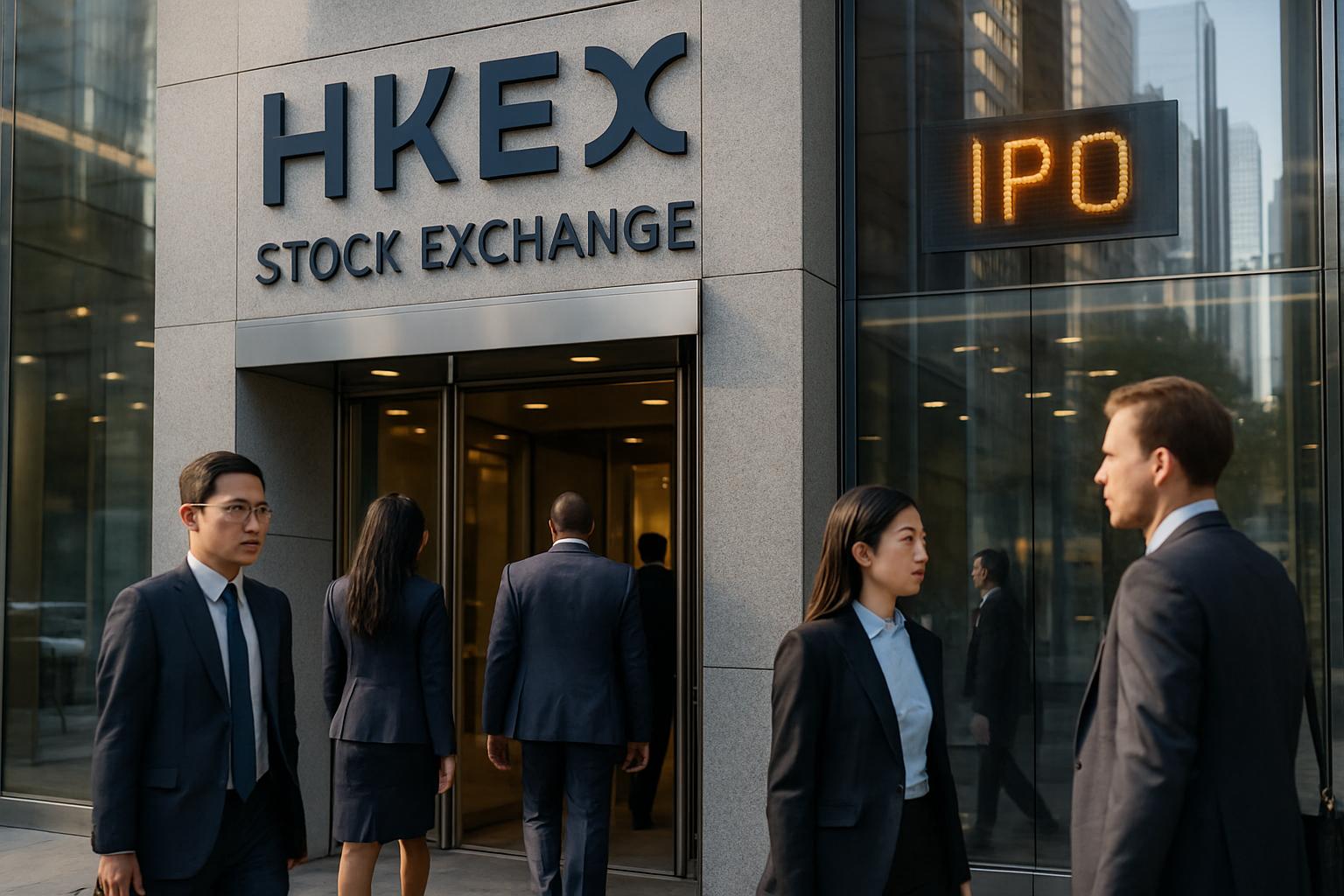
The IPO confirmed appetite for data-driven storage firms. However, revenue traction ultimately decides valuation durability.
Consequently, we next examine Sigenergy’s financial acceleration.
Explosive Revenue Growth Surge
Revenue jumped from RMB 58 million in 2023 to RMB 9 billion in 2025, according to the prospectus. Moreover, net profit reached RMB 2.9 billion, delivering 32 percent net margin. Frost & Sullivan ranked the company first in stackable systems with 28.6 percent 2024 share. Shipments grew sixty-five-fold to 3,947 MWh during the same period.
- Revenue: RMB 58 million (2023) → RMB 9 billion (2025)
- Net profit: RMB 83.8 million (2024) → RMB 2.9 billion (2025)
- Shipments: 18 MWh (2023) → 3,947 MWh (2025)
- Gross margin: expanded each year per prospectus
Consequently, average selling price declined, yet gross margin expanded as scale diluted unit costs. Additionally, the surge occurred despite volatile PV component pricing that squeezed many rivals. Treasury models circulating within the AI Financial Market now benchmark the company’s price-to-sales near eight times forward revenue. Nevertheless, skeptics highlight rising receivables and warranty provisions that could pressure cash flow. These numbers reveal massive topline growth but also the need for disciplined capital deployment.
Financials validate product-market fit. Yet profit quality depends on technology differentiation.
Therefore, the product stack deserves closer inspection.
AI Product Edge Defined
Sigenergy’s flagship SigenStor combines inverter, battery, power conversion, PV interface, and bi-directional EV charger in one chassis. Furthermore, the mySigen cloud forecasts generation and demand using transformer models linked to GPT-4o. Tony Xu argues this real-time optimization unlocks tariff arbitrage and grid services revenue. In contrast, many rivals still treat software as an add-on option. Installers praise the integrated DC design because fewer cables cut labor time. However, some recall-affected units in Australia forced firmware revisions to satisfy safety regulators.
Huawei heritage within the engineering team supported electromagnetic compatibility and smart charging algorithms. Consequently, the AI Financial Market discounts less for technical risk than for pure commodity battery makers. Another strength is continual over-the-air updates that expand functions without additional hardware. Professionals can deepen their strategic skills with the Chief AI Officer™ certification.
The integrated design elevates margins and loyalty. Nevertheless, production scale introduces new vulnerabilities.
Subsequently, we assess manufacturing risk factors.
Manufacturing Scale Risks Examined
The company operates a Nantong smart center capable of 5.6 GWh battery output yearly. Moreover, inverter lines can build 360,000 units, leveraging robotics and computer vision. Tony Xu claims “AI in All” manufacturing cuts scrap and shortens design cycles. However, rapid expansion may stretch supplier quality audits. Australia’s November 2025 recall illustrated how single component failures travel quickly through global inventories. Additionally, trade policy shifts could require local assembly in Europe or the United States. Huawei-experienced managers understand export compliance, yet tariffs still threaten margins. Consequently, analysts inside the AI Financial Market model downside scenarios with 5 percent extra cost per kilowatt-hour. Meanwhile, rising inventories risk write-downs if subsidy timetables shift.
Manufacturing prowess is impressive but fragile. Therefore, investor sentiment hinges on more than factory capacity.
Next, we explore how markets interpret these data points.
Investor Sentiment Trends Today
Trading rooms expect the Stock to open with brisk turnover when HKEX bells ring on 16 April. Moreover, pre-opening “grey market” quotes imply a mid-teens premium over offer price. Consequently, retail punters plan quick flips while long-only funds target multi-year plays. In contrast, short sellers cite valuation stretch relative to Tesla’s energy segment. Analysts covering the AI Financial Market highlight three supportive factors: cornerstone lock-ups, policy subsidies, and unmet residential storage demand. Nevertheless, they warn that any safety headline can erase recent gains overnight. PV analysts also watch module price trends because cheaper rooftop arrays stimulate battery attachment rates.
Sentiment appears bullish yet volatile. However, management guidance will shape future conviction.
Therefore, our final section outlines strategic priorities.
Strategic Outlook Moves Ahead
Management intends to allocate IPO proceeds toward overseas service centers, R&D, and working capital. Additionally, reports mention possible assembly plants within Europe to mitigate tariffs. The manufacturer must also diversify beyond a single flagship to blunt price pressure. One roadmap involves bundling SigenStor with virtual-power-plant software for utilities. Moreover, deeper cooperation with PV installers could lock distribution before rivals react. Huawei’s ecosystem experience may assist negotiations with telecom-linked energy partners.
Analysts inside the AI Financial Market suggest that such platform moves could justify premium multiples. In contrast, failure to resolve warranty concerns would quickly compress those valuations. Consequently, board oversight and independent audits will remain in focus. Meanwhile, the AI Financial Market will monitor quarterly margins for early inflection signs.
Strategic execution must balance speed with quality. Nevertheless, transparent metrics can reinforce trust among new shareholders.
Conclusion Actions And Insights
Sigenergy’s listing crystallizes the convergence of smart software and clean electrons. Moreover, breakneck revenue growth shows pent-up demand for integrated home batteries. The Stock embodies a bellwether for intelligent infrastructure valuations. However, recalls and scaling risks illustrate that execution remains paramount. Investors in the AI Financial Market should weigh margin durability, policy shifts, and product reliability. Meanwhile, energy professionals must track real-world performance data before recommending deployments. Consequently, continuous education becomes vital as algorithms reshape power economics. Ambitious leaders can enhance strategic oversight through the Chief AI Officer™ certification. Explore emerging case studies, audit frameworks, and governance playbooks to stay ahead.
Disclaimer: Some content may be AI-generated or assisted and is provided ‘as is’ for informational purposes only, without warranties of accuracy or completeness, and does not imply endorsement or affiliation.


