

AI CERTS
18 hours ago
SeerGuard Elevates GUI Agent Security With Predictive Guardrails
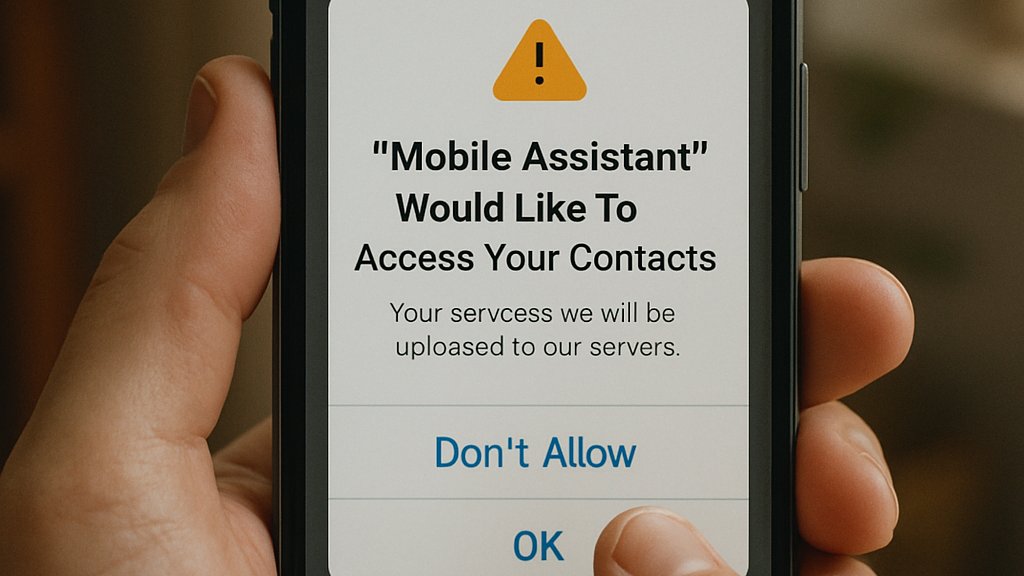
SeerGuard introduces a plug-and-play guardrail that evaluates commands before any on-screen action occurs. Consequently, developers gain runtime protection without rewriting existing planners or executors.
This article dissects the framework, benchmarks, and deployment trade-offs. Moreover, it positions the work within the larger arena of agent security research and enterprise risk management.
SeerGuard Safety Framework Overview
SeerGuard acts between an agent’s planner and the device executor. Firstly, an instruction classifier filters hostile requests such as account deletion or mass messaging.
Secondly, the Safety-Augmented World Model predicts the semantic next state for every candidate tap. If the forecast implies damage, the guard blocks execution and logs the rationale.
This workflow delivers runtime protection without accessing sensitive code bases. In contrast, pixel-level simulation tools consume extra GPU cycles and still miss semantic hazards.
SeerGuard’s plug-and-play nature appeals to regulated industries seeking faster safety certification. Consequently, teams can pilot GUI Agent Security without elevating infrastructure budgets.
SeerGuard screens instructions and actions before damage occurs. However, the true innovation sits inside its world model prediction engine. That engine deserves closer inspection, which the next section provides.
World Model Prediction Power
The core Safety-Augmented World Model fine-tunes Qwen3-VL-8B on 148,000 multimodal safety instances. Moreover, this world model prediction strategy outputs natural-language descriptions rather than raw pixels.
A predicted sentence might read, “Tapping delete empties the inbox permanently,” which the classifier flags unsafe. Therefore, agents avoid irreversible data loss before any byte changes state.
Mobile agents running GPT-5.1, Gemini-3.1, or Qwen3-VL inherit these forecasts through a simple API call. Consequently, world model prediction generalizes across backbones and device brands.
The approach reports an action-level F1 of 0.723 on MobileRisk while sustaining efficient latency. Meanwhile, prompt-injection F1 reaches 0.922, reflecting robust text screening.
As a result, GUI Agent Security evolves from reactive patching to anticipatory governance.
Semantic forecasting trims GPU demands and clarifies risk reasoning. Nevertheless, metrics matter more when compared against baselines. Those numbers appear in the next metric-focused section.
Benchmarks And Safety Metrics
SeerGuard joined the public MobileSafetyBench with a weighting coefficient ω = 0.8 for safety over utility. In contrast, direct Qwen3-VL runs scored only 0.191 on the Safety-Utility scale.
- SeerGuard Safety-Utility Score: 0.596, a three-fold uplift over unguarded agents.
- Risk-Cost Score dropped from 0.347 to 0.130 with guard enabled.
- Average task time decreased slightly, 3.49 to 3.35 minutes per task.
Furthermore, SeerGuard maintained these figures across three backbone models, showing architecture-agnostic benefits. The gains illustrate that GUI Agent Security can improve without harming productivity.
Industry observers note similar trajectories in NVIDIA NeMo Guardrails and MirrorGuard experiments. However, SeerGuard’s semantic focus offers clearer audit trails than black-box policy engines.
Measured uplift across safety and speed drives interest from enterprise buyers. Consequently, executives ask how to deploy the guardrail at scale. The following section details practical rollout lessons.
Comparative Research Context Today
MirrorGuard trains through simulated hazards, whereas SeerGuard relies on direct world model prediction. GUIGuard instead benchmarks privacy risks, revealing gaps in fine-grained screenshot understanding.
Moreover, industry guardrail kits embed rules or regex filters post execution. SeerGuard complements those approaches by offering upfront runtime protection with semantic reasoning.
Together, these methods can compose a defense-in-depth stack for agent security on real devices. Nevertheless, integration patterns vary by operating system, tooling, and compliance demands.
Comparative analysis highlights complementary strengths across projects. Therefore, informed teams must map SeerGuard to their specific workflows. We now examine deployment details.
Practical Deployment Considerations Today
SeerGuard ships example code for Android emulators and exposes a RESTful assessment endpoint. Consequently, mobile agents integrate by forwarding planned actions and receiving risk labels in milliseconds.
On-device latency averaged 42 ms per assessment during paper experiments, acceptable for most interface automation tasks. However, engineers should profile early because low-memory phones might throttle background transformers.
Deployment teams must also store guard logs for auditing and regulatory reporting. Moreover, organisations handling medical data should sandbox agents and enforce outbound network filtering.
Professionals can enhance their expertise with the AI Security Level 2 certification. The credential validates skills in GUI Agent Security implementation and continuous monitoring.
Low-latency API calls and audit logs simplify pilots. In contrast, memory constraints call for early hardware profiling. The strategic guidance subsection collects these operational tips.
Strategic Guidance For Teams
Start with a narrow task list, for example email triage, before scaling to full interface automation. Subsequently, employ chaos testing to evaluate guard efficacy under adversarial UI themes.
Next, calibrate refusal thresholds to balance user friction and agent productivity. Consequently, you will preserve utility metrics while respecting organisational risk appetites.
Finally, schedule quarterly reviews of world model prediction drift using updated GUI datasets. Nevertheless, maintain fallback policies such as time-boxed human escalation.
Tactical steps reduce integration surprises. Therefore, teams can progress from proof-of-concept to production confidently. Even so, every system presents limitations, covered next.
Limitations And Future Work
SeerGuard still misses fine-grained threats like mislabeled file types or subtle phishing colors. Authors report occasional false positives that hinder benign interface automation flows.
Moreover, the 148 K record training set underrepresents rare languages and custom Android skins. Domain shift may erode runtime protection accuracy in the field.
Adversarial UI manipulations could also fool the semantic predictor, similar to prompt injection issues. Therefore, future work will explore ensemble defenses, including simulation-trained agents and hardware sandboxes.
Nevertheless, GUI Agent Security research benefits from transparent sharing of code and metrics by the authors. Subsequently, external audits can replicate findings and refine datasets for broader demographics.
Open issues remind teams that no guard is perfect. However, iterative releases and third-party audits will push safety forward. The concluding section recaps actionable insights.
Key Takeaways
SeerGuard demonstrates that predictive guardrails can lift safety scores threefold while trimming latency. Moreover, its world model prediction engine offers transparent, semantic reasoning that regulators appreciate.
Ultimately, continuous learning will keep GUI Agent Security ahead of evolving threats. Practical deployment requires profiling memory ceilings, logging decisions, and assembling complementary defenses for agent security.
Consequently, organisations that prioritise GUI Agent Security can ship mobile agents without compromising user trust. Take the next step today.
Professionals should pursue the previously linked AI Security Level 2 certification to solidify runtime protection mastery. In contrast, waiting risks unmitigated breaches and regulatory penalties.
Disclaimer: Some content may be AI-generated or assisted and is provided ‘as is’ for informational purposes only, without warranties of accuracy or completeness, and does not imply endorsement or affiliation.


