

AI CERTS
18 hours ago
Netflix’s $587M Leap into AI Film Production
Therefore, the technology promises precision, speed, and budget relief without generic generative video artifacts. Moreover, Affleck will advise Netflix as the sixteen-person team integrates into the company’s product group. Stakeholders across Hollywood tech circles ask one urgent question. Can specialized algorithms reshape creative workflows while maintaining artistic control? This analysis explores the finances, strategy, risks, and wider implications for subscription pricing, talent relations, and future AI Film Production.
Netflix Bets On AI
Netflix’s latest Netflix acquisition shows deliberate timing. In March 2026 the company enjoyed surplus cash after a canceled Warner deal exit fee. Consequently, executives earmarked funds for strategic technology buys rather than another studio library. Elizabeth Stone, chief of product and technology, framed the purchase as empowerment for storytellers, not replacement. Meanwhile, co-CEO Ted Sarandos highlighted cost savings that can bankroll additional shows.
The regulatory filing recorded a $587 million cash consideration for InterPositive. Bloomberg earlier reported the Netflix acquisition could rise to $600 million if performance milestones trigger. Moreover, only sixteen engineers and creatives moved with the deal, underscoring Hollywood tech’s premium on scarce algorithmic talent. Observers therefore debate whether Netflix purchased code, people, or both.
Deal Economics Explained Clearly
Financial transparency matters because investors track capital allocation carefully. Consequently, Netflix disclosed headline numbers but kept milestone schedules private. Several filings, however, outline important details.
- Cash paid at close: approximately $587 million.
- Potential earn-outs: up to an additional $13 million, per Bloomberg.
- Team size onboarded: 16 specialists in film production AI and machine learning.
- GenAI already applied to roughly 300 Netflix titles during 2026.
Moreover, management connected the purchase to recent price increases and the fast-growing ads tier. The logic is simple. If AI Film Production tools shrink budgets, margin headroom can offset subscriber churn from pricing moves. Therefore, the acquisition sits at the intersection of cost control and top-line expansion.
Workflow And Creative Impact
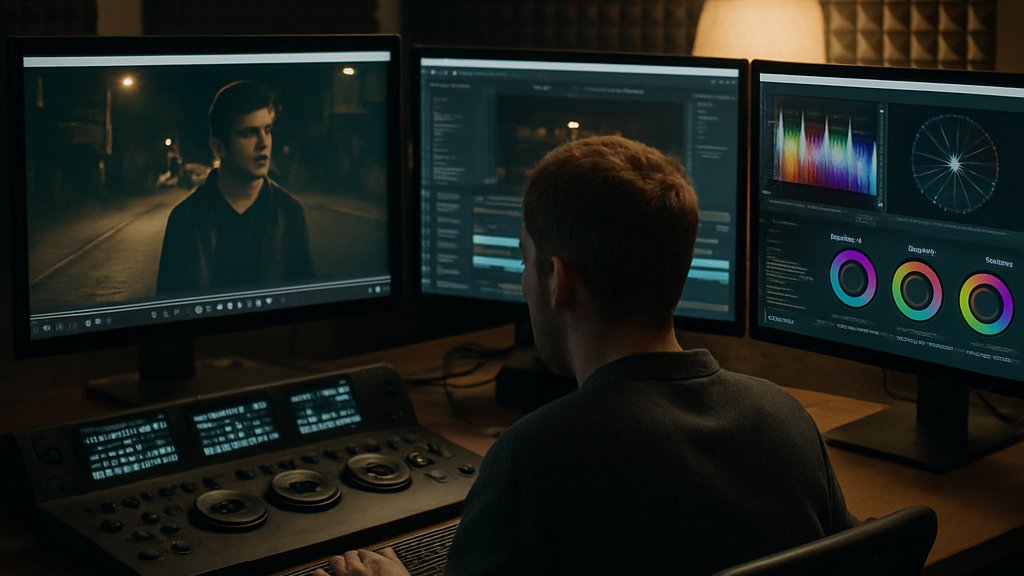
InterPositive focuses on post-production, not broad generative video generation. That focus places AI Film Production squarely within the editor’s toolkit rather than the writer’s room. Consequently, directors can re-light scenes, remove wires, or extend backgrounds without expensive reshoots. In contrast, generic engines often struggle with continuity and legal clearance. Therefore, film production AI that learns only from owned footage sidesteps many copyright controversies.
- Schedule compression: Certain VFX shots drop from ten days to two.
- Cost relief: Crowds and battle scenes require fewer manual artist hours.
- Quality assurance: Models preserve color science unique to each camera setup.
- Director control: Node-based interfaces mimic familiar creative tools, enabling frame-level tweaks.
Netflix reports that similar generative video workflows touched about 300 titles in 2026, including “Glory” and “Brasil 70.” Moreover, professionals can enhance their expertise with the AI Video Specialist™ certification. Such upskilling ensures crews speak the same technical language as new pipelines mature.
These benefits demonstrate tangible creative wins. However, further scrutiny will test whether savings persist at scale.
Industry Context And Comparisons
Netflix is not alone in racing toward algorithmic moviemaking. In December 2025 Disney struck a $1 billion partnership with OpenAI’s Sora division. Consequently, Hollywood tech observers compare both initiatives frequently. While Disney licenses a generative video engine, Netflix owns workflow-specific code. Moreover, InterPositive’s manageable headcount contrasts with Sora’s sprawling research group.
Other studios pilot creative tools from startups such as Runway and Pika. Yet none revealed a purchase as large as this Netflix acquisition. In contrast, Netflix’s vertical approach mirrors Apple’s historic hardware strategy—own the stack, control the margins. Therefore, investors view the move as a defensive moat against escalating content costs.
Analysts note that the deal, at roughly 35 times estimated revenue, dwarfs many prior film production AI valuations. Nevertheless, the premium may appear reasonable if per-title savings reach double-digit percentages across thousands of episodes. Analysts warn that late adopters of AI Film Production may face spiraling post-production costs.
Such industry parallels clarify Netflix’s intent. Meanwhile, they set stakeholder expectations for performance metrics.
Risks And Labor Pushback
Success is not guaranteed. Labor unions secured AI clauses during the 2025 bargaining cycle. Consequently, SAG-AFTRA requires consent for digital replicas and clear credit attribution. Writers also won provisions limiting text generation. Therefore, any AI Film Production deployment must respect those guardrails.
Critics warn that generative video could displace junior compositors and rotoscope artists. Moreover, IP lawyers highlight latent risks if models inadvertently ingest third-party assets. Hollywood tech guilds will likely demand transparency dashboards that expose training inputs and outputs.
Shareholders also worry about overpaying. However, Netflix acquisition multiples depend on realized cost savings, not presentations. Should promised efficiencies falter, the narrative could flip to missed opportunity.
These risks underscore a fragile social contract. Consequently, proactive governance will determine the project’s credibility.
Strategic Outlook For Netflix
Management argues that AI Film Production efficiency will buttress pricing power. Furthermore, Sarandos claims saved dollars will fund more diverse stories. Combined with the ads tier, cost control could stabilize average revenue per user.
Investors therefore seek transparent metrics. Netflix pledged to report selected case studies within upcoming shareholder letters. Meanwhile, product leads hint at releasing limited beta access to external partners. Such moves could turn proprietary creative tools into ecosystem glue.
Moreover, the company may license non-competitive rights to regional studios, monetizing dormant capacity. However, executives state that the core focus remains internal efficiency rather than external SaaS revenue.
Internal memos project that AI Film Production will cover 60% of titles by 2028. Netflix’s path now hinges on execution. Nevertheless, early signals suggest a disciplined roadmap.
Key Takeaways And Future
Netflix’s $587 million outlay highlights the strategic urgency surrounding AI Film Production. Consequently, the streamer positions itself as a technology owner, not merely a content buyer. Generative video workflows have already supported hundreds of titles, yet questions about labor impact persist. Nevertheless, early case studies suggest meaningful schedule compression and budget relief.
Looking ahead, film production AI adoption will likely shape collective bargaining agendas and investor models alike. Therefore, leaders must balance innovation with accountability. Professionals who master these creative tools stand to benefit as demand for hybrid skill sets rises. Consider pursuing the AI Video Specialist™ credential to stay competitive. Ultimately, AI Film Production could redefine Hollywood tech economics for decades.
Disclaimer: Some content may be AI-generated or assisted and is provided ‘as is’ for informational purposes only, without warranties of accuracy or completeness, and does not imply endorsement or affiliation.


