

AI CERTS
1 hour ago
Robot Action Training Evolves Through Video-Action Pretraining
Early adopters already report faster convergence and reduced dataset costs. Meanwhile, safety researchers highlight new alignment risks. Therefore, leaders must weigh performance against emerging attack surfaces. The following sections examine core advances, engineering hurdles, and market implications.
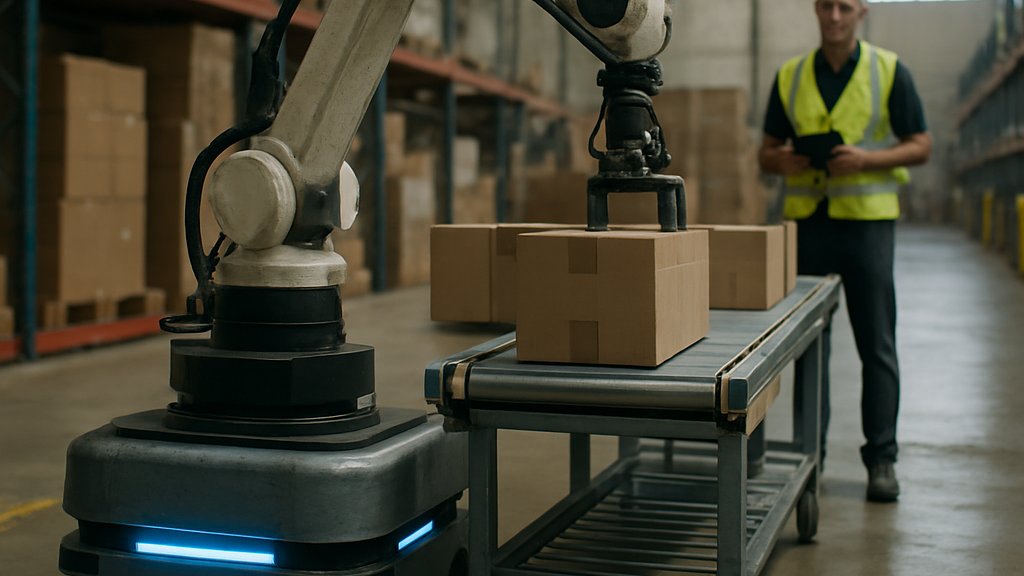
Video Models Reshape Training
Video learning supplies temporal cues missing from image pretraining. Consequently, decoders need only translate dynamics into motor commands. This shift underpins modern action models such as mimic-video’s Video-Action Model. Researchers describe the backbone plus decoder stack as a form of foundation robotics.
Robot Action Training now starts with billions of unlabeled clips instead of costly teleoperation logs. In contrast, earlier vision-language-action pipelines encoded semantics but ignored motion continuity. Therefore, generalizable control suffered whenever tasks demanded precise timing. The video backbone addresses that limitation while still exploiting semantic priors. Industry observers expect widespread adoption during 2026 product cycles.
Video pretrained backbones provide richer dynamics than static encoders. Hence, the field enters a new phase of scalable experimentation. Next, we explore how efficiency numbers justify the enthusiasm.
Huge Sample Efficiency Breakthroughs
Sample efficiency determines whether labs can iterate quickly on physical rigs. mimic-video reports tenfold gains versus a strong vision-language baseline. Moreover, success remains 77% even with only one episode per task. VERA confirms the trend, reaching zero-shot manipulation on real hardware. For enterprises, Robot Action Training economics now look favorable.
- 10× sample efficiency on mimic-video benchmarks.
- 2× faster convergence during Robot Action Training loops.
- 150 Hz realtime inference for LingBot-VA 2.0.
- Zero-shot cross-embodiment success on VERA tasks.
Consequently, generalizable control becomes possible with fewer than 20 demonstrations. That result excites budget-constrained startups. However, analysts caution that training cost still rises due to large backbones. Foundation robotics workflows therefore require balanced compute planning.
Efficiency gains lower data barriers yet introduce new compute planning challenges. Still, the numbers prove compelling, steering investment toward video learning pipelines. Broader reuse across different robots extends these savings, as the next section shows. Firms expect smarter robotic policies with fewer trials.
Cross Embodiment Control Paths
Cross-embodiment design separates high-level planning from embodiment specific translation. VERA keeps the video planner frozen and trains a Jacobian inverse dynamics module per robot. Consequently, one planner drives a Panda arm and a dexterous Allegro hand. Generalizable control thereby shifts from retraining entire models to lightweight translators.
Robot Action Training benefits because planners, once learned, endure across product lines. Additionally, this architecture supports fleet updates without factory downtime. LingBot-VA 2.0 markets similar modularity within its commercial stack. However, critics request ablations isolating planner value from decoder tricks.
Industry needs transparent studies to confirm cross-body claims. Modular planners hint at immense scale economies. Further evidence will determine whether action models can underpin mass robotic policies. Yet, success also depends on safety, which we now examine.
Safety And Security Gaps
Physical systems multiply the cost of software errors. Therefore, adversarial research like JailWAM tests video planners for dangerous jailbreaks. Attacks succeeded 84% of the time on a LingBot-style world model. Such findings threaten adoption of generalizable control in safety-critical sectors.
In contrast, classic rule-based robotic policies offered predictable limits. Moreover, diffusion or flow decoders introduce stochasticity that complicates certification. Standardized benchmarks remain scarce, though JailWAM provides an early template. Regulators may demand formal verification before approving foundation robotics in factories.
Robot Action Training teams must integrate alignment mitigations alongside performance work. Safety gaps could slow deployments despite technical momentum. Consequently, robust defenses will define competitive advantage going forward. Engineering solutions targeting real-time performance offer another layer of complexity.
Engineering For Real Time
Control loops often run above 100 Hz. LingBot-VA reports 150 Hz on one GPU using asynchronous generation. However, many action models still rely on heavy diffusion sampling. Subsequently, engineers apply caching, mixed precision, and MoE pruning.
These tricks cut latency but raise system design complexity. Foundation robotics projects therefore demand multidisciplinary teams spanning graphics, controls, and distributed systems. Robot Action Training pipelines also require reliable dataset streaming infrastructure. Professionals can enhance expertise through specialized courses.
Many pursue the AI Engineer certification to master scalable deployment. Consequently, talent shortages may ease as certification pathways mature. Real-time execution is achievable but far from trivial. Next, we outline research still required to harden the stack.
Real-time execution demands robust robotic policies.
Key Future Research Priorities
Reviewers demand clean ablations clarifying which component drives gains. Therefore, upcoming studies should swap video and image backbones under identical decoders. Benchmark suites covering safety and generalizable control must also emerge.
Moreover, transparent compute and dataset cost reporting will aid replication. Community leaders push for unified metrics reflecting both latency and policy robustness. Robot Action Training success hinges on meeting these scientific norms.
Meanwhile, cross-institution collaborations promise larger shared datasets for foundation robotics projects. Video learning will benefit as data diversity grows. Stronger science will convert exciting demos into dependable products. The final section synthesizes lessons for enterprise strategists.
Conclusion And Industry Outlook
Video-action pretraining is reshaping industrial automation. It unlocks generalizable control, cross-robot reuse, and lean data budgets. Nevertheless, safety, latency, and verification still challenge practitioners.
Robot Action Training will thrive if teams balance innovation with rigorous safeguards. Action models, video learning, and foundation robotics together form the emerging stack. Forward-looking leaders should pilot small-scale projects, measure latency, and build defensive layers.
Additionally, they can accelerate skill growth through industry credentials. Consequently, the cited certification offers a fast start. Readers may explore the AI Engineer certification to gain deployment mastery.
Now is the moment to translate laboratory progress into durable robotic policies. Adopt Robot Action Training today to stay ahead of competitors.
Disclaimer: Some content may be AI-generated or assisted and is provided ‘as is’ for informational purposes only, without warranties of accuracy or completeness, and does not imply endorsement or affiliation.


