

AI CERTS
1 hour ago
HRPI: Quantifying Comfort to Elevate Robot User Experience
This article explores how HRPI reshapes Robot User Experience across industries. We examine the math, evaluate limitations, and outline concrete deployment steps. Along the way, we consider human-likeness, path quality, and broader motion planning trends. Readers will gain actionable insights for upcoming projects and certification opportunities. Therefore, let us begin by understanding market pressures driving comfort metrics.
Market Demands Shape Robots
Global surveys predict 4.7 million indoor service robots by 2028, spanning logistics, hospitality, and elderly care. However, trials reveal discomfort spikes whenever machines invade personal space without context awareness. Traditional fixed-distance rules ignore activity, object risk, and interaction roles, reducing overall Robot User Experience. Consequently, investors now prioritize solutions that raise the comfort index while safeguarding task efficiency.
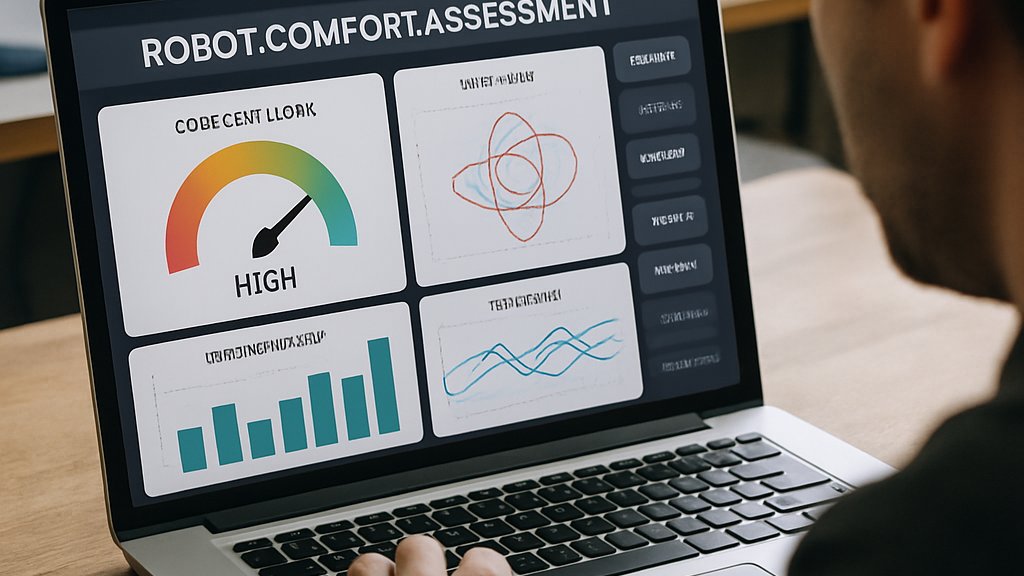
- Personalized proxemics adapting to individual anxiety levels.
- Seamless motion planning compatible with legacy path planners.
- Quantifiable metrics linking comfort to revenue or compliance.
- Transparent dashboards for continuous path quality auditing.
These market forces demand nuanced, data-driven comfort measurement. Meanwhile, HRPI supplies that missing quantitative layer. Let us examine the model's architecture.
HRPI Model Explained Clearly
HRPI aggregates three normalized sub-scores: Behavior-Dependent, Interaction-Dependent, and Object-Dependent. Moreover, it multiplies the sum by a sigmoid personalization term, aligning control directly with Robot User Experience goals. A higher coefficient means comfort drops quickly as distance shrinks, tailoring responses per user. Researchers validated the formula with nine volunteers and a ceiling-mounted service robot in controlled scenarios. Consequently, output values directly mapped to stop distances and velocities within the robot design software. In contrast, conventional comfort index measures rarely incorporate object risk, giving HRPI broader applicability. Therefore, engineers can embed the metric inside existing motion planning stacks with minimal overhead.
HRPI compresses multimodal context into a single score. Consequently, mapping that score to control commands becomes straightforward. Next, we explore personalization advantages.
Personalization Boosts User Comfort
Every individual perceives robotic intrusion differently. Moreover, age, culture, and prior exposure alter acceptable distances. HRPI’s sigmoid factor captures these variations using questionnaire scores collected during onboarding. That calibration anchors Robot User Experience in measurable psychology. Consequently, a robot approaching an anxious patient slows earlier than when serving an attentive nurse. Field reviewers argue that such tailoring elevates overall Robot User Experience beyond what static heuristics achieve. In healthcare pilots, designers reported smoother handovers, higher trust, and better path quality scores. Nevertheless, periodic recalibration remains necessary because human attitudes evolve over time.
Personalization brings demonstrable gains in comfort and efficiency. However, integration challenges require thoughtful engineering. Implementation details appear in the following section.
Implementation And Deployment Path
Developers first map HRPI outputs to a compatible motion planning layer, safeguarding Robot User Experience. Open-source libraries like MoveIt support dynamic distance constraints through plugin interfaces. Additionally, velocity scaling modules convert comfort thresholds into smooth acceleration profiles while respecting robot design constraints. Path planners then refine trajectories to preserve path quality without sacrificing task timing. Researchers demonstrated this pipeline on a ceiling-mounted manipulator, but wheeled robots would follow a similar schema.
Integration With Motion Planning
Successful integration hinges on real-time sensing of human activity, interaction intent, and object category. Consequently, vision modules classify poses, while semantic planners label objects as sharp, hot, or benign. Edge inference hardware maintains latency below 100 milliseconds, ensuring responsive Robot User Experience. Meanwhile, internal audits log raw HRPI values for regulatory review and comfort index optimization.
This architecture scales across diverse robot design choices. Subsequently, quality metrics reveal tangible business returns. Yet, human-likeness still influences perception.
Boosting Robot Human-Likeness Score
Design aesthetics modulate perceived intent before movement even begins. Researchers found that smooth, biomimetic joints raised human-likeness scores, uplifting Robot User Experience. Moreover, synchronized eye-level displays signal approach direction, further enhancing the comfort index. Consequently, combining expressive robot design with adaptive proxemics maximizes Robot User Experience benefits. Professionals can upskill through the AI+ UX Designer™ certification. The program covers emotion-aware interfaces and sensor fusion techniques relevant to HRPI deployment.
Elevated human-likeness complements adaptive proxemics for holistic comfort. Therefore, a balanced strategy delivers superior outcomes. Limitations still warrant discussion.
Limitations And Research Agenda
Initial HRPI studies involved only nine participants and one robot configuration. Consequently, statistical power remains low, and demographic diversity is limited. Moreover, current pipelines rely on manual questionnaire inputs, raising scalability concerns. Automated sentiment estimation using gaze, voice, and physiological signals could reduce that friction. In contrast, reviewers caution that comfort index metrics alone may overlook long-term trust factors. Future work should compare HRPI against alternative path quality indicators across extended deployments. Researchers also plan public datasets to accelerate benchmarking and motion planning standardization across diverse robot design approaches.
Significant questions persist around validation and automation. Nevertheless, momentum suggests robust solutions will emerge soon. We now recap key insights.
HRPI delivers a structured bridge between subjective comfort and objective control. Consequently, organizations can tune distance, speed, and robot design features for optimum Robot User Experience. Moreover, early pilots report smoother handovers, higher trust, and measurable path quality gains. Nevertheless, limited sample sizes and manual calibration highlight ongoing research gaps. Professionals should monitor new datasets, adopt sensor automation, and earn the AI+ UX Designer™ credential. Doing so positions teams to deliver comfortable, profitable human-robot interactions.
Disclaimer: Some content may be AI-generated or assisted and is provided ‘as is’ for informational purposes only, without warranties of accuracy or completeness, and does not imply endorsement or affiliation.


