

AI CERTS
3 days ago
Nvidia’s AI Smart Factories Blueprint Accelerates Gains
This article delivers that blueprint in practical language. It explains Nvidia's FOX design, agentic models, and partner moves. Ultimately, readers will grasp why AI Smart Factories reshape competitiveness.
AI Brains Enter Lines
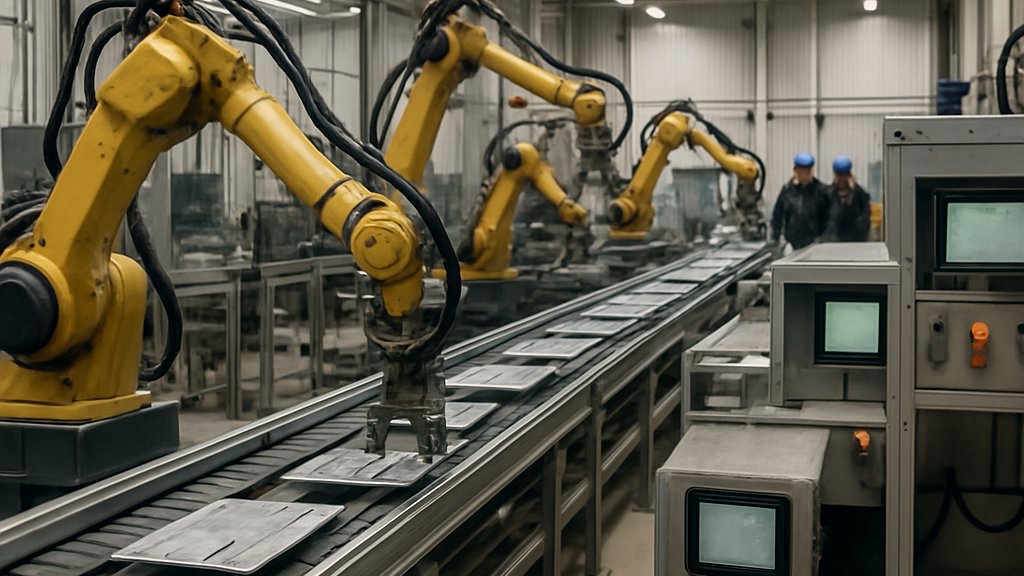
Nvidia calls its new control layer the Factory Operations Blueprint, or FOX. Furthermore, FOX acts as a factory-manager agent that reasons across sensors, MES, and ERP feeds. In contrast, legacy systems silo that data and slow action. The "AI Brain" runs on DGX Station servers positioned near the line. Consequently, inference latencies drop below critical process thresholds. Vendors claim sub-second reactions to operational alerts. Those metrics define the foundation of modern AI Smart Factories. Nevertheless, hardware alone never delivers transformation.
Factory Operations Blueprint Unpacked
Engineers often ask what sits inside the factory operations blueprint beyond marketing terms. Firstly, a live digital twin ingests physics data from Omniverse. Secondly, an orchestration layer deploys specialist agents for inspection, transport, and safety. Additionally, a reasoning engine evaluates scenarios before dispatching commands. Each decision then fires back to PLCs as secure operational alerts. Moreover, operators can query the system using natural language. This human loop keeps AI Smart Factories both transparent and controllable. Meanwhile, Siemens teams embed the same stack inside their Industrial AI Operating System.
Digital Twins Drive Insight
Digital twins create high-fidelity replicas of lines, machines, and even entire campuses. Consequently, engineers test schedule changes without halting production. McKinsey data suggests twin adoption accelerates manufacturing intelligence across sectors. Moreover, Nvidia Omniverse provides synthetic data for vision agents. Ansys and Cadence plug their physics solvers into the same environment. Therefore, complex thermal or vibration issues surface early. These insights feed back into AI Smart Factories for continuous improvement. Ultimately, digital twins underpin safer plant automation at scale. The approach also strengthens compliance reporting through replayable simulations.
Agentic Layers Coordinate Work
Unlike monolithic dashboards, agentic models distribute tasks among small, purposeful agents. Quality agents detect defects; logistics agents redirect AGVs; energy agents tune HVAC. Furthermore, the FOX manager agent harmonizes goals. Pegatron reports a 15% reduction in redundancy after deploying this industrial AI mesh. Additionally, Advantech estimates a 10% energy cut from autonomous HVAC tuning. Consequently, manufacturing intelligence rises while human load falls. Operators still receive clear operational alerts on exceptions. Hence, trust grows across shifts. These coordination benefits sit at the heart of AI Smart Factories.
Early Deployments Show Gains
Pilot numbers appear promising, yet remain vendor claimed. Foxconn cites striking improvements.
- 80% faster root-cause analysis time
- 15% higher labor productivity
- 10% lower machine failures
Moreover, Pegatron signals 15% asset savings. Hyundai plans 50,000 Blackwell GPUs for huge plant automation clusters. Furthermore, the project involves a $3 billion investment. Analysts therefore view the move as an industrial AI tipping point. Nevertheless, independent audits are still pending. Until those arrive, AI Smart Factories need cautious optimism.
Challenges Remain For Scaling
Significant obstacles can derail momentum. Data silos hinder real time flows despite the factory operations blueprint promise. Additionally, legal experts warn of IP leakage when models access proprietary recipes. Cybersecurity gaps also expand attack surfaces for operational alerts feeds. In contrast, strict zero-trust designs add latency and cost. Moreover, GPU clusters require capital that smaller firms lack. Governance frameworks for industrial AI liability remain immature. Consequently, scaling beyond pilots slows. These blockers temper expectations within AI Smart Factories. However, targeted strategies can mitigate them.
Future Outlook And Actions
Market analysts still forecast multi-billion growth for manufacturing intelligence platforms. Meanwhile, Nvidia and Siemens expand partner ecosystems monthly. Therefore, operations leaders should upskill quickly. Professionals can validate expertise through the AI Supply Chain™ certification. That credential aligns with plant automation and supply chain orchestration needs. Moreover, building cross-functional teams enhances factory operations blueprint adoption. Executives should also demand third-party audits before locking spending. Consequently, AI Smart Factories can scale responsibly. These actions prepare plants for autonomous competitiveness.
Nvidia’s FOX initiative signals a pivotal shift in factory orchestration. Moreover, early gains reveal tangible value but demand verification. Digital twins, agentic models, and industrial AI stacks now converge into cohesive offers. Consequently, forward-thinking manufacturers must balance speed with governance. Executives should secure skills, audits, and scalable architectures.
Professionals can start by mapping existing data flows against the factory operations blueprint. In contrast, ignoring the trend risks competitive erosion. Ultimately, AI Smart Factories will define 2030 manufacturing leadership. Additionally, transparent KPIs will persuade regulators and investors alike. Therefore, the time to pilot, measure, and iterate is now.
Disclaimer: Some content may be AI-generated or assisted and is provided ‘as is’ for informational purposes only, without warranties of accuracy or completeness, and does not imply endorsement or affiliation.


