

AI CERTS
2 months ago
AI Vaccine Development Hits Human Trials
However, safety headlines only begin the story. Industry leaders now examine scalability, regulatory fit, and talent gaps. The following analysis unpacks those themes while maintaining a tight focus on clinical research evidence and commercial realities.
AI Trial Signals Promise
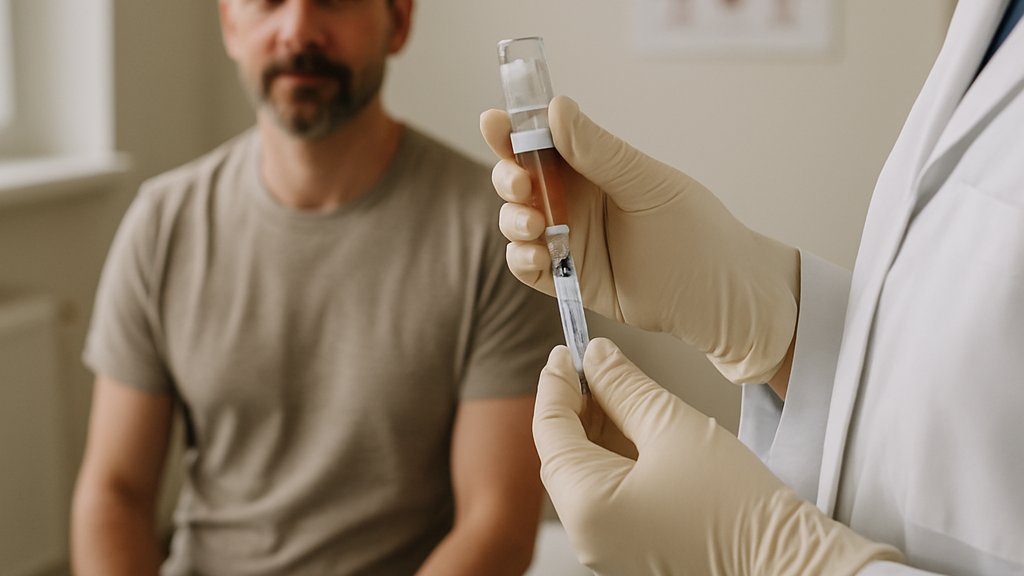
Investigators vaccinated 39 volunteers between December 2021 and September 2023. Needle-free intradermal injections delivered doses up to 1.2 mg on days 0 and 28. Meanwhile, no serious adverse events emerged.
- Trial ID: ISRCTN87813400
- Dose groups: 0.2-1.2 mg
- Primary endpoint: safety/reactogenicity
- Secondary endpoint: humoral response day 56
Subsequently, press coverage quoted “49 volunteers,” yet peer-reviewed numbers confirm 39 recipients. Nevertheless, minor reporting inconsistencies seldom overshadow the milestone. AI Vaccine Development now owns a tangible human dataset, and that shifts investor conversations.
These findings confirm tolerability yet leave efficacy open. Consequently, stakeholders await Phase II enrollment details.
Computational Design Pipeline Insights
DIOSynVax applies machine learning and protein-structure prediction to scan thousands of coronavirus genomes. Furthermore, conserved epitopes are stitched into a thermostable DNA backbone. AlphaFold-like models validate antigen folding, while generative algorithms optimize expression.
In contrast, traditional vaccine design iterates slowly through wet-lab screens. Here, AI Vaccine Development compresses months into hours, accelerating candidate selection before animal studies.
Researchers also leverage VaxSeer for influenza strain forecasting, demonstrating cross-pathogen versatility. Therefore, computational workflows now anchor next-gen vaccine portfolios.
Pipeline transparency still matters. Regulators will demand model provenance, version control, and reproducibility. Consequently, DIOSynVax plans detailed submissions alongside wet-lab validation.
Robust documentation will decide whether algorithms become routine in clinical research.
Global Industry Momentum Builds
Moderna, Evaxion, and several biotech peers increasingly publicize internal AI programs. Moreover, Fortune Business Insights values the AI-enabled drug discovery market at $4.46 billion in 2025, with double-digit CAGR projections.
Consequently, venture capital targets platforms promising faster vaccine design. AI Vaccine Development thus benefits from an expanding financial ecosystem supporting data, cloud, and wet-lab integration.
Evaxion recently showcased an AI-derived polio concept and personalized cancer vaccines. Meanwhile, MIT’s academic group published VaxSeer results that improve flu-strain prediction accuracy. Together, these projects broadcast a message: computational pipelines already influence diverse pathogen programs.
Market momentum appears sustainable. However, scaling beyond prototypes still requires coordinated manufacturing and regulatory strategies.
Such coordination will separate headline projects from deployable medicines.
Key Benefits And Hurdles
Advocates highlight several strengths:
- Speed: algorithmic screens truncate discovery timelines.
- Scope: conserved epitope focus promises broad protection.
- Stability: DNA formats resist cold-chain constraints.
- Access: needle-free devices simplify mass campaigns.
However, challenges persist. Immunogenicity signals were hard to interpret because volunteers already harbored coronavirus antibodies. Additionally, real-world efficacy against future spillovers remains speculative.
Manufacturing DNA vaccines at pandemic scale also tests supply chains. Moreover, regulatory agencies need evidence linking in-silico models to clinical outcomes. AI Vaccine Development must therefore establish rigorous audit trails.
Finally, public communication should avoid overpromising. In contrast to rapid mRNA rollouts, broad-spectrum claims demand large, diverse trials.
These benefits and hurdles create a dynamic risk-reward matrix. Nevertheless, informed planning can balance speed with safety for upcoming studies.
Evolving Regulatory Path Forward
Regulators increasingly publish AI guidance covering model risk, data lineage, and algorithm updates. Consequently, sponsors now prepare AI technical files alongside customary dossiers.
The pEVAC-PS team anticipates detailed questions on training datasets, epitope selection logic, and structural prediction validation. Moreover, post-approval monitoring may mandate ongoing algorithm audits.
International harmonization could streamline submissions. Meanwhile, clinical research consortia lobby for standardized reporting formats to ease cross-trial comparisons.
Clear rules will ultimately accelerate AI Vaccine Development adoption. Therefore, collaboration between agencies and developers becomes essential.
Transparent governance today will support rapid authorizations tomorrow.
Future Pandemic Preparedness Implications
Broad-spectrum vaccines align with global pandemic preparedness blueprints. Moreover, machine learning tools can rank emerging threats before outbreaks escalate.
Consequently, stockpiles may evolve from single-pathogen inventories to flexible libraries of AI-generated constructs. Governments already fund proactive platforms after COVID-19’s costly lessons.
AI Vaccine Development thus sits at the intersection of security and health economics. In contrast, reliance on retrospective strain selection now appears risky.
Preparedness strategies must integrate continuous surveillance, rapid computational updates, and agile manufacturing. Therefore, investments in data infrastructure become as vital as bioreactors.
These implications redefine national biosecurity agendas. Subsequently, multidisciplinary collaborations will guide implementation.
Skills And Certifications Needed
Workforce readiness underpins sustainable innovation. Bioinformaticians, immunologists, and software engineers must collaborate fluently. Additionally, regulatory specialists require AI literacy to evaluate model outputs.
Professionals can enhance their expertise with the AI Healthcare Specialist™ certification. Moreover, cross-training accelerates translation from code to clinic.
Consequently, universities expand curricula covering protein modeling, data ethics, and biotech commercialization. AI Vaccine Development teams will depend on such interdisciplinary talent pools.
Skill pipelines secured today will support tomorrow’s pandemic preparedness mandates.
These educational moves close the talent gap. Meanwhile, continuous learning keeps practitioners ahead of evolving tools.
Conclusion
Phase I data for Cambridge’s pEVAC-PS confirms safety and highlights the rapid progress of AI Vaccine Development. Furthermore, computational pipelines shorten discovery, yet regulatory, manufacturing, and efficacy questions remain. Global biotech momentum, combined with targeted upskilling, will decide whether algorithm-designed vaccines transform pandemic preparedness. Consequently, stakeholders should monitor upcoming Phase II results, engage with regulators early, and pursue certifications that bridge technical and clinical research expertise. Act now to stay at the forefront of this emerging frontier.
Disclaimer: Some content may be AI-generated or assisted and is provided ‘as is’ for informational purposes only, without warranties of accuracy or completeness, and does not imply endorsement or affiliation.


