

AI CERTS
6 hours ago
Diffusion Policy Transfer: DADiff Boosts Cross-Domain RL
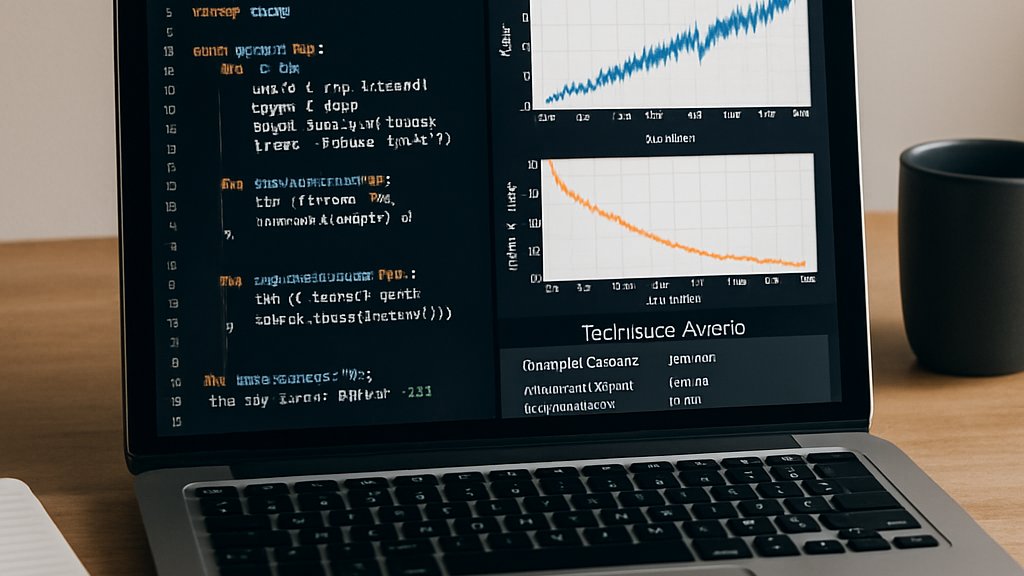
Moreover, early experiments show average performance gains of 8.7 percent over strong baselines on sixteen MuJoCo tasks.
These results highlight diffusion policies as a practical route for safer autonomous control in uncertain settings.
However, questions remain about memory overhead, hyperparameter tuning, and transfer learning beyond simulation.
Industry teams should track these developments because policy robustness directly influences deployment costs.
Therefore, this article unpacks the technical innovation, benchmarks, and practical implications for engineering leaders.
Innovation Behind DADiff Method
DADiff reframes adaptation as a generative-model discrepancy problem rather than a simple feature alignment task.
Consequently, the framework builds a diffusion model that denoises noisy latent states collected from the source environment.
During the reverse process, each denoised state forms a structured generative trajectory.
The team defines generative trajectory deviation as the statistical distance between source and target trajectories.
Moreover, they prove that this deviation upper bounds performance loss.
This insight enables two operational variants.
In DADiff-modify, a deviation penalty scales the reward during learning.
In DADiff-select, only source transitions below a threshold join the replay buffer.
Therefore, designers can choose between continuous shaping or discrete filtering based on deployment constraints.
Both variants still rely on diffusion policies to encapsulate multi-step dynamics, giving richer signals than previous classifiers.
Consequently, the approach connects generative modeling with transfer learning theory in an elegant manner.
Unlike many cross-domain RL baselines, DADiff avoids additional dynamics models.
This structural choice already hints at improved policy robustness under unseen disturbances.
These mechanisms transform abstract diffusion math into actionable adaptation knobs.
The next section reviews empirical impact.
Diffusion Policy Transfer Impact
Quantitative evidence supports the theoretical claims.
On sixteen MuJoCo benchmarks, DADiff-modify improved mean return by 8.7 percent over PAR, VGDF, and DARC.
The largest single gain reached 42.3 percent on a damaged HalfCheetah morphology.
Furthermore, Diffusion Policy Transfer delivered these gains with only 100,000 target environment steps.
Baseline SAC-tune required ten times more interaction for comparable results.
Meanwhile, VGDF consumed triple the training time because it learns an explicit dynamics model.
GPU memory rose modestly because latent trajectory sampling adds tensors during rollouts.
However, the authors report acceptable usage below twelve gigabytes on a modern workstation.
- Average improvement: 8.7 % across sixteen tasks
- Maximum gain: 42.3 % on broken HalfCheetah
- Optimal diffusion steps: K ≈ 100
- Source budget: 1 M steps; Target budget: 0.1 M steps
- Memory footprint: under 12 GB
These figures demonstrate tangible efficiency gains.
However, robustness under noise requires separate analysis.
Cross-Domain Benchmark Key Findings
Cross-domain RL remains challenging when gravity, friction, or kinematics drift.
DADiff tackled sixteen such shifts across ant, hopper, walker, and halfcheetah bodies.
Furthermore, experiments included severe morphology breakages unseen during source training.
In contrast, PAR relied on representation classifiers that misfired under extreme damage.
The diffusion policies inside DADiff captured multi-step stochasticity, therefore adapting smoother torques.
Additionally, value-guided data filtering lost momentum when trajectories drifted far from source statistics.
Consequently, this study enriches transfer learning literature with distributional insights.
Notably, performance remained stable across five random seeds, supporting statistical confidence.
These benchmarks illustrate general cross-task consistency.
However, resilience under injected noise deserves independent focus.
Robustness Under Dynamics Noise
Policy robustness often degrades when actuators slip or sensors drift.
Therefore, the authors injected Gaussian action noise during target evaluation.
DADiff-modify maintained near-optimal returns until noise standard deviation reached critical thresholds.
Meanwhile, PAR exhibited steep drops under identical disturbances.
Moreover, Diffusion Policy Transfer achieved graceful degradation because penalties track latent trajectory divergence instead of raw states.
Cross-domain RL experts will note the similarity to adversarial regularization, yet diffusion signals are smoother.
Additionally, the deviation bound offers theoretical guarantees rarely seen in applied autonomous control research.
For practical safety cases, such predictable falloff enables certification planning.
These findings affirm the stability benefits of diffusion metrics.
The forthcoming section covers deployment pragmatics.
Practical Deployment Key Considerations
Engineering teams must balance memory, runtime, and tuning complexity.
Diffusion policies consume extra GPU memory for latent generation.
However, early profiling shows minor overhead compared to end-to-end video policies.
Optimal diffusion timesteps hover around 100; performance drops beyond 200.
Therefore, automatic schedule search may simplify hyperparameter selection.
Penalty weight λ and filter ratio ξ percent also influence results.
Consequently, small validation sets in the target domain remain essential.
Teams pursuing autonomous control pilots should align budgets accordingly.
Professionals can enhance their expertise with the AI Engineer™ certification.
This program deepens understanding of diffusion frameworks and transfer learning pipelines.
Thoughtful resource planning mitigates operational barriers.
Next, we examine future research directions.
Promising Future Research Directions
Diffusion Policy Transfer currently lacks real-robot validation.
Moreover, no independent reproduction has surfaced since release.
Subsequently, third-party teams should rerun the open-source Docker examples.
Extending experiments to manipulation tasks would test generality beyond locomotion.
Researchers also envision multi-modal diffusion policies that include vision and force feedback.
In contrast, existing transfer learning baselines seldom integrate raw sensory data.
Another avenue integrates diffusion priors with model-predictive controllers for tighter policy robustness guarantees.
Additionally, automating λ and ξ search using Bayesian optimization can reduce manual labor.
Consequently, these directions promise broader adoption across industrial autonomous control.
Future work will decide whether diffusion methods dominate adaptation.
Until then, engineers should track benchmark updates closely.
Essential Takeaways And Action
Diffusion Policy Transfer has redefined adaptation baselines by linking generative trajectories to performance limits.
Consequently, Diffusion Policy Transfer yields consistent gains across dynamics shifts, morphology damages, and actuator noise.
Moreover, Diffusion Policy Transfer operates with modest compute, easing practical adoption for lean robotics teams.
Nevertheless, real-world trials are required before Diffusion Policy Transfer earns universal trust.
Meanwhile, Diffusion Policy Transfer offers a fertile playground for researchers exploring data-efficient autonomous control.
Therefore, readers should test the open code and pursue advanced certifications to stay ahead.
Disclaimer: Some content may be AI-generated or assisted and is provided ‘as is’ for informational purposes only, without warranties of accuracy or completeness, and does not imply endorsement or affiliation.


