

AI CERTS
1 month ago
NL Ad Failure: Six-Finger AI Image Crisis
These concerns are not isolated incidents; industry data show a growing pattern. Moreover, six-finger artifacts have appeared in books, magazines, and government posts during 2025-2026. The technical flaw meets operational negligence, creating a perfect storm for reputational fallout. Meanwhile, consumers demand stronger disclosure whenever artificial systems replace human photographers.
This article dissects the failure pattern, explains root causes, and maps the emerging mitigation playbook. Readers will see why stakes feel high, especially for teams embracing rapid creative automation. Finally, we highlight certification paths that help designers raise their professional guardrails.
Why Six-Finger Errors Rise
Extra digits are more than meme material; they expose core limits of diffusion systems. However, models optimize local patterns without counting fingers, so they sometimes add or subtract parts. Researchers call this patch bias because networks match textures before verifying global anatomy. Consequently, overlapping or occluded training examples confuse the generator during reconstruction.
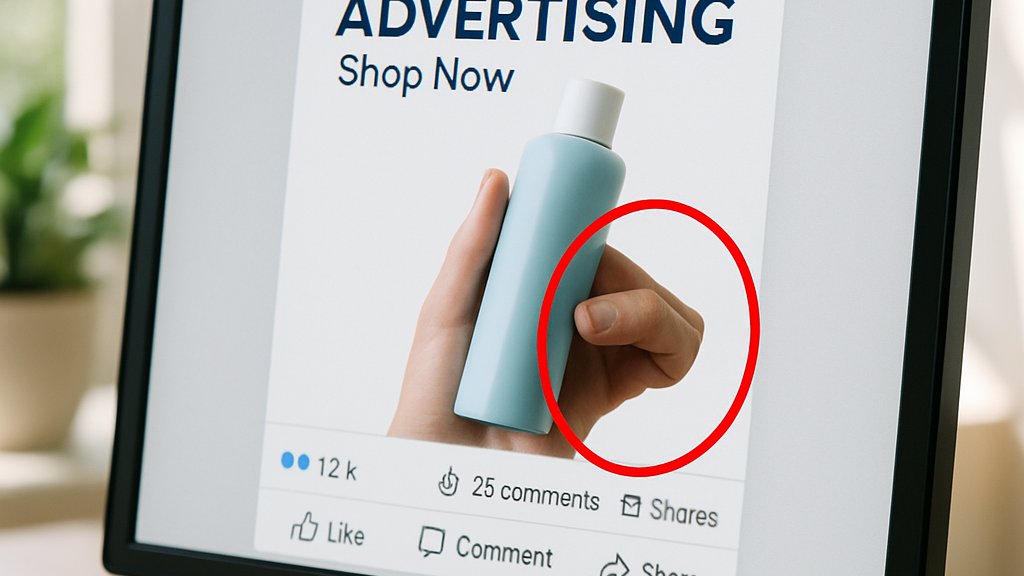
Moreover, hands occupy tiny pixel areas in many source photos, reducing high-quality training data. In contrast, faces receive abundant, well-tagged examples, so facial errors fell faster. The imbalance explains persistent hand glitches despite rapid model upgrades.
NL Ad Failure underscored these limits, showing that commercial deployments still rely on human polish. Nevertheless, speed pressures tempt teams to skip detailed reviews, letting glaring anomalies slip online. These causes frame every subsequent headline and prepare us for the timeline ahead.
Major Incident Timeline Review
Several public mishaps demonstrate how quickly an unnoticed flaw becomes headline news. Furthermore, each case reveals different operational weaknesses.
- Jan 2026: A Chinese photography book withdrew thousands of copies after readers spotted six-finger images.
- Jan 2026: Vogue Japan corrected Ariana Grande artwork when fans mocked an extra finger on social media.
- Sep 2025: Connecticut DEEP removed a hunter education post showing six fingers and unreadable text.
- Mar 2026: Viral video clips of Benjamin Netanyahu sparked rumors, yet fact-checkers blamed camera angles, not AI.
Consequently, apologies, refunds, or removals followed within hours in every example. NL Ad Failure appeared in the same news cycle, amplifying scrutiny across creative departments. Moreover, OECD.ai now logs such events as formal AI incidents, adding regulatory visibility. These chronicles show reputational harm moves faster than traditional correction workflows. Brands lost control within minutes, not days. Therefore, understanding technical roots became urgent.
Technical Error Roots Explained
Engineers diagnose six-finger artifacts by tracing the forward diffusion process frame by frame. Subsequently, they confirm that the denoising loop maintains local plausibility while ignoring numeric constraints.
Diffusion Model Core Weaknesses
Firstly, occlusion confusion occurs when partial hands during training create ambiguous outlines. Secondly, patch bias makes the generator repeat believable finger textures until the region stabilizes. Thirdly, noisy or mislabeled datasets leave the network without reliable anatomical ground truth. Therefore, even advanced guidance tokens cannot guarantee exactly five fingers.
Researchers at Stevens Institute quantified these flaws by cataloging 482 public reports. Moreover, they argue users need clear vocabulary, such as "logical fallacy" or "surrealism", to report issues. NL Ad Failure again mirrored their findings, reinforcing the study’s call for shared language. These technical insights feed market discussions about trust and revenue, covered next.
Market Data And Trust
Money follows eyeballs, yet digits determine trust. IAB surveys reveal 82% of executives believe young consumers enjoy AI visuals. However, only 45% of those consumers actually feel positive. Furthermore, over half demand disclosure when an advertisement is fully synthetic.
- 82% executives expect positive Gen Z sentiment.
- 45% Gen Z viewers report genuine enthusiasm.
- 50% consumers request disclosure labels on AI visuals.
Consequently, NL Ad Failure triggered internal audits across several agencies. Meanwhile, fast-food giants and fashion publishers intensified manual reviews for every Image asset. In contrast, smaller startups still chase speed, risking similar backlash. Trust gaps hurt click-through rates, brand equity, and eventual revenue. Therefore, rigorous quality pipelines now represent competitive advantage. These numbers set the stage for looming policy action, discussed next.
Regulatory Pressure Grows Fast
Lawmakers saw the memes and drafted rules. The EU AI Act mandates transparency tags for synthetic media. Additionally, the FTC warns US advertisers against misleading digital representations. IAB released its disclosure framework in January 2026, aligning industry self-regulation with government demands.
Moreover, state bills extend requirements to public service materials, including Vaccination posters. Consequently, Connecticut DEEP cited evolving standards when apologizing for its six-finger fiasco. NL Ad Failure surfaced during parallel deliberations, further pressuring policy drafters. Non-compliance can incur fines, content takedowns, or forced correction notices. Therefore, brands now integrate provenance metadata like C2PA to pre-empt scrutiny. These enforcement trends make mitigation strategies essential, covered in the next section.
Mitigation Playbook For Brands
Quality assurance begins with human eyes. Teams schedule dedicated reviewers to inspect hands, faces, and every critical Image region. Moreover, prompt engineers can use negative tokens or inpainting to fix anatomy before release.
Platform choice also matters. In contrast to hobby tools, enterprise offerings provide stricter content filters. Adobe’s Firefly and Canva now advertise improved hand rendering, though Photoshop post-work often remains necessary.
Furthermore, visible disclosure builds goodwill. IAB recommends a two-layer label: on-screen icon plus machine-readable metadata. Professionals can enhance their expertise with the AI Design certification. Consequently, certified designers earn credibility while reducing operational risk.
Vaccination campaign owners already apply these tactics after previous social media misfires. NL Ad Failure offers a cautionary tale they cite during training. These measures reduce incident probability, yet long-term success requires forward planning.
Future Outlook And Actions
Model vendors promise hand-specific improvements within upcoming releases. Meanwhile, researchers explore hybrid systems blending diffusion with explicit skeletal constraints. Moreover, watermarking standards like C2PA will likely become mandatory across advertising channels.
Brands preparing now will avoid repeating NL Ad Failure when the next platform launches. Consequently, governance teams should monitor roadmaps, vendor disclosures, and new policy drafts. Photoshop plugins may soon automate finger counting checks, further shrinking manual workloads.
Vaccination outreach groups plan pilot studies comparing trust when labels appear on each Image. In contrast, entertainment studios will A/B test whether disclosure icons harm ticket sales. These forward-looking experiments will refine best practices for every sector.
Six-finger memes may seem funny, yet the commercial cost climbs daily. However, NL Ad Failure reminds leaders that reputational hits arrive instantly. Therefore, disciplined reviews, transparent labels, and continual model evaluation become non-negotiable. Moreover, updated Photoshop toolchains and automated finger counters will soon simplify Image vetting. Vaccination campaigns, public agencies, and luxury brands share identical stakes in visual credibility. Consequently, professionals pursuing excellence should study recent frameworks and gain certification. NL Ad Failure offers the definitive case study steering that learning journey. Take action now, refine your creative pipeline, and position your team ahead of the next algorithmic surprise.
Disclaimer: Some content may be AI-generated or assisted and is provided ‘as is’ for informational purposes only, without warranties of accuracy or completeness, and does not imply endorsement or affiliation.


