

AI CERTS
2 hours ago
Apple AI Strategy Resets With Siri AI And Privacy Stack
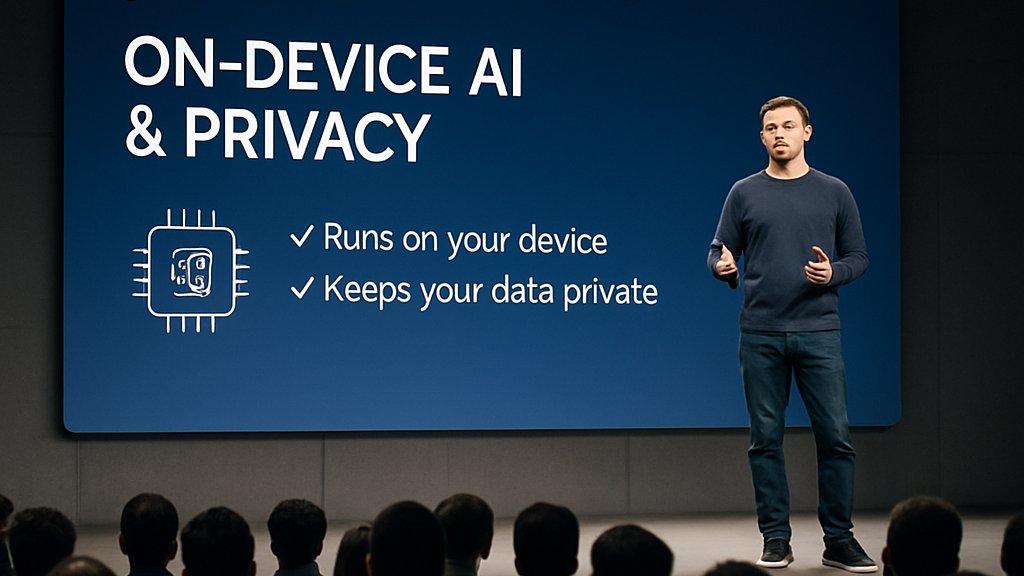
WWDC Launch Moment Highlights
Tim Cook opened with hard numbers: 2.5 billion active devices and Q2 FY2026 revenue of $111.2 billion. However, the real headline belonged to WWDC 2026, where the Siri brand finally evolved into Siri AI. Apple, in just four keynote minutes, explained richer conversation, visual understanding, and writing assistance. Moreover, early developer builds ship immediately, with public betas arriving later this year.
Hardware requirements remain strict. Supported devices include iPhone 16 Pro, M-series Macs, Vision Pro, and selected Apple Watch models. In contrast, older hardware stays locked out, creating inevitable fragmentation.
Key analyst opinions varied. Forrester called the launch a “narrative reset,” while Ars Technica worried about real-world latency. Nevertheless, both camps agreed that the Apple AI Strategy finally appears coherent.
The launch outlined major capabilities, yet the scale of adoption hinges on user trust, hardware cycles, and regional availability. These early reactions set expectations. Meanwhile, deeper technical questions remained.
These insights spotlight the momentous debut. Consequently, engineering realities demand closer examination.
Architecture Under The Hood
Craig Federighi introduced “Apple Foundation Models.” They run locally for speed and privacy. Additionally, heavy inference shifts to Private Cloud Compute, a server layer designed to avoid storing personal data. Developers gain new App Intents that let Siri AI act across apps without overreaching permissions.
Reportedly, custom Google Gemini models reinforce the cloud tier. The unconfirmed deal may approach $1 billion yearly and leverage ~1.2-trillion-parameter instances. Moreover, Nvidia hardware supposedly powers the farm. However, neither firm disclosed specifics.
This two-tier stack shapes Apple AI Strategy going forward. Furthermore, it aligns with the firm’s privacy stance while acknowledging scale limits of on-device silicon.
- On-device models: latency targets under 100 ms, offline support
- Private Cloud Compute: encrypted, ephemeral sessions, no profiles stored
- System orchestrator: context fusion across Photos, Mail, Calendar, Messages
The design balances privacy and capability. Therefore, success depends on seamless orchestration outcomes users can feel.
Engineering trade-offs frame future developments. Subsequently, external forces complicate deployment.
Regulatory Hurdles Emerge Now
European regulators served immediate friction. The Digital Markets Act blocks the iPhone and iPad versions of Siri AI at launch. Nevertheless, macOS 27 and visionOS 27 still ship in the EU. Federighi blamed “gatekeeping clauses” that restrict system-level assistants.
Analysts warn that fragmented releases dilute network effects. Moreover, users may delay upgrades, undermining consumer AI momentum in a vital market. In contrast, U.S. and Asian rollouts proceed as planned.
Privacy advocates applaud the Private Cloud Compute design. However, watchdogs will test claims once independent benchmarks appear.
Regulatory headwinds slow regional scale. Consequently, commercial forecasts must adjust.
Leadership And Talent Shift
Behind the scenes, leadership changed. John Giannandrea moved to an advisory role, then retirement. Subsequently, Google veteran Amar Subramanya joined as VP of AI, reporting to Federighi. This hire signals renewed urgency in the Apple AI Strategy talent plan.
Organizational diagrams now center AI across hardware, software, and services. Moreover, Apple silicon teams highlighted M-series advances tailored for local inference.
Internally, sources describe weekly cross-functional reviews. Consequently, decision cycles shortened, aligning disparate teams on platform strategy.
Structural realignment sharpens focus. Therefore, execution accountability should improve.
Market Impact Forecast
Wall Street cares about upgrades and services revenue. Furthermore, Services already posted a $30.976 billion quarterly record. Analysts at Bernstein model a two-year replacement wave if Siri AI delivers tangible productivity gains.
On-device requirements push users toward premium hardware. Consequently, average selling prices could rise. However, that dynamic risks alienating price-sensitive segments, slowing consumer AI democratization.
Enterprises weigh privacy guarantees against cloud dependence. The hybrid model may appeal to regulated industries. Additionally, the new Foundation Models framework lets ISVs embed domain models locally, strengthening the overall platform strategy.
These drivers suggest upside for premium segments. Nevertheless, cost and compliance factors temper enthusiasm.
Opportunities For Professionals
Developers can now call systemwide intents, integrate camera context, and access summarization functions with minimal code. Moreover, the upcoming Xcode release automates quantization for optimized on-device deployment.
Product leaders should map workflows where latency and privacy matter. In contrast, cloud-first features might require extra design work to respect Secure Enclave boundaries.
Professionals can deepen expertise through the AI Executive Essentials™ certification. This program covers governance, model selection, and risk management aligned with the Apple AI Strategy architecture.
Skill development enables rapid experimentation. Consequently, early movers can capture premium placement in the refreshed App Store spotlight sections.
Actionable training supports faster deployment. Subsequently, teams should formalize learning roadmaps.
Strategic Outlook And Takeaways
Cupertino’s AI reset places privacy, hardware, and cloud in a tight embrace. Furthermore, WWDC 2026 proved the company still controls narrative moments when prepared.
Nevertheless, regional regulation, device gating, and external cloud partners introduce risk. The next six months will test whether the Apple AI Strategy can translate hype into daily value.
Teams that align with the hybrid stack, invest in talent, and pursue recognized credentials stand to gain. Consequently, stakeholders must monitor rollout metrics, benchmark transparency, and EU negotiations.
The roadmap appears ambitious yet plausible. Therefore, proactive planning will separate winners from observers.
Call to Action: Assess your product roadmaps now, and elevate team skills with the linked certification to thrive inside the rapidly unfolding Apple ecosystem.
Disclaimer: Some content may be AI-generated or assisted and is provided ‘as is’ for informational purposes only, without warranties of accuracy or completeness, and does not imply endorsement or affiliation.


