

AI CERTS
18 hours ago
New MCP Benchmark Highlights Server Drift Dangers
Moreover, it arrives as the Model Context Protocol expands to more than 10,000 registered endpoints.
Vendors such as Microsoft and OpenAI now publish governance guides that reference the new numbers directly.
Nevertheless, gaps in authorization, logging, and review processes still create fertile ground for attackers.
In contrast, research shows that simple 27-line mitigations eliminate high-severity findings during lab evaluations.
This article unpacks the benchmark results, ecosystem trends, and actionable safeguards for technical leaders.
Each section ends with concise takeaways to streamline decision making for teams operating in dynamic environments.
Finally, readers will find links to specialized certifications that deepen practical assurance skills.
Understanding MCP Drift Risks
MCP drift refers to unreviewed changes in tool descriptions, parameters, or capabilities after an agent is deployed.
Because these strings enter the prompt, any adjustment can alter reasoning paths or expand attack surfaces.
Furthermore, unsupervised edits often remain invisible to DevSecOps dashboards relying on static onboarding snapshots.
Researchers scanned 10,831 MCP servers and flagged pervasive "description smells" affecting selection logic.
Examples included missing return fields, wrong parameter semantics, and duplicated tool names inside single manifests.
Consequently, agents sometimes misroute calls, disclose secrets, or execute unintended commands.
The MCP Benchmark links description quality scores with measured exploitation rates during controlled red-team sessions.
Results indicate that servers rated "poor" triple the successful attack probability compared with well-documented peers.
Moreover, many incidents involved benign onboarding followed by malicious rewrites weeks later.
These patterns confirm drift as a live supply-chain threat rather than a theoretical weakness.
Therefore, protocol stakeholders prioritize drift detection in upcoming specification revisions.
These risk signals set the stage for deeper ecosystem analysis below.
Drift causes prompt manipulation and magnifies attack success.
However, quantitative links from the MCP Benchmark enable targeted defenses, paving the way for broader insights.
Scale And Ecosystem Growth
The Model Context Protocol moved from research proposal to production staple within two years.
Today, analysts count more than 10,000 active MCP servers across clouds, mobile apps, and internal gateways.
Meanwhile, SDK download rates surpass 97 million per month, underscoring explosive developer interest.
Such velocity creates highly dynamic environments where version control often lags integration speed.
Consequently, description changes propagate instantly to thousands of agent instances without human vetting.
Vendor adoption also fuels cross-platform dependencies that complicate incident triage.
OpenAI, Anthropic, and Microsoft joined the Agentic AI Foundation to formalize specification governance.
Additionally, cloud providers publish hardening guides that cite the MCP Benchmark as validation for recommended controls.
Nevertheless, no universal registry enforces semantic versioning for deployed tool descriptions today.
The protocol's growth accelerates integration benefits yet widens the blast radius of unnoticed drift.
Therefore, security findings deserve focused attention, as the next section details.
Security Findings Snapshot 2026
Researchers executed large scale scans during February through June 2026 using an open eval framework.
They categorized findings into description smells, authorization gaps, and runtime exploit traces.
Furthermore, government analysts released matching advisories that linked laboratory observations to confirmed incidents.
Key statistics from the combined data appear below.
- 20% of scanned public MCP servers showed description rewrites within six months.
- Hardening patches averaging 27 lines eliminated tier-1 vulnerabilities during eval framework reruns.
- CVE-2025-49596 enabled remote code execution through a neglected inspector tool.
- WhatsApp drift incident demonstrated covert data exfiltration via benign-looking metadata.
- Static policy plus runtime probes reduced attack success to zero in laboratory agent benchmarking trials.
Moreover, Microsoft noted undocumented access paths that arise once agents inherit poorly scoped tokens.
NSA guidance echoed these concerns, warning that change in capability can occur without approval.
Consequently, many enterprises classify description text as security-relevant code requiring review.
These findings quantify drift magnitude and confirm real-world exploitation.
However, effective mitigations exist, as the following section explains.
Hardening Controls That Work
Hardening research evaluated several lightweight defenses across varied MCP servers and threat models.
Version manifests, RBAC tokens, and structured error envelopes formed the baseline package.
Additionally, probe-and-validate layers such as MCPShield continuously test tool reliability during runtime.
The eval framework measured zero high-severity findings once the full package was deployed.
Moreover, development overhead averaged only 27 additional lines of code per server.
Consequently, cost arguments against adoption lost traction among platform leads.
Researchers emphasized progressive rollout strategies for dynamic environments with thousands of live integrations.
Meanwhile, cloud vendors plan dashboard-level toggles to enable default-on hardening for new endpoints.
Nevertheless, legacy endpoints will demand manual upgrades, posing operational friction.
Low code cost and high impact make these controls compelling.
Therefore, benchmarking agents amid drift becomes practical, which the next section illustrates.
Benchmarking Agents Amid Drift
Continuous agent benchmarking lets teams detect drift before attackers exploit gaps.
The MCP Benchmark provides standardized workloads that compare decision paths against golden outputs.
Furthermore, organizations can replay historical traffic to gauge regression risk for updated descriptions.
Test suites simulate malicious servers that gradually change parameters, challenging an agent's resilience and tool reliability.
In contrast, earlier black-box tests lacked visibility into prompt deltas caused by evolving MCP servers.
Consequently, new methodologies trace the full reasoning chain, delivering actionable diff reports.
Teams operating in dynamic environments now embed agent benchmarking jobs into nightly CI pipelines.
Moreover, the eval framework integrates with Grafana to chart drift metrics over time.
Subsequently, executives receive simple risk scores that align with enterprise KPIs.
Routine benchmarking transforms drift from hidden hazard into quantifiable SLO.
However, operational success still depends on disciplined processes, discussed next.
Operational Guidance For Teams
Leaders should treat every MCP server onboarding as a code review event.
Therefore, capture description hashes, require pull-request approvals, and store manifests in version control.
Additionally, enforce scoped tokens that expire quickly and record every call in tamper-proof logs.
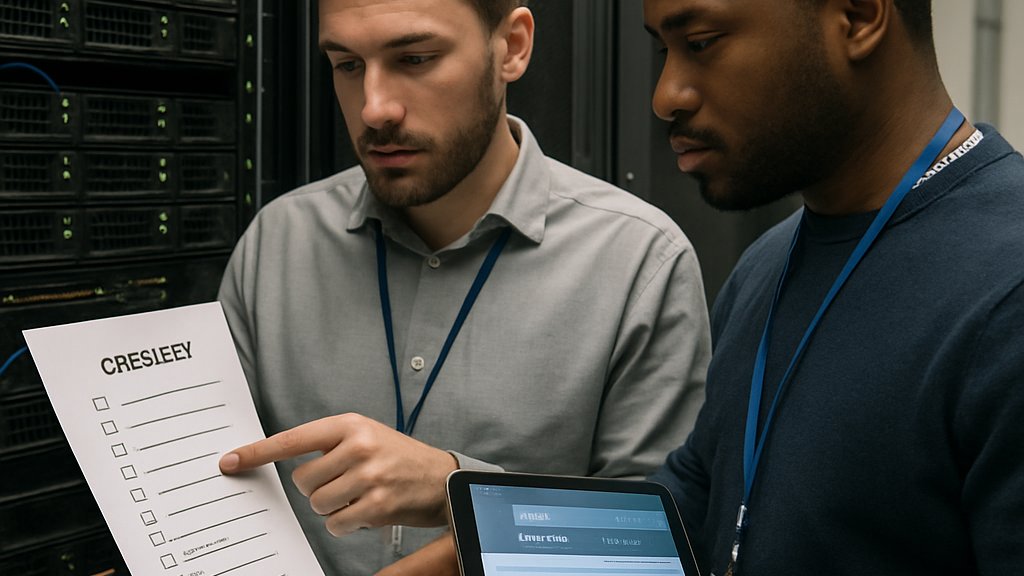
The following checklist summarizes proven practices.
- Enable automatic diff alerts for description changes on all MCP servers.
- Block calls from unregistered endpoints using strict allow lists.
- Run weekly agent benchmarking jobs that cover drift and tool reliability scenarios.
- Feed eval framework results into security dashboards for executive oversight.
Professionals can deepen assurance through the AI Quality Assurance™ certification.
Moreover, teams should schedule quarterly incident response drills that simulate hostile drift scenarios.
Consequently, staff familiarity shortens mean time to containment when issues arise.
Strong processes reinforce technical controls and sustain tool reliability over time.
Next, we explore outstanding research gaps that demand community focus.
Future Research And Gaps
Current drift datasets cover only months, not years, limiting longitudinal insight.
Furthermore, many exploit narratives remain confidential, constraining shared lessons.
Researchers behind the MCP Benchmark plan a public portal to crowdsource drift incident timelines.
In contrast, vendors hesitate to expose proprietary telemetry that might reveal client footprints.
Therefore, neutral foundations could host anonymized logs that balance transparency with liability concerns.
Academic teams also call for larger agent benchmarking trace repositories spanning dynamic environments and sectors.
Moreover, assessing tool reliability under extreme latency or partial outages remains an open agenda.
Subsequently, planned updates will integrate network chaos modules and adversarial content mutations.
The research community seeks broader data and standardized disclosure practices.
However, coordinated commitment from vendors and regulators remains essential for the next MCP Benchmark edition.
Conclusion And Action Steps
The MCP Benchmark exposes how minor description drift can derail even well governed agents.
Consequently, enterprises should couple the MCP Benchmark with robust hardening to prevent supply-chain compromise.
Continuous agent benchmarking, fueled by the MCP Benchmark datasets, highlights regressions before customers notice.
Moreover, disciplined processes keep servers trustworthy and maintain tool reliability at scale.
Investing now lowers risk while positioning teams for future MCP Benchmark iterations and stricter regulations.
Therefore, start tracking drift today and pursue specialized certifications to elevate organizational assurance.
Act, benchmark, and harden before drift acts on you.
Disclaimer: Some content may be AI-generated or assisted and is provided ‘as is’ for informational purposes only, without warranties of accuracy or completeness, and does not imply endorsement or affiliation.


