

AI CERTS
17 minutes ago
Nestlé GPU Breakthrough Slashes Analytics Costs
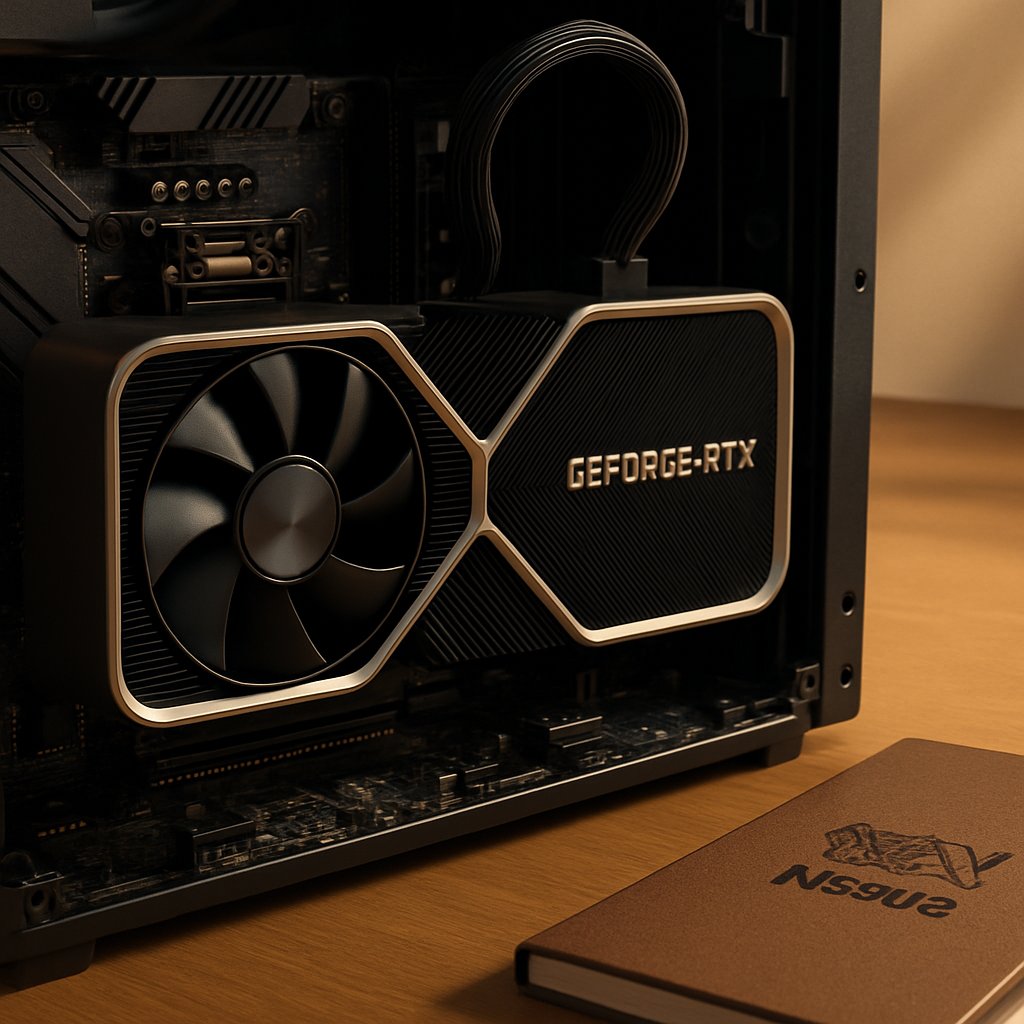
Meanwhile, Nestlé positions the result inside its broader Fuel for Growth transformation program. Therefore, the news resonates with finance chiefs chasing multi-billion-franc efficiency goals. This article dissects the timeline, technical stack, benefits, caveats, and verification priorities for practitioners.
GPU Shift At Nestlé
IBM revealed the expanded NVIDIA partnership at GTC on 16 March 2026. However, the headline spotlighted the Nestlé GPU pilot instead of experimental demos.
Arvind Krishna called data infrastructure the next competitive frontier during the keynote. Jensen Huang echoed him, stating that data provides ground truth for enterprise AI.
- 16 Mar 2026: Announcement
- 18 Mar 2026: IBM blog deep dive
- 23 Mar 2026: IT Jungle analysis
Chris Wright, Nestlé CIO, said faster refreshes guide daily supply decisions across 186 countries. Consequently, the pilot links technology to board-level cost objectives.
These events prove executive endorsement for the initiative. However, the raw numbers convey stronger evidence. Therefore, we now examine cost and latency metrics.
Reported Cost And Latency
IBM measured the CPU baseline at roughly fifteen minutes per data-mart refresh. In contrast, the Nestlé GPU path finished in three minutes using identical datasets. Meanwhile, both runs employed identical Presto SQL queries to maintain fairness.
Moreover, IBM and NVIDIA estimated 83% cost savings for the optimized cluster. Therefore, calculated price-performance improved about thirty times under their model.
- Baseline runtime: 15 minutes
- GPU runtime: 3 minutes
- Cost reduction: 83%
- Price-performance: 30×
These metrics trigger interest among CFOs and architects alike. Nevertheless, caveats lurk beneath headline ratios. Understanding the stack clarifies why performance scaled.
Technology Stack Explained
The project used IBM watsonx.data, a C++ variant of Presto running on Velox. Additionally, Velox handed columnar batches to NVIDIA cuDF kernels for parallel execution.
IBM Storage Scale streamed data directly to GPU memory, avoiding costly copies. Consequently, the engine sustained high throughput during complex joins across forty-four tables.
Experts at IT Jungle noted that storage orchestration mattered as much as raw silicon. In contrast, naive GPU offload often stalls on I/O contention.
- Storage layer: IBM Storage Scale
- SQL engine: Presto + Velox
- GPU library: cuDF
- Orchestration: watsonx.data
Meanwhile, Velox provides vectorized operators that map neatly onto GPU cores. Consequently, predicate pushdown reduces host-to-device traffic before kernels execute.
As a result, the Nestlé GPU architecture shows SQL workloads can exploit modern GPUs effectively. However, benefits never arrive free of caveats.
The stack reveals why performance improved dramatically. Nevertheless, understanding limits remains crucial. We now weigh benefits against risks.
Benefits And Caveats
First, faster refresh empowers planners to act on near real-time demand shifts. Moreover, analysts can test more scenarios because compute costs fall sharply.
Second, the reported cost savings dovetail with Nestlé’s Fuel for Growth milestones. Therefore, technology teams can frame the project as direct shareholder value.
Nevertheless, performance gains remain workload sensitive. Queries heavy on joins and aggregations benefit; lighter lookups may not justify GPU rental. Moreover, Presto workloads heavy on scalar functions see smaller GPU benefits.
Furthermore, GPU memory limits demand careful batching and early filtering. Academic studies show throughput collapses once data spills across the PCIe bus. Subsequently, performance heads must test compression formats, as some codecs hinder GPU decompression speed.
- Limited GPU memory capacity
- Data movement overhead
- Integration engineering effort
- Volatile hardware pricing
The Nestlé GPU pilot highlights these boundaries clearly. Consequently, cautious scoping becomes mandatory for future adopters.
Benefits appear large yet conditional. However, clear planning can mitigate many limits. Next, we assess broader enterprise impact.
Enterprise Implications Ahead
Large multinationals with unified data resemble Nestlé’s architecture. Consequently, they may repeat similar efficiency gains using GPUs.
Meanwhile, mid-sized firms might target single pain-point marts before scaling. In contrast, fragmented estates must invest in governance first. Additionally, data catalog maturity influences how quickly teams can migrate Presto schemas to GPUs.
Vendor product maps already tout GPU acceleration for everyday Presto SQL, not just machine learning. Moreover, cloud operators will revisit pricing tiers as demand profile diversifies.
CIOs writing budgets should embed sensitivity models for instance availability and energy tariffs. Therefore, internal benchmarks provide a hedge against marketing optimism.
The Nestlé GPU narrative reinforces how operational analytics can become a competitive lever. Nevertheless, each organization must validate its own numbers.
Broader impact depends on data discipline and cost tracking. Consequently, transparent verification grows central. Verification questions now dominate the discussion.
Verification Questions Remain
Independent labs still lack hardware, query, and pricing detail for replication. Consequently, reproducible benchmark releases stand as the logical next step.
Analysts urge IBM to publish workload scripts alongside per-minute infrastructure rates. Similarly, Nestlé could share power consumption deltas from the production pilot.
Furthermore, rival vendors may submit comparative benchmark reports within months. Such data will clarify true efficiency curves across engines.
- Which GPU models powered tests?
- Were spot discounts applied?
- How were engineering hours capitalized?
- Is full production rollout approved?
The Nestlé GPU story will mature only when these answers surface. In contrast, opacity will stall broader adoption.
Verification remains the final hurdle. However, transparent benchmarks could accelerate mainstream uptake. We close with key takeaways.
Nestlé GPU results place GPUs inside daily SQL pipelines, not only training clusters. Moreover, the project illustrates that efficiency gains require disciplined storage, orchestration, and cost accounting. However, true savings materialize only when workload characteristics align with the hardware profile. Consequently, organizations should design an internal benchmark before any purchase order.
The Nestlé GPU narrative style metrics can pair with carbon accounting to defend strategy. Nevertheless, scaling a Nestlé GPU approach demands transparent vendor disclosure. Professionals can deepen relevant skills through the AI Cloud Specialist™ certification and related curricula. Therefore, act now; validate workloads, upskill teams, and convert analytical latency into measurable savings.
Disclaimer: Some content may be AI-generated or assisted and is provided ‘as is’ for informational purposes only, without warranties of accuracy or completeness, and does not imply endorsement or affiliation.


