

AI CERTS
2 months ago
Musk Trial Spotlights Mars Tech Feasibility
Consequently, stakeholders assess what technology, funding, and governance must converge before astronauts settle permanently. This article unpacks the evidence, traces financial stakes near $80B, and examines potential industry shifts. Throughout, we scrutinize Court filings, engineer testimony, and commercial projections with a critical lens. Ultimately, professionals need clear insight to navigate policy, investment, and technical strategy. Therefore, let us explore how legal drama intersects with practical steps toward a sustainable red frontier.
Courtroom Drama Meets Space
Legal arguments stretched over five days as attorneys probed the early emails that founded OpenAI. Musk Trial observers learned that Musk pledged funding, yet resisted dilution of board influence. However, OpenAI lawyers produced messages suggesting he supported a for-profit arm before departing. Testimony from former directors depicted a shifting mission as AI costs soared beyond early estimates. In contrast, Musk framed profit caps as essential to attract the billions required for supercomputers.
Court filings reveal direct links between those funding debates and his parallel plan for a Mars City. Subsequently, Judge Patel admitted exhibits tracing money from Tesla stock sales into early AI research. These revelations close the gap between legal strategy and interplanetary aspiration. Consequently, investors now monitor both verdict timing and launch milestones in the same calendar. These intertwined calendars set the stage for technical realities, addressed next.
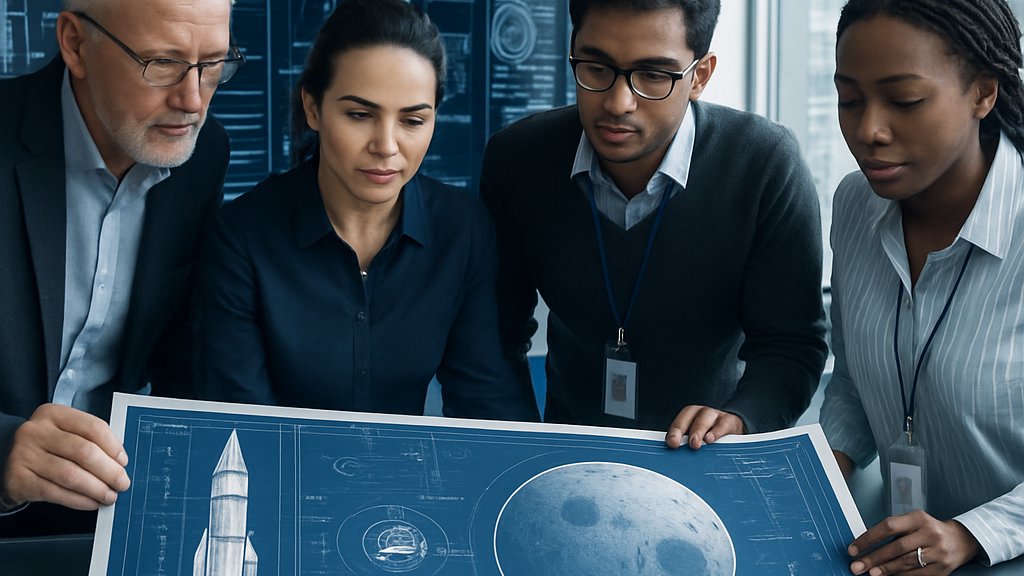
The Court narrative clarifies Musk’s dual objectives. Nevertheless, hardware realities may challenge the vision. Now we examine Starship’s progress and persistent gaps.
Starship Progress And Limits
SpaceX conducted four integrated flights since mid-2025, demonstrating rapid iteration after each explosion. Furthermore, FAA approvals expanded, permitting higher cadence launches from Boca Chica. Starship’s advertised 100-tonne payload promises cheaper mass delivery, yet numbers remain unverified by outsiders. Additionally, the Musk Trial amplified calls for verified vehicle data. Independent analysts still lack audited cost data, so the true per-flight figure hovers near $80B program totals.
Meanwhile, Scientific Reports modeled required propellant output for return vehicles and flagged multi-megawatt gaps. Testimony by aerospace professors referenced that study during the Musk Trial technical brief. Moreover, reliability remains uncertain until reuse cycles surpass double digits. Court-level scrutiny will intensify once Starship shifts from spectacle to commercial manifest. These operational unknowns feed directly into ISRU planning.
Starship shows promise but lacks proven cadence and economics. Consequently, surface resource systems face moving targets. Let us assess those ISRU hurdles.
ISRU Scale Up Challenge
MOXIE’s 122 grams prove oxygen extraction chemistry works on Mars. However, mission architects calculate ascent vehicles need thousands of kilograms, not grams. Therefore, engineers propose Sabatier plants producing methane alongside oxygen, powered by multi-megawatt reactors. NASA roadmaps list water extraction, liquefaction, and cryogenic storage as unresolved integration issues. In contrast, Musk tweets suggest timelines measured in single presidential terms.
Court exhibits include spreadsheets where SpaceX planners multiplied MOXIE output by one million. Subsequently, reviewers noted the scaling ignores downtime, dust storms, and maintenance logistics. City planners on Earth would never commission infrastructure without redundancy; Mars deserves equal caution. Consequently, experts promote phased pilots before committing life-critical propellant loops.
ISRU chemistry is validated, yet industrial scale remains speculative. Nevertheless, autonomy could narrow that gap. Next we examine AI autonomy’s role.
Autonomy Powers Mars Dreams
Signals from Mars take up to 22 minutes one way. Therefore, robots must handle faults, schedule tasks, and self-diagnose in harsh conditions. NASA and DARPA field tests show promising navigation and drilling autonomy advances. Additionally, xAI, Musk’s new venture, claims large multimodal models will supervise fleets of rovers. Cross-examination questioned whether such claims justified OpenAI funding disagreements.
Testimony from rival researchers cited image-segmentation failures under Martian dust lighting. Nevertheless, autonomy tech improves rapidly when validated on Earth analog missions. Professionals can deepen skills through the AI Researcher™ certification for advanced autonomous systems insight. Moreover, certification pathways align with agency procurement benchmarks for mission software.
Autonomy must mature before crews arrive. Consequently, funding choices hinge on credible software roadmaps. Economic stakes now demand attention.
Economics Behind $80B Vision
Space industry analysts aggregate launch development, propellant plants, habitat modules, and life support costs. Their mid-range scenario reaches approximately $80B by the first sustained outpost. During the Musk Trial, attorneys cited that projection to illustrate financing stakes. However, optimistic schedules assume Starship marginal cost falls below $20 million. In contrast, Scientific Reports warns each surface power system alone rivals ISS budgets. Capital markets worry because creeping scope may deter sovereign partners.
Moreover, rating agencies assess how multi-line revenue from lunar cargo could subsidize red-planet logistics. City branding also appears in investor decks, promising tourism and tech-hub spillovers. Nevertheless, every financial model hinges on eventual Martian exports, a still speculative assumption.
- $80B estimated total program outlay through first decade on Mars.
- 100+ tonnes target payload per Starship flight.
- Multi-MW surface power needed for propellant plants.
- 122 grams oxygen produced by MOXIE to date.
Projected budgets dwarf typical space programs. Therefore, reliable cost data remains crucial for stakeholder confidence. Ethical and governance debates complete the picture.
Governance Ethics Next Steps
Planetary protection protocols demand sterilization of outbound hardware to prevent contamination. Meanwhile, radiation, low gravity, and legal jurisdiction complicate settlement charters. The Musk Trial spotlights how corporate control debates will migrate off-planet. Furthermore, policymakers argue that an independent City council, not one billionaire, should set laws. Nevertheless, treaty updates proceed slowly through the United Nations framework. Consequently, some experts suggest phased governance sandboxes tied to mission milestones.
Testimony before congressional committees next month will include ethics scholars and aerospace CEOs. Additionally, DARPA has proposed open data requirements for AI models guiding life-support equipment. These discussions will shape investment appetite and recruitment pipelines.
Governance clarity reduces mission risk. Ultimately, a transparent framework unlocks aligned innovation. We conclude with actionable insights.
Mars settlement dreams now sit at the intersection of courtrooms, launchpads, and balance sheets. The Musk Trial underscores how legal narratives influence technical roadmaps and market sentiment. Moreover, sworn statements illuminate capital flows that decide which prototypes leave the ground. Consequently, implementing robust ISRU pilots and autonomous operations must precede any permanent Martian address.
Nevertheless, sustained progress on Starship, supportive policy, and transparent governance could transform bold vision into habitable settlement reality. Professionals should track each Musk Trial filing, every Starship test, and upcoming policy hearings. Therefore, rely on credible data and advance skills with certifications addressing autonomous mission demands. Explore the linked AI Researcher™ program and position yourself for the next wave of space innovation.
Disclaimer: Some content may be AI-generated or assisted and is provided ‘as is’ for informational purposes only, without warranties of accuracy or completeness, and does not imply endorsement or affiliation.


