

AI CERTS
55 minutes ago
Mercedes Breach Highlights AI Data Privacy Imperatives
Hudson Rock says stolen credentials bypassed multi-factor authentication. Moreover, analysts warn that credential markets are scaling faster than corporate defenses. Previous vendor exposures at Mercedes show recurring gaps. This report unpacks the campaign, risks, and next steps for technical leaders.
Campaign Overview Key Facts
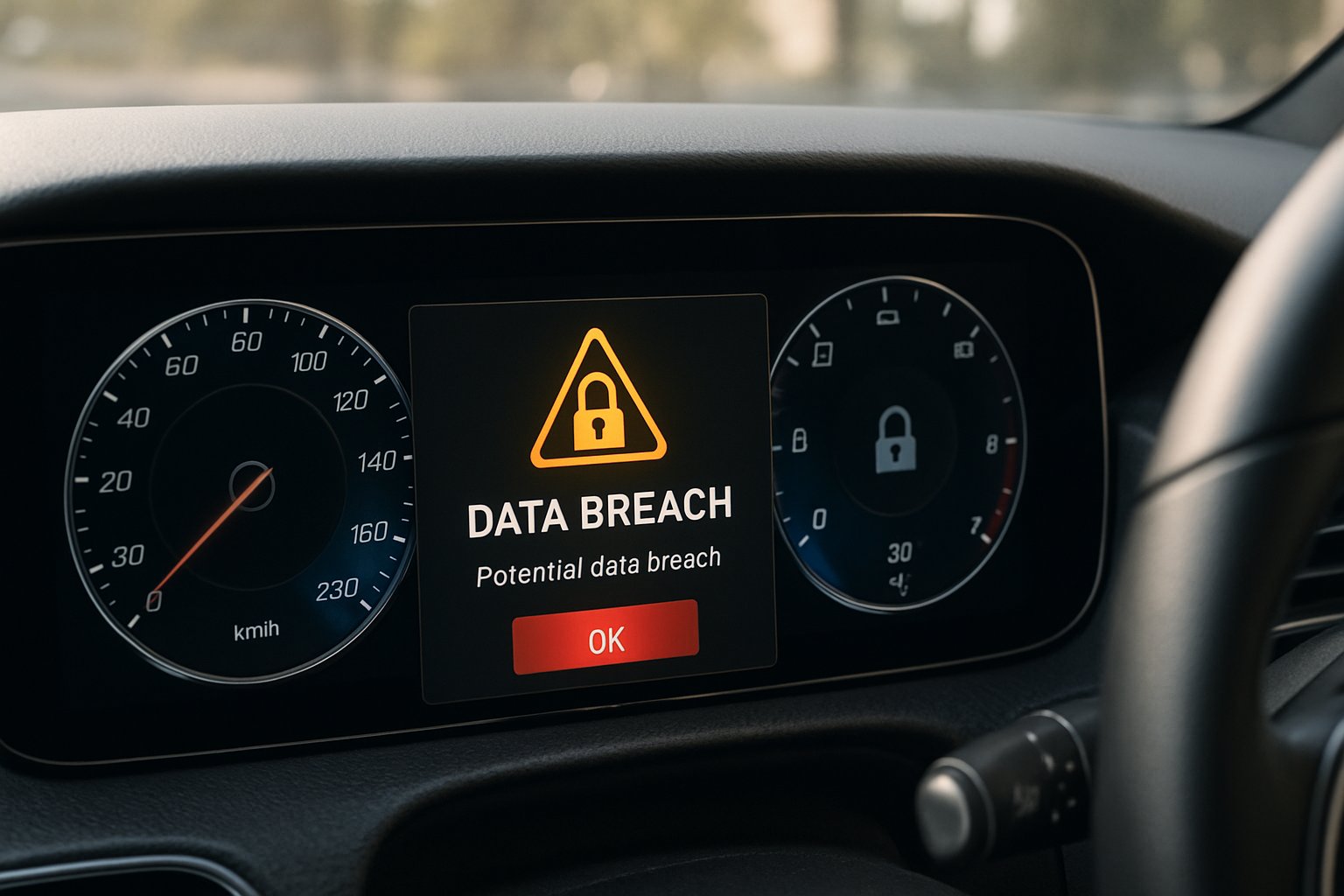
Investigators say Zestix acted as an initial access broker. They gained entry using credentials harvested by commodity infostealers. Consequently, the actor advertised multiple corporate archives, including the law firm's store. Hudson Rock identified fifty victims spanning automotive, aerospace, and healthcare. The Mercedes dataset alone weighs 18.3 gigabytes according to leaked catalog screenshots.
Key numbers illustrate the scale:
- 18.3 GB archive linked to Burris & Macomber, counsel for Mercedes.
- ~50 organizations featured in the Zestix sales portfolio.
- Terabytes of sensitive material offered for $30,000 in cryptocurrency.
- Analysts cite AI Data Privacy lapses as a central campaign enabler.
These figures confirm the operation's industrial scale. However, understanding the legal vendor link requires deeper inspection.
Legal Vendor Exposure Impact
Zestix did not hack Mercedes infrastructure directly. Instead, the actor accessed Burris & Macomber’s ShareFile instance. That repository stored warranty litigation documents and Customer contact lists. Moreover, VIN numbers, license plates, and addresses reportedly appear in sample screenshots. If legitimate, the exposure threatens case strategy confidentiality.
Customer plaintiffs could leverage leaked negotiations during settlement talks. Meanwhile, attackers might craft believable phishing tailored to vehicle owners. Such secondary risk amplifies potential regulatory penalties. AI Data Privacy principles stress strict third-party oversight to avoid cascading harm.
Vendor weaknesses often become the path of least resistance. Consequently, organizations must map supplier trust boundaries before incidents escalate.
Technical Root Cause Analysis
Hudson Rock attributes the compromise to credential reuse and absent multi-factor authentication. Infostealer logs contained valid usernames and passwords for the ShareFile portal. Therefore, Zestix authenticated normally and exfiltrated files over HTTPS. No zero-day exploitation appears in public evidence.
In contrast, enforcing MFA would likely have stopped simple login attempts. EFSS platforms support MFA yet many administrators leave it optional. Subsequently, a single infected endpoint can jeopardize entire legal workflows. AI Data Privacy frameworks recommend credential hygiene, device health checks, and encryption at rest. Continuous logs review remains critical for AI Data Privacy assurance.
The technical root sits squarely in identity management. Next, we examine earlier incidents showing a repeating pattern.
Historical Security Context View
Mercedes faced previous exposures that echo the present scenario. In 2021 a vendor misconfiguration leaked information on 1.6 million prospects. Less than one thousand Customer records contained sensitive identifiers and triggered notifications. Additionally, RedHunt Labs found a public GitHub token in 2024 revealing internal source code.
These episodes underline a persistent governance gap around secrets handling. Moreover, none involved sophisticated exploits; each started with exposed credentials or open repositories. AI Data Privacy maturity models advise continuous secrets scanning across development pipelines.
History suggests lessons remain only partially learned. Therefore, regulators watch for patterns indicating systemic negligence.
Regulatory And Litigation Fallout
United States Breach notification rules vary by state. Massachusetts and California impose disclosure within thirty days for personal information loss. Consequently, Burris & Macomber may face multi-state attorney general reviews. Class action filings typically follow public confirmation of a Breach involving consumer records.
The European Union would label the incident a likely GDPR event if EU owners appear. Moreover, securities regulators could ask the automaker to update risk disclosures. Civil penalties scale with record counts and negligence findings. AI Data Privacy compliance audits therefore gain priority during post-incident reviews.
Regulatory exposure often dwarfs initial technical costs. However, proactive controls can reduce settlement sizes moving forward.
Risk Mitigation Action Plan
Security leaders can apply several immediate safeguards. First, enforce MFA on every external file portal, regardless of user complaint. Second, monitor infostealer markets for leaked corporate credentials using threat-intel feeds. Third, mandate periodic password rotation for law firm partners handling sensitive content.
Additionally, lawyers should encrypt archives before cloud upload and enable download watermarks. Consequently, exfiltrated files lose operational value for attackers. AI Data Privacy training must extend beyond engineers to paralegals and outside counsel. Moreover, tabletop drills should incorporate AI Data Privacy breach scenarios. Professionals can enhance expertise with the AI Product Manager™ certification.
These measures lower attack surface and boost evidence of due diligence. Subsequently, leadership can focus on strategic resilience rather than firefighting.
Conclusion And Future Outlook
Zestix’s campaign reinforces a simple lesson. Credential hygiene remains the frontline of enterprise defense. However, vendor diligence, MFA enforcement, and continuous monitoring must all advance together. Failing that, another Breach will surface from the same underground marketplaces. Meanwhile, regulators are poised to scrutinize incident responses for AI Data Privacy compliance. Therefore, leaders should embed privacy safeguards into contracts, code, and culture. Act now, and consider upskilling teams through the above certification to stay ahead.
Disclaimer: Some content may be AI-generated or assisted and is provided ‘as is’ for informational purposes only, without warranties of accuracy or completeness, and does not imply endorsement or affiliation.


