

AI CERTS
2 months ago
Kenya Health AI Reform Faces Data Flaws and Legal Heat
Meanwhile, officials defend the same systems as indispensable weapons against multibillion-shilling health fraud. Investigative outlets Africa Uncensored, Lighthouse Reports and The Guardian published audit evidence on 4–5 May 2026. They reproduced the model, tested accuracy, and found systematic income overestimation for low-income families.
In contrast, wealthier households often enjoyed underestimated scores, lowering their statutory premiums. Therefore, equity objectives embedded within the national health reform appear dangerously compromised. The following analysis unpacks design choices, economic cost, legal oversight, and the broader impact of this contested rollout.
Algorithmic Design Concerns Exposed
Design scrutiny begins with the model’s training data, the 2021 Kenyan Continuous Household Survey. Moreover, investigators note poverty pockets were under-sampled, creating biased coefficients that misread extreme deprivation. Kenya Health AI predictions therefore drift when applied nationwide, especially across remote arid counties.
Proxy variables, such as roofing type or livestock ownership, correlate imperfectly with volatile informal earnings. Consequently, more than half of audited poor households landed in higher payment bands. Nevertheless, only 47–54% of households were placed correctly according to reconstructed tests, exposing severe flaws.
These diagnostic signals confirm fundamental flaws within the scoring architecture. However, the economic consequences demand closer attention next.
Kenyan Households Economic Burden
Field interviews show contribution demands reaching 10–20% of monthly income for some fishing families. Furthermore, national enrollment stands near twenty million, yet regular payers hover around five million. Facilities consequently report cash deficits, delaying reimbursements and stock purchases.
Audits quantify financial stress through the following figures:
- 2.75% statutory rate applied to informal workers’ predicted income.
- Common assigned monthly premium: KSh650, exceeding lowest band by over double.
- KSh3,500 extreme monthly charge surfaced in reconstructed cases.
- Over KSh10.6 billion fraud claims blocked, yet hospitals still face arrears.
In contrast, wealthier households often pay the minimum after underestimated scoring. Therefore, the cost distribution skews regressively, contradicting universal health promises. Kenya Health AI calculations amplify this unequal cost pattern across counties. These monetary pressures set the stage for competing narratives about system purpose. Financial evidence underlines the reform's escalating cost for vulnerable families. Meanwhile, officials highlight different numbers, focusing on fraud savings. Consequently, we examine those success claims now.
Fraud Detection Success Claims
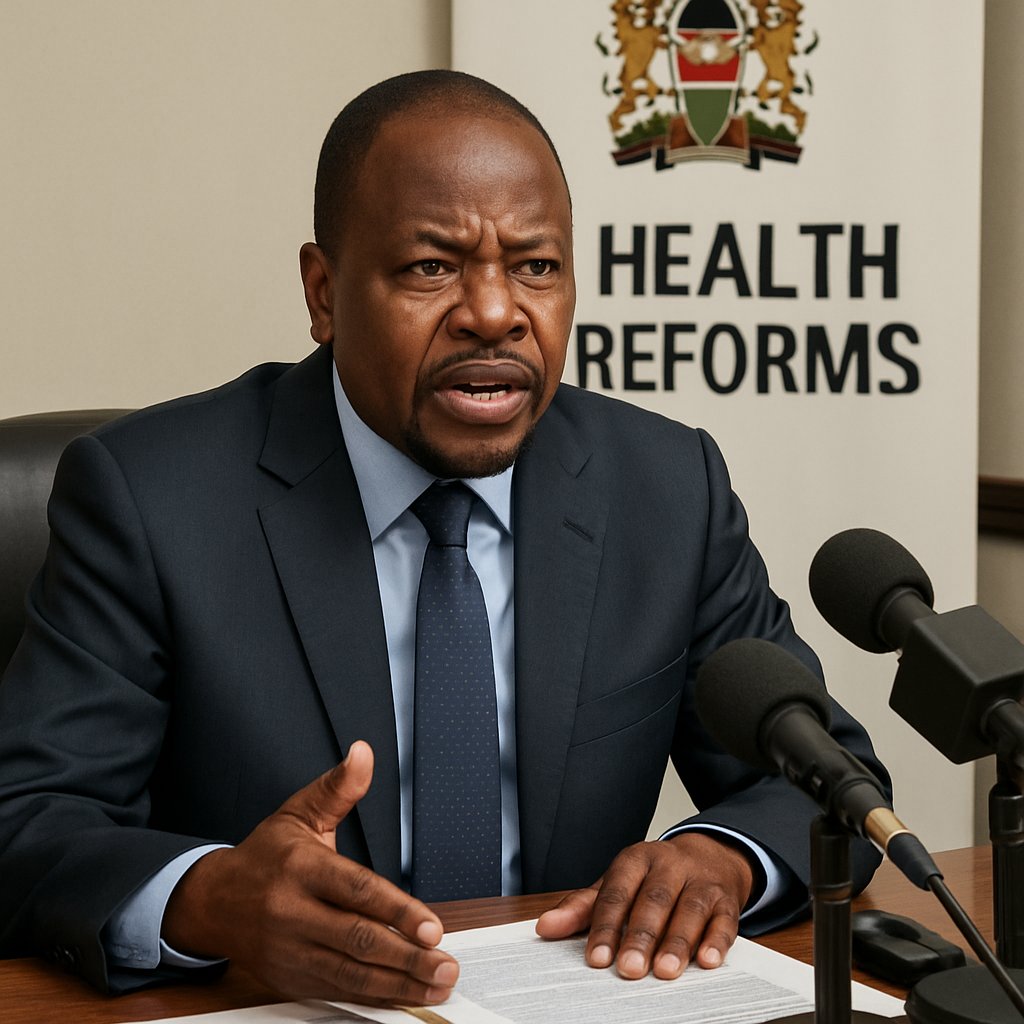
Health Cabinet Secretary Aden Duale touts AI analytics blocking ghost patients and false surgeries. Moreover, his ministry cites KSh11 billion in rejected claims across hundreds of facilities. Government spokespeople argue Kenya Health AI savings offset model flaws and sustain fund liquidity.
Independent auditors acknowledge tangible fraud reductions yet caution against conflating two separate objectives. Consequently, they recommend distinct governance for fraud modules and premium algorithms. These divergent frames feed legal debates addressed next.
Fraud savings appear real yet partial. Nevertheless, legal oversight now shapes allowable algorithmic boundaries.
Legal Oversight And Mandates
The High Court ruled in March 2026 after petitioners cited socio-economic rights violations. Although, the bench upheld statutory reforms, it declared the October 2024 rollout dangerously premature. Therefore, judges ordered a compliance plan within 90 days and quarterly progress reports.
In addition, the court emphasized transparency, directing SHA to publish model details and create appeals mechanisms. Auditor General teams subsequently intensified procurement audits of the IHITS digital backbone. Nevertheless, official disclosures remain incomplete, prolonging uncertainty for households awaiting rectification.
Judicial pressure forces the administration toward overdue governance reforms. However, Kenya Health AI now operates under strict judicial scrutiny. Accordingly, proposed fixes now enter focus.
Urgent Technical Fixes Proposed
IDinsight recommended retraining the model with fresher, more granular survey data. Moreover, they advised two-step logistic calibration to reduce extreme misclassifications among the poorest quintile. Kenya Health AI engineers reportedly implemented partial tweaks, yet external audits show minimal performance gains.
Experts outline three additional corrective actions:
- Conduct targeted household surveys to fill poverty pocket data gaps.
- Separate fraud detection code from premium calculation modules.
- Launch an open, time-bound appeals platform for contested scores.
Collectively, these tasks aim to cut classification flaws and rebuild credibility. Nevertheless, transparency remains the enabling backbone, explored next.
Critical Data Transparency Measures
Ombudsman intervention compelled SHA to release variable lists but not coefficient weights. Consequently, investigators reconstructed the algorithm independently and published code for peer scrutiny. Professionals can enhance their expertise with the AI+ Healthcare™ certification to audit similar systems.
Meanwhile, civil society groups push for publication of error metrics and regional confusion matrices. Moreover, they demand open APIs allowing citizens to query their predicted income bands. These transparency tools would empower households and researchers to measure real-world impact.
Public scrutiny strengthens Kenya Health AI accountability. Therefore, data openness directly supports sustainable reform progress. Broader policy themes now emerge.
Broader Policy Implications Explored
Kenya’s experiment resonates across low-income nations pursuing digitally financed universal coverage. In contrast, global reviews warn proxy means testing often fails the poorest everywhere. Therefore, multilateral funders face renewed calls to reconsider default reliance on algorithmic proxies.
Additionally, the case highlights governance tension between innovation and rights-based service delivery. Regulators may soon mandate independent impact assessments before national scale deployments. Subsequently, firms exporting health scoring tools must adjust business models for heightened scrutiny.
Kenya Health AI now serves as a global cautionary tale. However, targeted lessons could still transform the reform into a fairness benchmark. Actionable recommendations conclude the analysis.
Kenya Health AI now stands at a crossroads between exclusionary algorithms and equitable universal coverage. Investigations detailed serious flaws yet offered concrete technical and governance solutions. Furthermore, the High Court mandates provide a clear reform timetable. Consequently, transparent data publication, retrained models, and independent appeals could reverse negative impact trends.
Professionals, regulators, and funders must coordinate swiftly to cut cost burdens on low-income households. Moreover, adopting the recommended certification empowers auditors and engineers to safeguard public interest. Take decisive action today and explore the linked credential to shape the next, fairer Kenya Health AI chapter.
Disclaimer: Some content may be AI-generated or assisted and is provided ‘as is’ for informational purposes only, without warranties of accuracy or completeness, and does not imply endorsement or affiliation.


