

AI CERTS
6 days ago
Intel AI Infrastructure Shapes Next-Gen Data Centers
Therefore, practitioners must understand how each component advances cloud data centers and enterprise compute agendas. This article dissects the roadmap, partnerships, and market implications behind the evolving stack. Readers will gain actionable insight for procurement planning and technical validation.
Intel Systems Strategy Emerges
Intel’s AI narrative has shifted from isolated chips to integrated systems. Furthermore, recent revenue data show the pivot gaining traction. DCAI posted $5.1 billion in Q1 2026, up 22 percent year over year. Observers see Intel AI Infrastructure as the connective tissue linking those products. Leadership credits the broader Intel AI Infrastructure push for that rebound. Lip-Bu Tan states, “AI is reshaping how infrastructure is built and scaled.” In contrast, analysts warn that execution risks persist until independent benchmarks arrive.
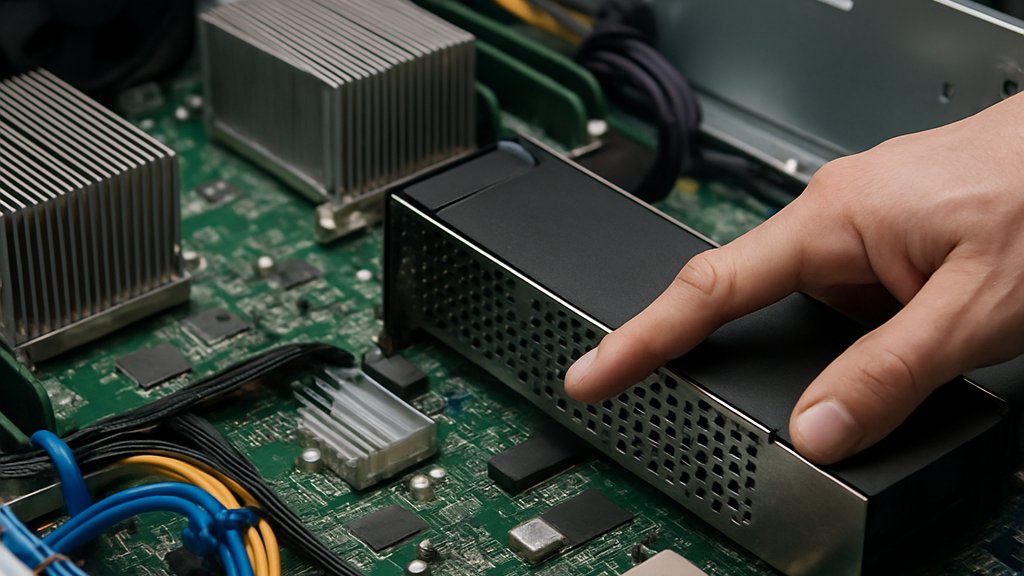
Intel now positions CPUs, GPUs, IPUs, and accelerators as a coordinated platform. This systems lens differentiates the vendor from GPU-centric competitors. Next, we examine how Intel Xeon 6+ anchors that platform.
Xeon 6+ Anchors Orchestration
Xeon 6+ debuts Intel’s 18A process with up to 288 Efficient-cores. Moreover, twelve DDR5 channels and 96 PCIe Gen5 lanes improve memory and I/O saturation. The Intel Xeon 6+ family serves as the orchestration engine for agentic AI pipelines.
Consequently, CPUs can manage tool invoking, data movement, and policy enforcement while accelerators crunch tensors. Kevork Kechichian claims AI scales as a coordinated system rather than discrete parts. Adopters expect Intel AI Infrastructure to expose consistent telemetry across heterogeneous nodes.
Independent architects observe that agentic workflows involve many short bursts, favoring responsive CPUs. Therefore, Intel Xeon appears central for both cloud data centers and on-prem enterprise compute clusters.
Early sampling customers report smoother concurrency when orchestration remains CPU-resident. Nevertheless, final proof awaits MLPerf numbers later this year. Partner accelerators will provide the heavy matrix throughput, as the next section details.
Partner Accelerators Complement Stack
Intel’s accelerator roadmap extends beyond Gaudi 3 training cards. Crescent Island GPU targets inference with 160 GB LPDDR5X and Xe architecture roots. Additionally, a SambaNova partnership introduces RDUs optimized for token decode tasks. Each device plugs into Intel AI Infrastructure software primitives like oneAPI and OpenVINO.
The heterogeneous blueprint splits prefill to GPUs, decode to RDUs, and orchestration to Intel Xeon. Analysts argue this mix reduces latency and rack power versus GPU-only deployments.
- Up to 2.5× workload uplift claimed for Xeon 6+ over prior generation.
- 160 GB on-package memory reduces host traffic for Crescent Island GPU.
- RDU token throughput targets sub-20 microsecond latency per generation step.
- Combined stack fits within typical 30 kW data center rack envelopes.
- Unified management through Intel AI Infrastructure reduces manual tuning overhead.
However, these numbers stem from vendor presentations and need third-party validation. Intel AI Infrastructure gains flexibility by pairing diverse accelerators with common software hooks. Such modularity simplifies procurement across cloud data centers and enterprise compute teams. Effective networking and IPU support must accompany those accelerators, which we cover next.
Networking And IPUs Advance
Low-latency links remain vital for disaggregated AI pipelines. Therefore, Intel refreshed Ethernet E835 adapters with Application Device Queues and 400 Gbps ports. The update tightens Ethernet networking integration between CPUs, GPUs, and RDUs.
Google is co-developing custom IPUs that offload storage, telemetry, and security tasks. Consequently, CPUs retain cycles for orchestration rather than housekeeping. Moreover, offload engines can enforce micro-segmentation, aligning with the AI Network Security™ certification for best practice. Professionals can validate skills through that program.
Ethernet networking plus IPUs form the nervous system of Intel AI Infrastructure. This fabric underpins performance consistency across enterprise compute workloads. Understanding competition helps contextualize these technical moves, which the following section explores.
Market Context And Competition
Nvidia still dominates training spend, capturing mindshare and software momentum. In contrast, Intel targets inference, a market projected to exceed $117 billion by 2026. Furthermore, AMD, Qualcomm, and Groq sell alternatives that challenge Intel’s accelerator roadmap narrative. Rivals rush to counter Intel AI Infrastructure with proprietary SDK bundles.
However, Intel’s x86 footprint gives it incumbency advantage inside many cloud data centers. Financially, the rising DCAI revenue indicates progress but not victory. Subsequently, investors will scrutinize margins as 18A manufacturing reaches volume.
Competitive pressure ensures aggressive cadence on every accelerator roadmap element. Nevertheless, software ecosystem maturity may decide ultimate winners. Enterprise buyers next ask how these developments translate into deployment playbooks.
Deployment Outlook For Enterprises
CIOs must evaluate workload patterns before adopting Intel AI Infrastructure blueprints. Moreover, agentic AI introduces sustained inference, making orchestration efficiency critical. Pilot studies pair Intel Xeon 6+ with Gaudi 3 on IBM Cloud for hybrid bursts. Meanwhile, enterprises running private LLMs appreciate Ethernet networking compatibility with existing top-of-rack switches.
Analysts recommend phased rollouts. Start with orchestration nodes, then integrate accelerators as software integration matures. Consequently, enterprises can avoid forklift upgrades while gaining incremental AI headroom. Additionally, professional teams can strengthen governance using the linked AI Network Security certification.
Success hinges on balanced node design, observability, and disciplined benchmarking. Certified staff accelerate adoption while containing operational risk. The conclusion distills these insights and offers next steps.
Key Takeaways And Action
Intel AI Infrastructure now spans CPUs, GPUs, RDUs, IPUs, and smart networks. Consequently, the company presents a credible alternative to GPU-centric silos. Ethernet networking upgrades simplify integration with existing fabrics. Competitive forces will drive rapid evolution of every accelerator roadmap component. Enterprises evaluating Intel AI Infrastructure should pilot mixed racks and track MLPerf results. Nevertheless, disciplined benchmarking and certified teams remain essential.
Organizations seeking an edge should explore Intel AI Infrastructure pilots, pursue independent performance tests, and upskill teams through the referenced AI Network Security program. Acting early can secure procurement leverage and technical leadership in the next wave of cloud data centers and enterprise compute innovation.
Disclaimer: Some content may be AI-generated or assisted and is provided ‘as is’ for informational purposes only, without warranties of accuracy or completeness, and does not imply endorsement or affiliation.


