

AI CERTs
3 months ago
Inside Apple AI chatbots powering private employee innovation
Apple’s secretive culture just revealed a new chapter.
Recent reports show the company quietly rolling out two new conversational tools, Enchanté and Enterprise Assistant.
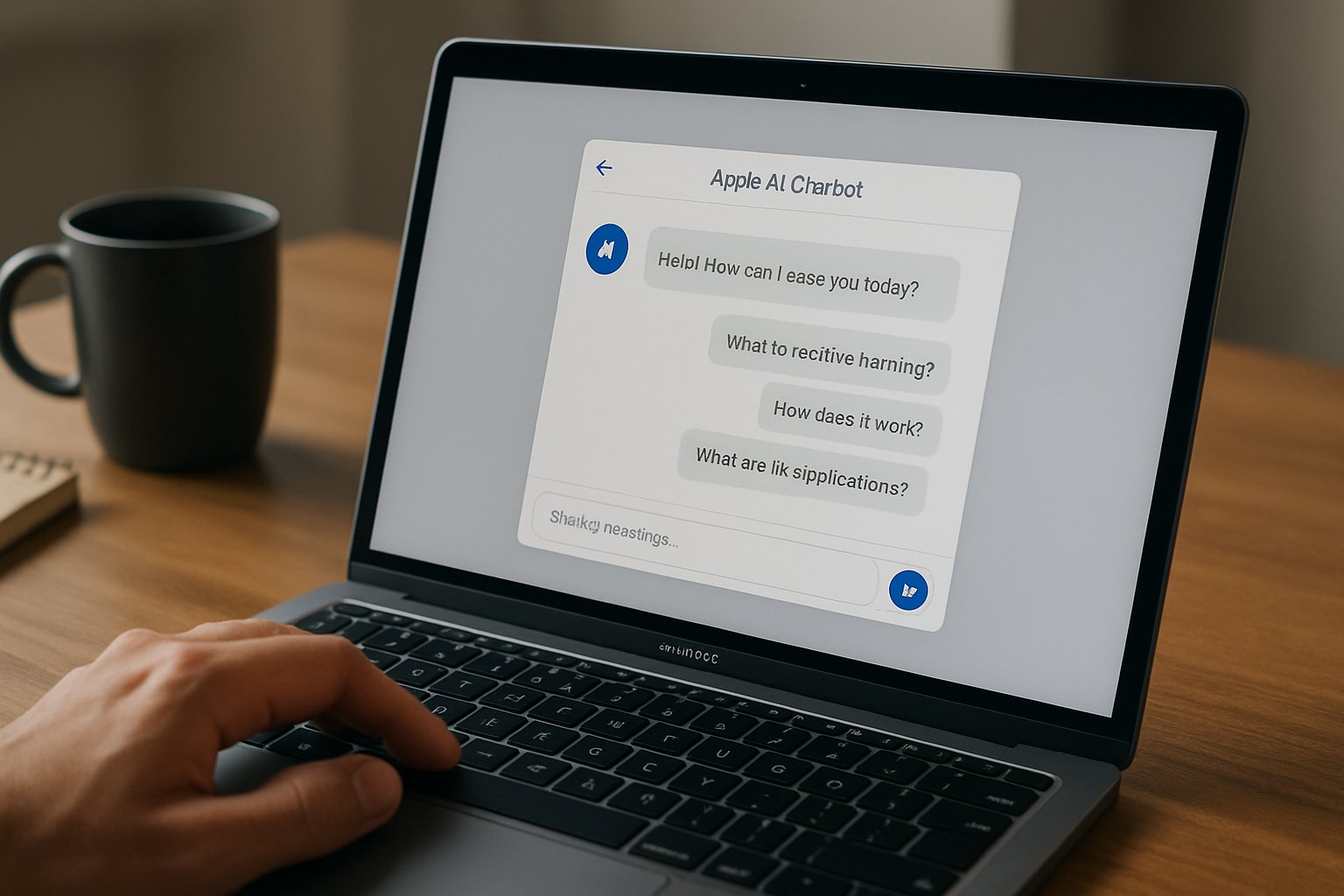
These Apple AI chatbots now assist thousands of staff inside Apple Park, accelerating brainstorming, policy searches, and prototype testing.
Furthermore, the move reverses Apple’s 2023 ban on external large language models for employee work.
Analysts view this internal AI deployment as a critical step toward a more capable, privacy-preserving Siri.
However, questions remain about data governance, public testing, and competitive timing against Microsoft and Google.
This article unpacks the rollout, features, security design, and strategic stakes behind Apple’s latest generative gamble.
Moreover, professionals will find actionable insights and certification resources to strengthen their own internal AI deployment journeys.
Early Apple Chatbots Rollout
Macworld broke the story on 21 January 2026 after interviewing multiple anonymous employees.
Sources said Enchanté reached a broad engineering audience in November 2025, with Enterprise Assistant following weeks later.
Meanwhile, Gurman previously revealed an earlier prototype, Veritas, that focused on next-generation Siri interactions.
Together, these tools now serve Apple’s 166,000 full-time employees, though adoption data remains unconfirmed.
Consequently, the internal program marks Apple’s most ambitious conversational rollout since launching Siri in 2011.
- May 2023 – External LLM ban for staff.
- September 2025 – Veritas pilot revealed.
- November 2025 – Enchanté wider launch.
- January 2026 – Public reporting confirms dual tools.
Employees describe Apple AI chatbots as fast, polished, and surprisingly humorous compared with earlier prototypes.
These dates highlight Apple’s deliberate, phased approach. Nevertheless, wider staff access signals rising confidence in model quality.
Consequently, understanding what the bots can do becomes essential.
Core Features And Tasks
Enchanté operates like ChatGPT yet integrates deeply with macOS file systems and internal documentation.
Employees draft code, summarize PDFs, and analyze images without sending content to uncontrolled clouds.
Additionally, side-by-side comparisons let testers rate Apple-built models against Anthropic Claude and Google Gemini.
Enterprise Assistant focuses on corporate knowledge, answering benefits, HR, and IT queries in conversational form.
Moreover, both assistants collect structured feedback that flows into Apple’s Foundation Models tuning pipeline.
- Idea generation and copy editing.
- Code explanation with inline references.
- Policy lookup across internal wikis.
- Document summarization with citation links.
During daily stand-ups, teams rely on Apple AI chatbots to draft testing plans and refactor legacy Objective-C modules.
These capabilities already reduce routine workload for engineers and administrators. However, new benefits arrive alongside technical complexities.
Therefore, an architectural review clarifies how Apple balances privacy with experimentation.
Architecture And Security Posture
Apple runs inference on device when feasible, then routes heavier tasks to Private Cloud Compute servers built in Houston.
Furthermore, data never reaches third-party endpoints unless explicitly selected for comparison testing.
In contrast, many rivals rely on public APIs, creating larger attack surfaces and regulatory headaches.
Employee prompts and ratings feed secure telemetry stores, providing high-quality labels for Apple researchers.
Such guarded internal AI deployment aligns with Apple’s marketing around privacy by design.
Security diagrams show Apple AI chatbots operating within hardened enclaves that isolate inference from personal identifiers.
The infrastructure limits exposure while enabling rapid iteration. Nevertheless, perfect security remains elusive given model hallucinations.
Subsequently, attention shifts to the measurable productivity upside and associated risks.
Productivity Gains And Risks
Not every task suits generative automation, yet early surveys describe notable efficiency jumps.
Macworld sources estimated time savings between 20 and 40 percent for documentation and bug-triage routines.
Moreover, streamlined knowledge retrieval frees engineers to focus on silicon design and user-level innovation.
However, hallucinated answers still appear, demanding vigilant human review before code or policy changes proceed.
Enterprise risk teams also monitor compliance exposure, especially where confidential product roadmaps intersect with model training.
Survey data confirms Apple AI chatbots cut document turnaround times from hours to minutes.
The net effect remains positive but conditional on robust oversight.
Consequently, competitive dynamics intensify as Apple weighs public release timelines.
Strategic Context And Competition
Globally, Microsoft and Google already monetize public copilots, gathering broad feedback at consumer scale.
Meanwhile, Apple AI chatbots stay internal, preserving secrecy yet forfeiting crowdsourced error reports.
Analysts debate whether the privacy dividend outweighs slower public data accumulation.
Consequently, Apple invests heavily in Houston server manufacturing to offset data scarcity with compute intensity.
Veritas testing also informs next-generation Siri, hinting at a staged consumer debut during 2026.
Apple’s cautious stance protects brand trust. Nevertheless, rivals may pull ahead in model refinement speed.
Scrutiny therefore turns to governance transparency and remaining knowledge gaps.
Governance And Data Gaps
Public documents never mention Enchanté or Enterprise Assistant by name, leaving policy observers reliant on leaks.
Additionally, retention intervals for prompt data remain undisclosed, creating ambiguity for regional privacy regulators.
Internal AI deployment best practice recommends clear opt-out mechanisms and audit trails for employee interactions.
Nevertheless, Apple’s feedback UI allows staff to flag sensitive output, suggesting some procedural safeguards exist.
External experts urge Apple to publish a white paper detailing oversight committees, red-team processes, and training filters.
Policy auditors continue probing how Apple AI chatbots log usage metrics without breaching workplace privacy laws.
Internal memos regulating Apple AI chatbots usage have not surfaced publicly.
Transparent governance could strengthen stakeholder confidence. However, Apple rarely reveals internal processes until products ship.
Future plans and industry impact now enter sharp focus.
Future Roadmap And Impacts
Tim Cook recently tied server investments to upcoming Apple Intelligence consumer features, signaling an ambitious schedule.
Moreover, documentation leaks suggest an on-device language model may power offline summarization within iOS 20.
Apple AI chatbots will likely graduate into public beta once hallucination rates drop below stringent thresholds.
Consequently, enterprises watching the rollout can adapt lessons on phased experimentation and privacy-centric scaling.
Such lessons will benefit any internal AI deployment roadmap inside regulated industries.
Professionals may also boost skills through the AI Foundation™ certification, preparing teams for secure chatbot integrations.
Apple’s roadmap hints at wider openings during 2026. Meanwhile, organizations refine their own strategies by observing Cupertino’s playbook.
Ultimately, several themes stand out across this evolving narrative.
Apple’s quiet experiment offers three clear lessons.
First, privacy-centric infrastructure can coexist with rapid iteration.
Second, structured feedback loops speed model refinement without public exposure.
Finally, phased internal AI deployment builds organizational trust before consumer launch.
Apple AI chatbots embody these principles, positioning Cupertino for a stronger Siri reboot in 2026.
Furthermore, technology leaders should emulate Apple’s approach while investing in their own skills.
Therefore, consider earning the AI Foundation™ certification to guide your next generative project.


