

AI CERTS
53 minutes ago
Industrial AI Policy Spurs U.S. Supply Chains and Jobs
However, rapid automation threatens routine jobs and overstretched grids. Federal Reserve leaders therefore monitor wage shocks and regional imbalances. Meanwhile, export controls already reach inside cloud APIs, proving the policy stakes. This article unpacks the debate, the numbers, and the choices now confronting corporate strategists.
Industrial AI Policy Debate
The phrase Industrial AI Policy migrated from think-tank memos into congressional hearings this spring. In contrast, earlier bills treated artificial intelligence mainly as a research domain. Policymakers now align chips, data centers, workforce, and export regimes under one industrial strategy. Furthermore, the White House blueprint dated 20 March 2026 outlines ten legislative levers. It recommends shared testing sandboxes, federal datasets, and loan guarantees for AI infrastructure. Experts say such cross-cutting support mirrors historic manufacturing incentives.
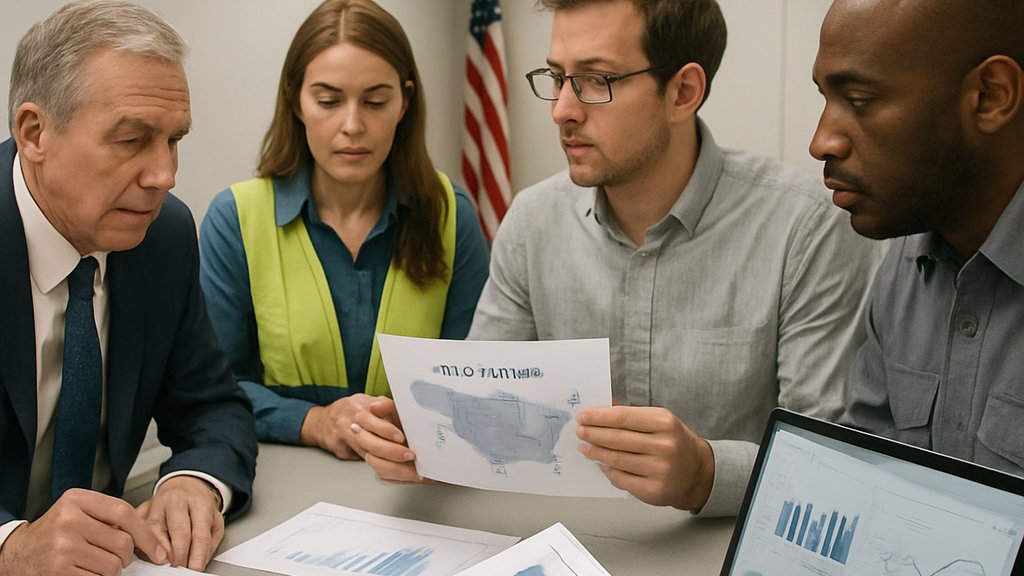
Economists supporting the blueprint stress links between AI adoption and economic competitiveness. Nevertheless, they caution that incentives alone will not protect displaced workers. Consequently, the panel calls for portable benefits and rapid retraining funds. The debate therefore centers on balance: speed versus social cushioning. Industrial AI Policy advocates argue that stalling would concede advanced manufacturing leadership to rivals.
Key Legislative Blueprint Highlights
- Shared regional testbeds for advanced manufacturing pilots.
- Loan guarantees for hyperscaler AI infrastructure buildouts.
- Tax credits tied to mineral-efficient chip designs.
- Mandatory workforce impact assessments for Industrial AI Policy grants.
- Export-control safe harbors for compliant open models.
The blueprint reframes AI adoption as a full-spectrum production challenge. However, difficult tradeoffs remain as Congress refines the package. Consequently, supply chains take center stage in the next phase of discussion.
Supply Chain Pressures Rise
Semiconductor demand has exploded alongside generative workloads. Morgan Stanley analysts now forecast $600-800 billion in 2026 U.S. hyperscaler capital expenditures. Moreover, water-cooled data center clusters multiply across the Great Lakes and desert counties. Circle of Blue reporters note gaps in permitting regimes and grid planning. Consequently, mayors scramble to integrate AI infrastructure into zoning maps. Industrial AI Policy champions fear such bottlenecks could slow domestic economic competitiveness gains.
The supply narrative extends beyond chips to critical minerals. In contrast, previous semiconductor subsidies overlooked upstream mining capacity. The panel therefore recommends strategic stockpiles and recycling mandates. Additionally, private buyers negotiate long-term offtake agreements to secure minerals. Advanced manufacturing firms demand clear disclosure on supply provenance.
Chipmakers already face eighteen-month lead times for advanced lithography tools. Therefore, the panel suggests accelerated depreciation schedules for fabrication equipment. Meanwhile, energy regulators examine time-of-use tariffs tailored for AI infrastructure clusters. Mineral traders flag price spikes in gallium and germanium following overseas export restrictions. Consequently, domestic recycling startups attract venture funding to recover rare earths from e-waste.
Infrastructure Stress Signals Emerge
Regional utilities warn that dozens of gigawatts will be needed for planned AI data centers. Meanwhile, drought-prone states debate water pricing structures. Industrial AI Policy discussions now include grid interconnection timelines and desalination credits. Therefore, investors want synchronized permits across energy, environment, and land-use agencies.
Supply chain fragility spans silicon, power, and water. Nevertheless, coordinated incentives could unlock resilient growth. Attention next shifts to the compliance landscape shaping corporate risk.
Export Controls Reshape Compliance
Commerce’s June move against Anthropic shocked the developer community. The agency treated remote access to frontier models as an export event. Consequently, firms revised onboarding, logging, and authentication policies. Lawyers call the episode a watershed for Industrial AI Policy enforcement. Policy watchers compare the change to past cryptography controls. However, the letter was softened after industry consultations.
Legal analysts highlight the interplay between export rules and economic competitiveness. If compliance costs soar, startups could move abroad. Therefore, lawmakers weigh narrower definitions for frontier thresholds. Advanced manufacturing alliances lobby for clear carve-outs for production-line models. Minerals trade associations also seek clarity on AI-driven geological analysis exports.
Commerce officials privately acknowledge limited auditing capacity for thousands of models. Subsequently, they discuss tiered licensing that scales with model compute thresholds. Civil-society groups demand transparency reports summarizing foreign access denials. Industrial strategy researchers propose shared compliance utilities to lower duplication costs.
Investment Outlook And Risks
Wall Street expects frontier model hosting to remain capital intensive. Some forecasts tie AI infrastructure spending to debt-financed megaprojects. Nevertheless, bond investors demand transparent revenue sharing and environmental safeguards. Industrial strategy proponents argue that blended public loans can crowd-in private capital. Industrial AI Policy backers cite historical rail subsidies as precedent.
Market analysts estimate compliance spending could top seven billion dollars annually by 2028. Moreover, insurers now price cyber policies based on model governance maturity. Consequently, boards treat oversight frameworks as material information for investors.
Export control uncertainty now factors into every boardroom forecast. However, skilled talent remains the decisive variable for success. The workforce dimension therefore deserves focused attention.
Building Inclusive Workforce Pipelines
U.S. vacancies for machine-learning engineers exceed 80,000 positions. Meanwhile, community colleges rush to revise advanced manufacturing curricula. Consequently, professional societies partner with state labor agencies to certify reskilled workers. Professionals can enhance their expertise with the AI Sustainability™ certification. Moreover, the certification aligns with Industrial AI Policy sustainability metrics.
Labor economists favour wage insurance during transition periods. In contrast, some executives propose equity sharing to retain scarce talent. Industrial strategy committees study previous defense programs for guidance. Additionally, unions request transparent algorithmic-management standards. These negotiations will decide whether AI boosts broad economic competitiveness or deepens inequality.
Regional apprenticeships pair data center operators with vocational schools. In contrast, some rural districts lack broadband needed for remote labs. Therefore, governors request federal grants to expand fiber and cloud credits. Industrial strategy advocates argue that infrastructure spending yields long-term tax revenue.
Retraining costs, according to Deloitte, may reach forty billion dollars across manufacturing sectors during the next five years. Nevertheless, success stories emerge where displaced technicians pivot to prompt engineering roles within months. Such transitions, experts argue, reinforce social license for large-scale automation programs.
Effective training and benefits can cushion disruption. Nevertheless, coherent funding remains essential. The coming budget cycle will test whether rhetoric meets reality.
Washington finally treats artificial intelligence as heavy industry rather than abstract software. Consequently, policy now joins supply chains, capital markets, and workforce programs. Export controls, mineral sourcing, and grid resilience define the new battleground. Moreover, coordinated industrial strategy could secure long-term economic competitiveness for the United States. Risks persist, yet agile governance can balance innovation with security. Professionals should follow legislative markups and participate in public-comment windows. Additionally, upskilling through recognized programs such as the AI Sustainability™ certification strengthens individual and national resilience. Act now, explore further resources, and help shape an inclusive AI-powered economy.
Disclaimer: Some content may be AI-generated or assisted and is provided ‘as is’ for informational purposes only, without warranties of accuracy or completeness, and does not imply endorsement or affiliation.


