

AI CERTs
6 months ago
How script breakdown engines revolutionize video pre-production
Budgets bleed when breakdowns drag. Consequently, producers now test artificial intelligence to slash pre-production delays. Among the hottest innovations are script breakdown engines that promise near-instant scene parsing.
These cloud platforms convert raw screenplays into tag-rich metadata for every department. Moreover, early adopters report hours saved, smoother handoffs, and faster greenlights. However, unions, regulators, and technologists debate accuracy, IP rights, and labor displacement. This report examines market momentum, core technology, vendor claims, and looming policy moves. It clarifies how script breakdown engines reshape production planning while raising fresh accountability questions.
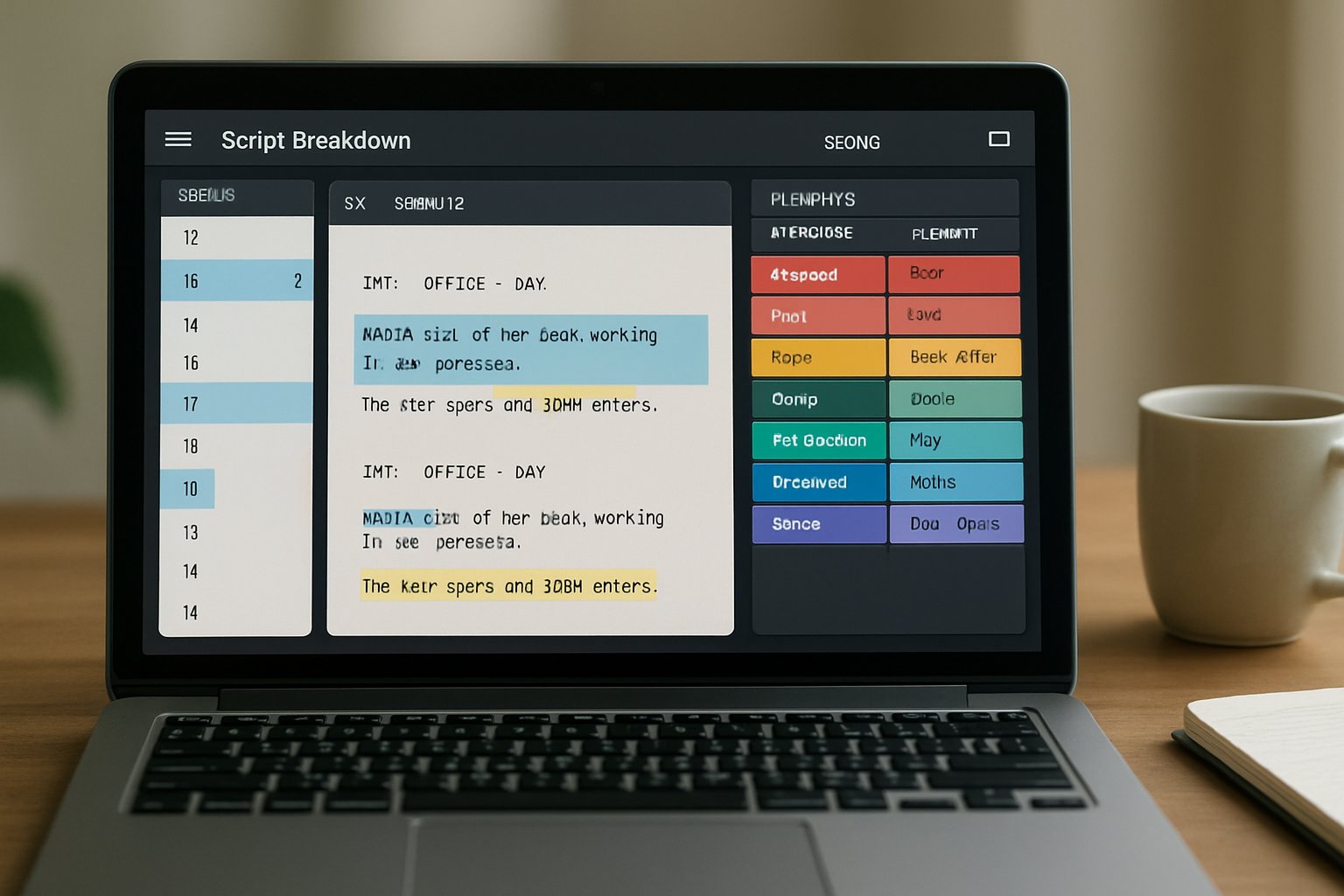
Rapid Market Momentum Rise
Industry data from 2024-2025 shows explosive adoption of script breakdown engines across global sets. Furthermore, specialist SaaS firms and established platforms added AI breakdown modules during that span.
Filmustage markets two-minute turnarounds, while Dramatify touts tenfold speed boosts. Statista meanwhile projects trillion-dollar generative AI spending within a decade, underscoring available capital.
Nevertheless, hard enterprise penetration figures remain scarce because studios pilot tools under non-disclosure agreements. BFI’s June 2025 foresight report therefore urged transparent metrics and independent benchmarks.
Momentum appears undeniable, yet verification lags. Consequently, the next section explores technology foundations.
Inside The Core Technology
Screenplay Parsing And Tagging
At their core, the engines apply natural language processing to screenplay formats like FDX, PDF, and Fountain. Additionally, named-entity models flag characters, props, VFX cues, and locations.
In contrast, legacy manual workflows relied on assistant directors armed with highlighters and spreadsheets. Script breakdown engines instead create structured metadata that exports directly into scheduling suites.
Moreover, the latest script breakdown engines detect implied elements such as shattered glass or rain ambience. Subsequently, revised scripts re-sync automatically, preserving version control.
Therefore, every department views consistent data without re-entering sheets. Automation improves precision yet still misreads sarcasm or aliases. Next, we inspect leading vendors and adoption patterns.
Teams embed the extracted metadata into production planning templates, smoothing bid preparation. Meanwhile, indie filmmakers leverage free creator tools that bundle AI breakdowns with storyboarding.
Vendor Landscape Snapshot Today
Dozens of contenders now crowd the field. Filmustage, Dramatify, Scriptflow, Prescene, and Blooper headline specialist rosters.
StudioBinder and Movie Magic incorporate AI modules yet position themselves as neutral integration hubs. Consequently, productions can mix and match script breakdown engines with legacy scheduling pipelines.
Underlying AI stacks vary. Some vendors fine-tune proprietary language models, while others route calls to OpenAI or Anthropic.
Professionals can enhance their expertise with the Bitcoin Security Professional™ certification, gaining broader insight into secure data workflows.
Competitive differentiation currently centers on speed, accuracy, and export breadth. However, benefits matter little without measurable impact, as the next section details.
Several platforms market all-in-one creator tools suites to attract small teams. Enterprise buyers demand seamless fit with existing production planning software to avoid change-management headaches.
Benefits And Use Cases
Quantified gains dominate marketing decks. Dramatify advertises tenfold acceleration, while Filmustage claims two minutes versus 100 hours.
Key advantages cluster around speed, collaboration, and decision support.
- Up to 100x faster first-pass breakdowns, freeing staff for creative tasks.
- Automatic DOOD, stripboard, and budget drafts that sync with production planning dashboards.
- Affordable creator tools bundles democratize studio-grade workflows for indie teams.
Moreover, early metadata guides VFX and location bids before final greenlight. Therefore, financiers gain visibility into cash exposure earlier.
Script breakdown engines also boost continuity because each revision propagates instantly. Additionally, mobile dashboards let on-set crews query script breakdown engines for real-time prop lists.
Time savings ripple across every schedule line. Nevertheless, substantial risks demand equal attention, as outlined next.
Risks And Key Limitations
Accuracy remains the first worry. Hallucinated props or stunts cascade into budget overruns.
Furthermore, BFI and guild leaders criticize opaque training datasets. In contrast, vendors insist on fair-use claims while exploring licensing models.
Job displacement presents another flashpoint. Automated tagging erodes entry-level spreadsheet duties, although AI-literate roles emerge.
Legal frameworks are still forming. Subsequently, studios demand indemnification clauses in contracts with script breakdown engines providers.
Stakeholders therefore walk a tightrope between efficiency and liability. The final section considers policy signals and next-year outlook.
Some creator tools already surface confidence scores to mitigate blind trust.
Future Outlook And Policy
Policymakers accelerate activity after the 2025 BFI report. Moreover, EU legislators study data licensing mandates for creative AI systems.
North American guild agreements now require AI usage disclosure on call sheets. Consequently, vendors race to build audit logs and watermarking features.
Independent benchmarks will shape 2026 budgets. Researchers plan head-to-head trials comparing manual teams against script breakdown engines on feature scripts.
Meanwhile, investors expect consolidation as differentiators narrow. Startups that bundle storyboarding and scheduling could outpace point solutions.
Regulation, proofs, and capital will decide winners. In closing, the market remains volatile yet promising.
Conclusion And Action Steps
AI has shifted pre-production from paperwork to real-time analytics. Consequently, script breakdown engines stand at the center of that shift.
Vendors boast dramatic speed gains, while unions seek transparent data practices. Moreover, policymakers push for licensing frameworks that protect rights without stifling innovation.
Professionals who master these systems will drive next-generation sets. Complementary production planning skills remain essential to convert automation into profit.
Additionally, adopting trusted creator tools ecosystems safeguards data flows. Explore emerging credentials and stay competitive.
Get started today by securing the linked certification and testing a pilot workflow.
Disclaimer: Some content may be AI-generated or assisted and is provided ‘as is’ for informational purposes only, without warranties of accuracy or completeness, and does not imply endorsement or affiliation.


