

AI CERTS
1 hour ago
CAD Generation AI Reshapes Mechanical Design Workflows
Readers will gain an objective snapshot of where the field stands today. Moreover, we outline practical next steps for professionals evaluating engineering AI in design. Evidence comes from vendors such as Autodesk, Microsoft, and Spectral Labs alongside peer-reviewed benchmarks. Therefore, decision makers can ground expectations in data, not hype.
Foundation Models Finally Arrive
Autodesk ignited interest in September 2025 by previewing neural CAD models inside Fusion and Forma. Meanwhile, Spectral Labs released SGS-1, a startup answer claiming fully manufacturable B-Rep output. Additionally, Microsoft open-sourced CADFusion, letting researchers test text and image prompts against open benchmarks.
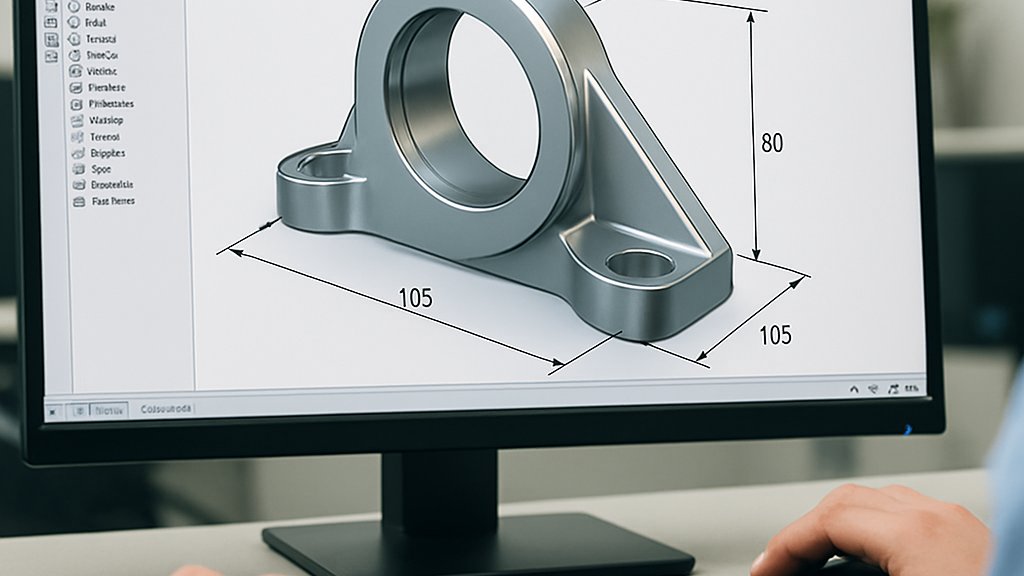
Academic labs have not stayed silent. Arko-T, introduced June 2026, maps natural language design instructions into parametric programs trained on 1.3 million Build123d files. Collectively, these launches signal that CAD Generation AI left the lab and entered pilot deployments.
Consequently, every major CAD vendor now lists generative roadmaps on investor decks. Nevertheless, advertised capabilities vary widely, requiring careful validation. This section sets the context for deeper technical discussion ahead. Key players have established early beachheads across commercial and research domains. Next, we examine the engineering breakthroughs enabling those claims.
Core Technical Advances Explained
Traditional text-to-mesh tools ignore constraints and editing requirements. In contrast, new foundation models encode relationships among sketches, dimensions, and features. Moreover, they generate boundary representations or STEP files consumable by downstream kernels. Parametric histories ensure engineers adjust hole diameters or wall thicknesses after generation.
Mike Haley claims these models reason about complete systems, not isolated surfaces. Therefore, a building sketch can update rooms and structural beams simultaneously. SGS-1 reports success on 75 medium-complexity prompts where mainstream large language models failed. Similarly, CADFusion improves visual alignment scores against GPT-4o baselines.
CAD Generation AI systems tackle these gaps with geometry-aware tokenization. Natural language design interfaces lower the barrier for cross-functional ideation. Benchmarks remain fragmented, yet early numbers impress. Arko-T tops several structured-CAD metrics while still trailing expert acceptance by 53 percent on NeuralCAD-Edit. Consequently, rigorous benchmarking must accompany any enterprise rollout. Technical progress has closed many gaps, especially around parametric fidelity. Let us now turn toward commercial traction and market size.
Market Size And Traction
Market research paints a growing, yet inconsistent, picture. Fortune Business Insights valued core CAD software at USD 2.77 billion in 2025, excluding broader engineering AI segments. ResearchAndMarkets listed figures between USD 12 billion and USD 20 billion, depending on scope. Meanwhile, generative AI for product design hit roughly USD 5.69 billion the same year. Analysts now carve out CAD Generation AI as a distinct growth segment. Some reports bundle mechanical design software with simulation suites, inflating totals.
- Autodesk demo registrations grew 300% quarter-over-quarter after the September reveal.
- Spectral Labs signed five pilot manufacturing partners within three months.
- Community downloads of CADFusion crossed 50,000, indicating research momentum.
Consequently, investors see headroom, yet procurement leaders demand evidence beyond demos. Clear benchmarks and ROI metrics will drive broader adoption. Monetary signals suggest strong curiosity across markets. However, opportunities must align with disciplined engineering objectives, discussed next.
Opportunities For Mechanical Design
Mechanical design workflows could gain the most immediate value. Text prompts describing a gear box may yield editable 3D parts within seconds. Additionally, voice assistants may soon propose fillet sizes based on load cases. Such speed frees engineers to evaluate performance, rather than draft sketches.
Teams integrating CAD Generation AI into PDM systems forecast shorter quoting cycles. Moreover, early users report fewer translation errors when exporting STEP files to CAM. SGS-1 claims manufacturable tolerances without manual cleanup, reducing rework rates. Natural language design means non-experts can contribute early concept sketches without CAD training. Engineering AI workflows align with digital thread strategies.
Professionals can deepen skills with the AI Construction Practitioner™ certification. Therefore, teams gain both tooling and talent advantages. Faster iteration and reduced rework define the upside. Yet unresolved technical gaps warrant close scrutiny, covered next.
Persistent Gaps And Risks
Despite hype, quality gaps remain stark. NeuralCAD-Edit shows foundation models lag expert acceptance by 53 percent. Moreover, spatial reasoning errors can compromise safety-critical assemblies. Privacy concerns loom when proprietary 3D parts feed training pipelines.
Model cards warn about harmful design generation and bias in datasets. Consequently, governance frameworks must accompany any deployment. Benchmarks also fragment, making vendor claims hard to compare. Performance variability across CAD Generation AI implementations complicates procurement decisions.
Nevertheless, transparent evaluation protocols are emerging from academic consortia. Industry collaboration around standardized metrics could accelerate trust. Gaps span accuracy, safety, and evaluation consistency. Addressing them is vital for roadmaps discussed next.
Roadmap And Next Steps
Enterprises should begin with small, well-scoped pilots. Startups like Spectral Labs often provide sandbox access for this stage. Furthermore, pair CAD Generation AI tools with measurement dashboards tracking cycle time and rework. Parallel talent development remains critical.
Suggested sequence follows.
- Establish benchmark baselines using open datasets such as NeuralCAD-Edit.
- Select one 3D parts family and generate prototypes via text prompts.
- Compare manufacturability against traditional mechanical design efforts.
- Iterate security reviews covering data sovereignty and IP leakage.
- Scale gradually after cost-benefit ratios validate investment.
Moreover, engage certification programs to upskill multidisciplinary teams. Consequently, organizations align human expertise with advancing automation. A phased roadmap mitigates risk while capturing early value. The final section summarizes overall insights and next actions.
CAD Generation AI now sits at a pivotal threshold. Foundation models can already produce editable 3D parts from natural language design directions. Market indicators show growing traction, yet rigorous benchmarks expose persistent accuracy gaps. Nevertheless, disciplined pilots, workforce training, and transparent evaluation enable safe progress. Therefore, leaders should explore small deployments while investing in skills and governance. Leaders can deepen knowledge via the above AI Construction Practitioner™ certification and track new benchmark releases. Act now to shape, not chase, the future of mechanical design automation.
Disclaimer: Some content may be AI-generated or assisted and is provided ‘as is’ for informational purposes only, without warranties of accuracy or completeness, and does not imply endorsement or affiliation.


