

AI CERTS
2 months ago
Hong Kong AI: Sovereign DeepSeek Model Runs on Huawei Chips
Moreover, policymakers emphasise trilingual service delivery, data protection, and reduced reliance on foreign clouds. Meanwhile, users are flocking to HKChat, the first consumer application powered by the home grown model.
Industry watchers see the project as a crucial stress test for local infrastructure and governance. Therefore, understanding the timeline, technology, and political context is essential for technical leaders. The following analysis unpacks key milestones, hardware shifts, enterprise traction, and open risks. Consequently, readers will gain actionable insight into building compliant deployments inside the territory. Such clarity positions businesses to join the unfolding Hong Kong AI ecosystem confidently.
Sovereign Vision Emerges Boldly
HKGAI frames its work as a sovereign intelligence stack tailored to Cantonese, Mandarin, and English residents. Furthermore, the centre claims full control over data pipelines, training code, and deployment choices. This stance echoes global debates about strategic autonomy and technological resilience. In contrast, multinational clouds still dominate most enterprise workloads inside the city. Consequently, HKGAI positions Hong Kong AI as a public infrastructure layer that complements international offerings.
These priorities clarify why leadership invests heavily in research capacity. However, technical results matter most, so the next section dissects DeepSeek origins.
DeepSeek Origins And Impact
DeepSeek began as an open source project in Hangzhou targeted at cost efficient mixture-of-experts design. Moreover, the model family quickly iterated from R1 to the recently previewed V4 release. Developers praise its documentation, performance, and permissive licensing. Nevertheless, Anthropic accused DeepSeek engineers of industrial scale distillation using 24,000 fraudulent Claude accounts.
Regulators in Washington subsequently hinted at expanded export controls covering advanced chips and training resources. Therefore, HKGAI selected DeepSeek yet also pursued independent training data to mitigate provenance concerns.
These developments set the stage for Hong Kong AI adoption detailed next.
HKGAI V1 Public Debut
July 2025 saw the HKGAI-V1 paper land on arXiv with 67 pages of technical detail. Additionally, the team performed full parameter fine tuning on a 120-billion parameter DeepSeek base model. A retrieval augmented pipeline grounded answers in government gazettes, MTR schedules, and bilingual weather alerts. HKChat launched in November and attracted about 90,000 users during its first week. Subsequently, registered downloads surpassed 720,000 by April 2026, according to HKUST.
- 90,000 first-week users, SCMP reported.
- 630,000 downloads within two months, Hong Kong Business stated.
- 720,000 total downloads by April 2026, HKUST confirmed.
- Three language support covering Cantonese, Mandarin, English.
- RAG layer improved regional factual recall by 21%, internal testing showed.
Collectively, these numbers prove sustained curiosity about a truly regional assistant. Yet hardware economics soon demanded optimisation, leading to the Huawei shift explored below.
Shift Toward Huawei Chips
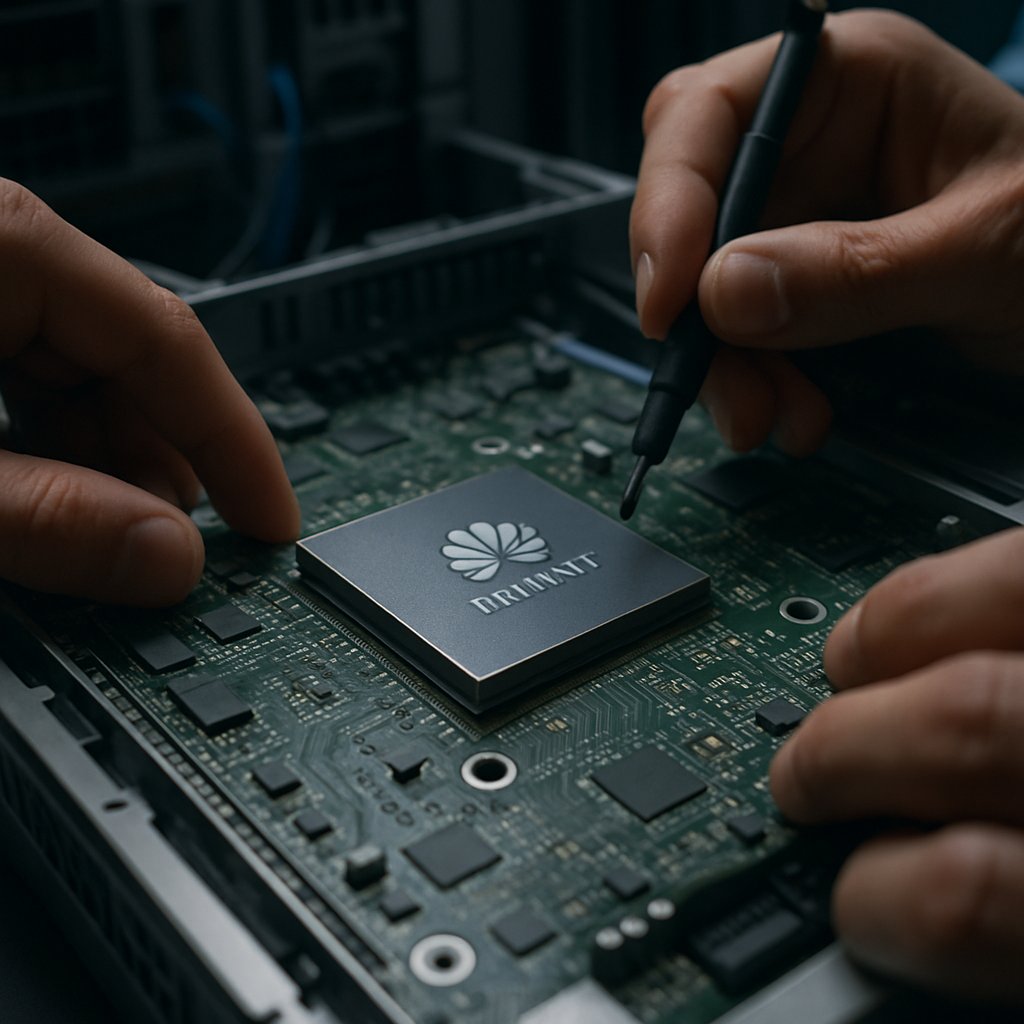
DeepSeek V4 previewed in April 2026 with 1.6-trillion parameters and native Huawei Ascend compatibility. Consequently, HKGAI announced that V3 would inherit the architecture and run on those chips inside Hong Kong. Engineers expect inference cost reductions of up to 38% versus Nvidia A100 clusters. Moreover, domestic hardware eases future export control uncertainties for Hong Kong AI researchers. In contrast, some multinational banks worry about Ascend supply chain resilience and tooling maturity. Nevertheless, pilot benchmarks show comparable throughput once software stacks are tuned.
These findings highlight both opportunity and caution. The enterprise adoption section now assesses commercial reactions.
Enterprise Adoption Accelerates Rapidly
DYXnet packaged "DeepSeek-in-a-Box" to deliver on-prem deployments for finance, healthcare, and logistics clients. Furthermore, Baidu’s Qianfan platform exposed the same architecture family through a Hong Kong endpoint. Regional systems integrators cite reduced latency, audit logging, and bilingual customization as main selling points. Consequently, procurement managers list sovereign posture among top five decision factors this quarter. A recent survey of 42 CIOs found 61% piloting at least one Hong Kong AI workload.
Strong vendor support propels adoption beyond early experiments. Yet unresolved legal questions continue to shape planning, as the following section explains.
Governance, IP, Safety Questions
Anthropic’s February allegations reignited longstanding concerns about data provenance within open systems. Moreover, Hong Kong privacy laws require explicit consent before storing identifiable user prompts. HKGAI asserts that HKChat logs reside on local servers isolated from mainland networks. Nevertheless, auditors request independent validation of retention periods and anonymisation protocols. Therefore, legal counsel advises enterprise buyers to secure indemnification clauses covering IP infringement. Industry bodies subsequently drafted a voluntary assurance framework aligned with ISO-42001.
Collectively, these measures create a maturing compliance landscape. The skills section now considers how talent can keep pace.
Talent, Skills, Certification Path
Demand for engineers versed in mixture-of-experts tuning, token streaming, and Ascend optimisation is surging. Consequently, universities have added dedicated Hong Kong AI practicum modules to postgraduate courses. Professionals can enhance their expertise with the AI Developer™ certification. Moreover, HKGAI plans quarterly open datasets and benchmark competitions to nurture local research. Managers prefer candidates who understand alignment trade-offs, policy shifts, and chip roadmaps. Subsequently, salaries for senior LLM engineers in the city have risen 22% since 2024.
These upskilling avenues ensure a robust pipeline of talent. The conclusion distils critical lessons for leaders.
Conclusion
Hong Kong AI now stands at a pivotal crossroads between sovereignty, capability, and global scrutiny. DeepSeek technology delivers impressive scale, yet governance frameworks must evolve just as quickly. Enterprises that pilot the local model today will shape tomorrow’s service standards. Moreover, hardware diversification through Huawei chips provides resilience provided supply chains mature reliably. Consequently, teams should invest in rigorous evaluations and continuous talent development. Embrace certifications, pursue shared benchmarks, and join the widening Hong Kong AI community to lead responsibly. With deliberate strategy, Hong Kong AI efforts can inspire other regions seeking independent innovation.
Disclaimer: Some content may be AI-generated or assisted and is provided ‘as is’ for informational purposes only, without warranties of accuracy or completeness, and does not imply endorsement or affiliation.


