

AI CERTS
1 month ago
Hans Holbein AI Study Reidentifies Anne Boleyn Portrait
Therefore, the team argues that a drawing long catalogued as “An Unidentified Woman” merits stronger consideration as a lifetime likeness of Henry VIII’s second queen. Nevertheless, the authors frame their claim as probabilistic, not absolute.
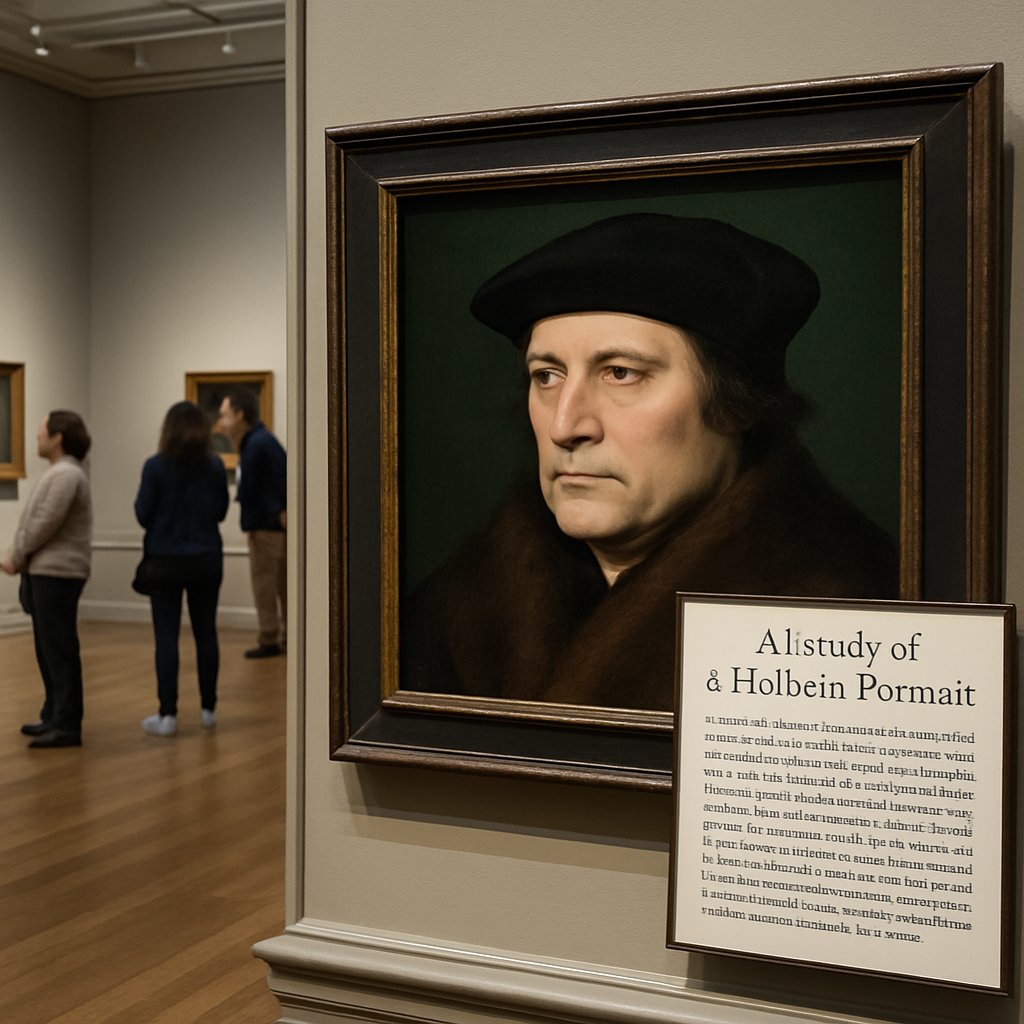
Public debate grew quickly after publication. In contrast, many art historians defend traditional connoisseurship over algorithmic analysis. Yet the conversation signals a wider technological shift inside museum studies.
Study Reveals New Likelihood
The March 2026 paper compares 82 Tudor images using AdaFace embeddings. Subsequently, RCIN 912190 registered a 76.9 similarity score against Elizabeth I’s authenticated portrait. Meanwhile, the Windsor sketch labelled “Anne Boleyn” scored 75.4. Although the gap appears modest, cluster mapping strengthened confidence.
Davies labels the approach the “Working Likeness Methodology.” Furthermore, computational findings were cross-checked with documentary traces, sitter inscriptions, and conservation notes. Consequently, the multidisciplinary weave lends weight to the suggested reassignment.
Two ideas emerge. First, biometric clustering can quantify facial structure beyond stylistic surface. Second, numerical evidence gains force when anchored in archival context.
These points outline why the unidentified sheet may depict Anne Boleyn. However, technical procedures still require critical scrutiny, which the next section addresses.
Facial Recognition Methodology Explained
AdaFace converts each face into a 512-dimension vector. Consequently, cosine similarities indicate closeness between images. The authors remapped raw scores to a 0–100 scale for readability. Additionally, they validated thresholds using documented siblings Mary and Henry Howard, who scored 85.5.
Importantly, the pipeline limited inputs to Holbein’s life-drawn sketches, reducing style noise. Moreover, cross-medium comparisons with later oil portraits served as external checks. Nevertheless, Ugail notes that clustering trends matter more than any single number.
Art historians worry that chalk shading and paper aging distort biometric signals. In contrast, computer scientists counter that large-scale embedding spaces absorb moderate stylistic drift.
The methodology mixes algorithms and caution. Yet lingering doubts persist, leading us to examine core figures next.
Key Data Points Unpacked
Several statistics anchor the discussion:
- Only 12 of 81 preparatory sketches have contemporary documentation (~14.8%)
- RCIN 912190 similarity to Elizabeth I: 76.9
- RCIN 912189 similarity to Elizabeth I: 75.4
- Sibling benchmark Mary/Henry Howard: 85.5
- Dataset size: 82 images across four institutions
Furthermore, the study received peer review between November 2025 and March 2026. Therefore, the timeline demonstrates academic vetting. Moreover, open-access publication allows independent replication because code excerpts accompany the article.
These numbers indicate meaningful, though not definitive, shifts in attribution probability. However, data alone cannot silence sceptics, so the argument’s strengths and gaps deserve balanced review.
Supportive Arguments And Limitations
Proponents praise the study’s reproducible metrics and transparent workflow. Additionally, quantitative clustering offers a fresh lens on portrait attribution. Consequently, museums gain a scalable tool for rediscovering sitters.
Critics emphasise model bias toward modern photographs. Nevertheless, Davies counters that restricting inputs to sixteenth-century sketches mitigates style drift. Furthermore, small similarity gaps invite cautious interpretation.
Ethical concerns also surface. In contrast, the authors stress that Holbein AI acts as an “evidential filter,” never a solitary judge. Museums remain the final arbiters after material and historical checks.
Supporters and sceptics both contribute essential perspectives. However, their dialogue would stall without broader sector engagement, explored below.
Sector Reactions And Debate
Bendor Grosvenor calls the technology “profoundly misplaced.” Conversely, Royal Collection Trust welcomes new evidence and ongoing analysis. Media outlets amplify both voices, fueling public fascination.
Meanwhile, computational scientists laud interdisciplinary collaboration. Additionally, heritage watchdogs urge robust oversight when applying surveillance-grade tools to cultural assets. Consequently, professional guidelines may soon formalise best practices.
Industry observers suggest upskilling curators in data literacy. Professionals can enhance their expertise with the AI Researcher™ certification. Moreover, shared vocabulary eases cross-field dialogue.
The conversation underscores technology’s disruptive potential. However, practical next steps depend on planned verification work.
Future Research And Verification
Davies and colleagues plan higher-resolution scans and pigment tests. Additionally, the Royal Collection may release conservation files for independent review. Consequently, material science could confirm or challenge the AI-driven hypothesis.
Further replication of the Holbein AI pipeline requires open code and raw embeddings. Moreover, comparing algorithmic outputs against stylistic expertise will refine attribution protocols. Subsequently, multi-spectral imaging might detect sketch revisions hinting at sitter identity.
Institutions also weigh visitor engagement. In contrast, updating wall labels without exhaustive consensus risks controversy.
Next steps promise richer evidence streams. However, readers still need a concise round-up, offered in the closing section.
Final Insights And Actions
The Holbein AI study redraws debates over Tudor portrait accuracy. Moreover, its blend of facial recognition, documentary research, and peer review offers a compelling, although provisional, discovery path. Consequently, museums and researchers must balance algorithmic promise with historical nuance.
Professionals should monitor replication efforts, engage in open data discussions, and pursue targeted certifications that bridge art and technology. Therefore, continuing education remains vital for trustworthy innovation.
Holbein scholarship may soon shift again, yet disciplined collaboration will anchor future findings.
Disclaimer: Some content may be AI-generated or assisted and is provided ‘as is’ for informational purposes only, without warranties of accuracy or completeness, and does not imply endorsement or affiliation.


