

AI CERTS
1 hour ago
Governments Boost Mistral Europe Deals
Meanwhile, system integrators and chip makers pour capital into the Paris venture. ASML led a €1.3 billion round, underscoring European industrial backing. Additionally, Mistral secured $830 million debt for a domestic 13,800-GPU data center. These moves aim to guarantee sovereign AI capacity for state workloads. Nevertheless, critics warn of vendor consolidation and partial openness. Therefore, understanding how Mistral Europe collaborates with ministries matters for every technology leader.
Government Deals Accelerate Rapidly
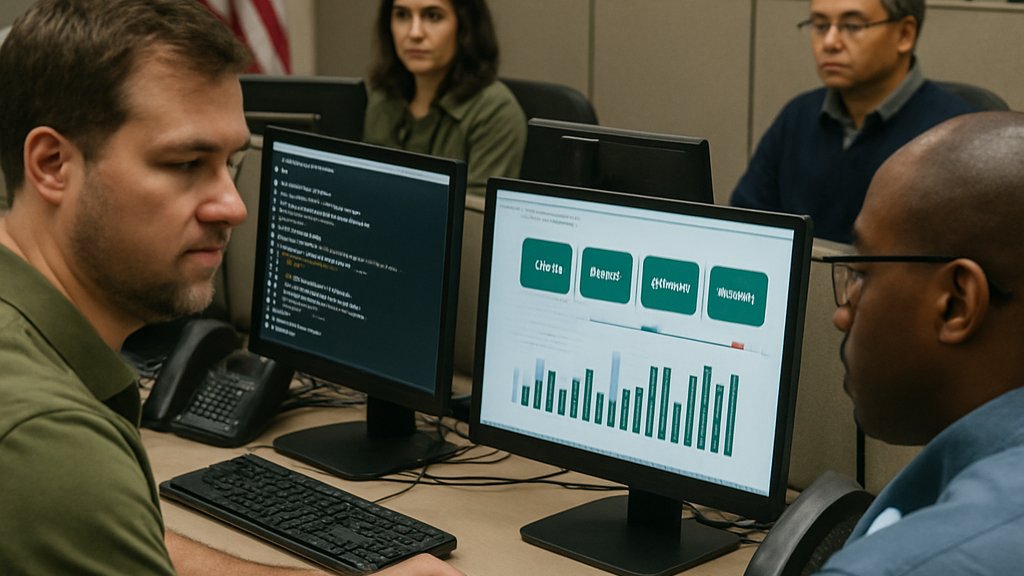
France set the tone by notifying a framework agreement with Mistral on 16 December 2025. The deal lets all armed services, CEA, ONERA, SHOM, and AMIAD run open-weight models on national servers. However, officials kept pricing confidential, fueling speculation about milestone payments. Luxembourg followed at Nexus 2025 with a €44.4 million, five-year partnership covering CTIE and the Army. Meanwhile, Singapore’s DSTA expanded an earlier collaboration in June 2026 to develop AI agents and drone navigation. Consequently, regional adoption momentum accelerated during 2025-2026. NTT DATA signed on 29 July 2025 to package Mistral Europe solutions for regulated clients. HSBC took a similar route, securing self-hosted rights on 1 December 2025. These agreements create reference customers that reassure cautious procurement officers.
Collectively, the contracts validate open-weight adoption across continents. However, understanding the sovereignty drivers explains why ministries signed quickly.
Sovereign Adoption Drivers Explained
Defence ministries face strict data classification and export-control rules. Therefore, hosting models on domestic hardware is often non-negotiable. Sovereign AI strategies emerged to meet these compliance pressures. Open-weight licences let agencies inspect, fine-tune, and red-team models without vendor oversight. In contrast, closed API services can breach confidentiality because logs leave national borders. French AI advocates also value aligning research spending with European startups, not hyperscalers. Moreover, cost projections favour local inference when usage exceeds certain volumes. A recent French audit estimated 30% savings over API billing during GenIAl pilot deployments. Analysts say Mistral Europe positions itself as the turnkey provider of this sovereignty stack. Nevertheless, sovereign AI still needs robust security baselines and skilled operators.
These drivers clarify governments’ rapid shift to open models. Next, we examine the capital behind these promises.
Financial Muscle Now Grows
Building sovereign stacks requires heavy infrastructure spending. ASML’s €1.3 billion lead investment in September 2025 provided critical runway. Furthermore, Mistral raised about $830 million in debt to finance a 13,800-GPU facility. The site will support military, banking, and wider public sector workloads. Additionally, system integrators like Accenture and IBM have created managed offerings around the models. Consequently, customers can choose dedicated racks, air-gapped clusters, or managed clouds. Mistral Europe benefits because each deployment deepens lock-in through tooling and fine-tuning pipelines. However, such capital intensity raises questions about long-term margins amid growing competition.
The funding picture reveals confidence from strategic investors. Yet benefits must translate into concrete advantages for civil servants.
Benefits For Public Sector
Government teams highlight several immediate gains from open-weight adoption. Key advantages include:
- Lower inference cost for high-volume workflows
- Auditability through local weight inspection
- Integration with existing open source toolchains
- Rapid mission-specific fine-tuning on classified data
Moreover, France’s GenIAl platform already supports over 100,000 defence users. Luxembourg expects similar uptake once CTIE rolls out citizen-service chatbots. Singapore targets battlefield decision aids and autonomous drone navigation. Professionals can deepen expertise through the AI Government Specialization certification. Officials expect new efficiencies across public sector contact centers. Mistral Europe appears central to these initiatives by bundling reference architectures and support.
The benefits look compelling on paper. However, critics urge caution regarding transparency and security.
Emerging Critical Voices Surface
Civil-society groups question whether open weights equal open source transparency. Openwashing accusations note that training data and pipelines remain proprietary. Furthermore, security researchers warn that unrestricted weights can empower malicious actors. The UK safety report urges export-control reviews for frontier open models. Nevertheless, procurement teams argue that on-prem controls mitigate many misuse vectors. Another debate centres on liability when models hallucinate inside sensitive public sector workflows. Competition also intensifies as rivals launch similar offerings. Open source communities celebrate the momentum but demand clearer reproducibility commitments. Mistral Europe responds by promising expanded technical documentation and external red-teaming.
The debate highlights unresolved governance gaps. Therefore, stakeholders monitor the next policy steps closely.
Outlook And Next Steps
Market analysts expect more ministries to sign sovereign AI procurements during 2026. Moreover, the European AI Act will likely formalize audit obligations, increasing demand for inspectable models. Consequently, Mistral Europe plans regional data centers to serve Nordic and Central European agencies. However, global competition could erode margins if U.S. vendors embrace similar licensing. French AI leadership hopes that industrial alliances with ASML and Airbus protect strategic advantage. Meanwhile, customers will weigh cost savings against the burden of maintaining specialist engineering teams.
Future adoption hinges on trust, transparency, and sustainable economics. Readers should prepare now for potential procurement waves.
Conclusion
Mistral Europe exemplifies a shift toward controllable, high-performance AI within government borders. Recent contracts demonstrate tangible momentum across defence and civil domains. However, open source advocates and policy experts will continue pressing for deeper transparency. Therefore, leaders must balance sovereignty gains with security, skills, and rising competition. Professionals seeking to guide upcoming deployments should explore the previously mentioned certification and monitor regulatory updates. Act now by securing specialized skills and positioning your organization for the sovereign AI era.
Disclaimer: Some content may be AI-generated or assisted and is provided ‘as is’ for informational purposes only, without warranties of accuracy or completeness, and does not imply endorsement or affiliation.


