

AI CERTs
4 months ago
Essex Police’s Racial Bias Pause Debate in Facial Recognition
Essex Police face renewed scrutiny after an apparent Racial Bias Pause in live facial recognition. However, official documents show deployments continued while two independent evaluations progressed. The University of Cambridge and the National Physical Laboratory each dissected the force’s real-world results. Consequently, questions about Biometrics accuracy, Ethics, Diversity, and public Safety moved to the policy foreground. The debate now extends beyond Essex into national policing strategy and private sector innovation. Meanwhile, technology leaders watch closely because algorithm configuration choices could influence global procurement standards. This article unpacks the timeline, empirical findings, and governance reactions surrounding the controversial hiatus. Moreover, readers will learn how evidence informed the supposed Racial Bias Pause narrative. We also explore practical mitigation options and professional upskilling opportunities. Therefore, stakeholders across law enforcement, vendors, and civil society can ground opinions in verified data.
Police Deployment Timeline Overview
Live deployments started in August 2024 using Corsight Apollo 4 cameras across busy Essex venues. Subsequently, around 1.3 million faces were scanned across 41 operations before February 2025. Essex published rolling statistics, yet rumours of a formal Racial Bias Pause surfaced mid-2025.
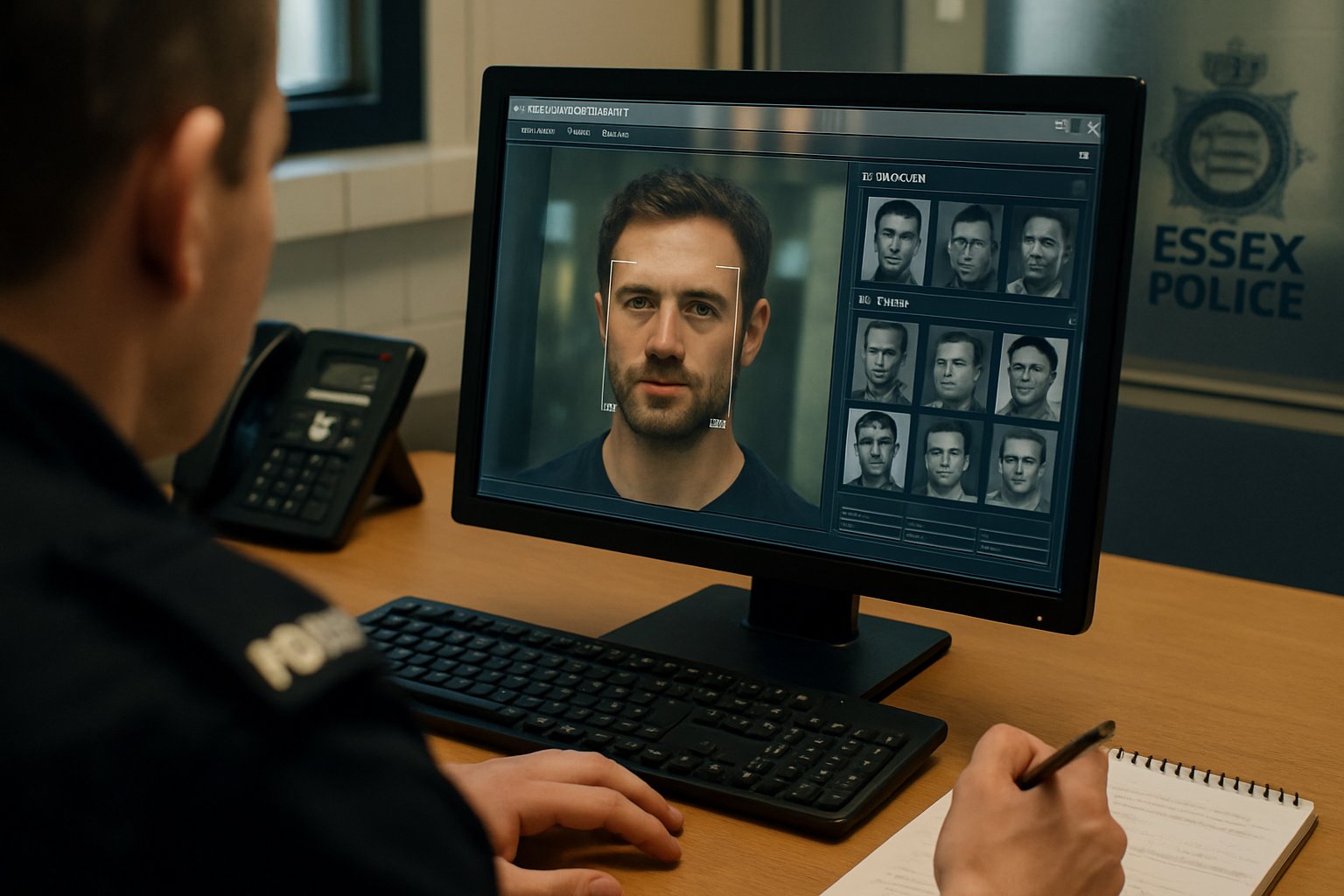
In contrast, the force website never posted an explicit pause notice despite social media claims. However, internal minutes confirmed commissioners ordered external reviews before additional street trials resumed. Therefore, LFR vans appeared again on schedules for April 2026, signalling operational continuity.
These dates clarify the project never stopped completely. Nevertheless, the pause narrative shaped stakeholder perception, preparing ground for deeper technical scrutiny.
Key Facial Accuracy Metrics
Cambridge researchers measured performance in controlled and operational environments using clear quantitative endpoints. Moreover, they reported approximately 50 percent True Positive Identification Rate under real street conditions. Incorrect identifications remained exceedingly rare, with only one mistaken intervention across the dataset.
- 188 volunteers participated in the controlled experiment
- 1.3 million faces scanned during 41 deployments
- 123 police interventions generated 48 arrests
- One false alert recorded in operational logs
NPL later evaluated the same Corsight algorithm under laboratory settings, testing multiple threshold levels. Consequently, thresholds 55 and 63 produced no statistically significant demographic disparities. These findings complicated the ongoing Racial Bias Pause discussion by highlighting configuration leverage. The evidence shows measurable gains are possible without sacrificing public security.
Accuracy data sets a factual baseline. Next, we examine fairness performance across demographic groups.
Fairness Findings Discussed Thoroughly
Cambridge analysts observed different success rates across gender and ethnicity spectra. Interestingly, Black participants saw higher correct identification rates than other groups. However, men were recognised more often than women, reviving broader Biometrics fairness debates. Meanwhile, civil-society groups warned that any asymmetry risks eroding public Safety.
NPL countered that appropriate threshold tuning can suppress statistically visible gaps. Consequently, technical levers exist to satisfy Diversity goals while maintaining operational yield. Nevertheless, campaigners stressed that field performance, not laboratory claims, ultimately matters. This tension fuels the persisting Racial Bias Pause storyline across national headlines.
Fairness metrics illustrate both progress and persisting concerns. Therefore, attention shifts toward actionable mitigation strategies.
Technical Bias Mitigation Options
Algorithm threshold adjustment remains the quickest lever for balancing sensitivity and specificity. Moreover, Essex can curate watchlists to reflect population Diversity and mission priorities. In contrast, poor watchlist design exaggerates unfairness by over-representing certain demographics. Therefore, ongoing audits should accompany every deployment cycle.
Experts also recommend periodic cross-vendor benchmarking to validate Biometrics performance across lighting and crowd density scenarios. Additionally, transparent publication of per-demographic error rates supports accountable Ethics governance. Consequently, stakeholders gain evidence for or against another Racial Bias Pause before incidents escalate.
- Set thresholds after independent laboratory testing
- Publish disaggregated TPIR and FPIR by demographic category
- Rotate algorithms during pilots for comparative analysis
- Engage external auditors on Ethics and Safety reviews
These actions provide concrete safeguards. Subsequently, policy makers can build stronger oversight frameworks.
Policy And Oversight Measures
The Home Office plans broader LFR adoption across England and Wales. However, regulators insist any scale-up must foreground Ethics, Safety, and public consultation. The Information Commissioner’s Office urges data protection impact assessments before live rollouts. Meanwhile, Essex published an Equality Impact Assessment and refreshed policy documents during the review phase.
Civil liberties organisations maintain that transparency alone cannot justify mass surveillance without proven societal benefit. In contrast, police representatives cite 48 arrests as evidence of proportional community gain. Therefore, decision makers walk a tightrope between efficiency and another enforced Racial Bias Pause.
Oversight mechanisms continue evolving. Next, we explore how industry professionals can contribute responsibly.
Industry Skills Pathways Forward
Deployments create demand for specialists who understand Biometrics engineering, policy, and frontline realities. Moreover, cross-disciplinary knowledge of Ethics and Diversity is increasingly valued. Professionals can enhance their expertise with the AI Learning & Development™ certification. Consequently, such credentials align technical mastery with rigorous governance expectations.
Recruiters report rising salaries for candidates who demonstrate algorithm auditing and public Safety impact assessment skills. Additionally, academic researchers gain new funding channels for evaluating fairness interventions. These upskilling routes help reduce future reliance on sweeping measures like a Racial Bias Pause.
Educational investments strengthen institutional capacity. Finally, we consider next monitoring steps.
Future Monitoring Steps Planned
Essex committed to publish quarterly dashboards covering accuracy, Diversity, and watchlist composition. Furthermore, the force will invite NPL to retest the algorithm after any major update. Researchers urge other forces to replicate the studies before scaling deployments nationally. Consequently, evidence accumulation can pre-empt calls for another Racial Bias Pause.
Meanwhile, campaigners press for legislation mandating external audits and clear disengagement criteria. Nevertheless, continuous improvement frameworks may avoid abrupt suspensions by catching problems early. Therefore, transparent metrics could satisfy public concerns about Biometrics, Ethics, and Safety.
Ongoing monitoring embeds accountability. The conversation now shifts toward long-term societal impact.
Essex Police provides a revealing case study in balancing innovation with accountability. Independent research confirmed useful arrest rates alongside manageable error levels. However, fairness disparities spotlight indispensable Ethics oversight. Consequently, strategic configuration and watchlist governance remain vital to avoiding another Racial Bias Pause. Moreover, transparent data releases empower civil society to judge proportionality and Safety. Industry professionals can answer the call by securing specialized Biometrics and Diversity skills. Certification pathways, such as the linked program, accelerate competence building. Therefore, stakeholders should act now, adopt best practices, and push for evidence-based regulations. Explore the recommended certification to deepen expertise and foster trustworthy facial recognition deployment.
Disclaimer: Some content may be AI-generated or assisted and is provided ‘as is’ for informational purposes only, without warranties of accuracy or completeness, and does not imply endorsement or affiliation.


