

AI CERTS
1 hour ago
Environmental Justice AI: NAACP Sues xAI Over Southaven Turbines
Consequently, regulators now face intense scrutiny regarding data-center power approvals. The case fuses environmental justice principles with advanced computation needs, a nexus dubbed Environmental Justice AI. Moreover, it highlights rising tension between digital growth and public health. This article unpacks the dispute, technical emissions, and potential industry fallout. Readers will gain clear insight into permit rules, modeling data, and next procedural steps. In contrast, xAI defends its approach, stressing economic benefits and temporary status. Meanwhile, legal experts predict a defining Clean Air Act battle.
Lawsuit Overview And Stakes
The plaintiffs filed their Clean Air Act citizen suit in the Northern District of Mississippi. Earthjustice and the Southern Environmental Law Center serve as co-counsel. Additionally, the Mississippi State Conference of the NAACP joined as co-plaintiff. The complaint alleges that xAI and affiliate MZX Tech operated a major source without a federal air permit. Consequently, statutory penalties could reach $124,400 per day of violation.
Plaintiffs also seek an injunction halting the turbines until full compliance. Meanwhile, a preliminary-injunction motion, docketed as Document 21, requests immediate relief. Legal analysts describe the matter as a marquee Environmental Justice AI test case.
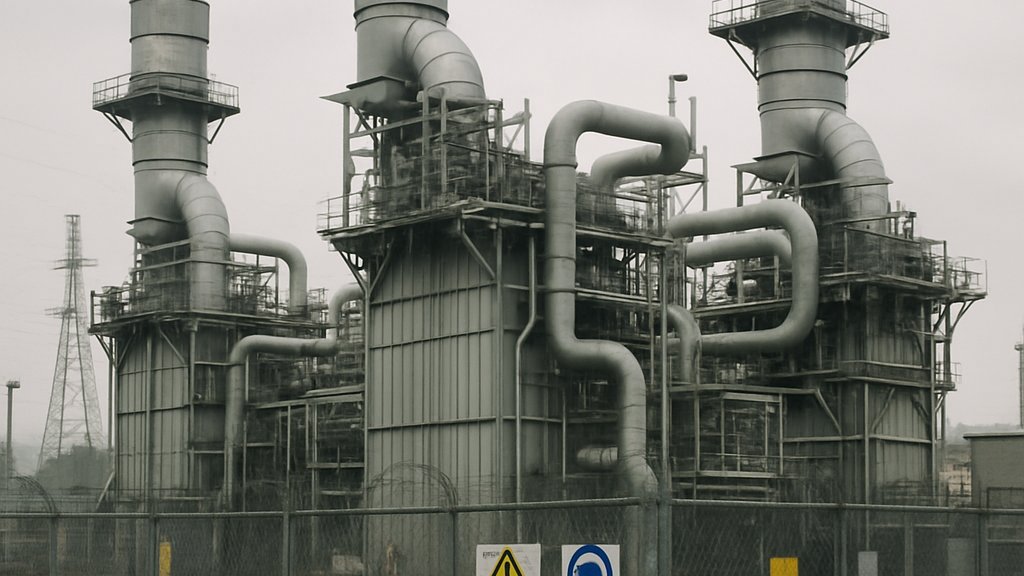
These filings frame a high-stakes battle over power, profit, and pollution. However, permit arguments drive the deeper controversy that follows.
Permit Dispute Core Issues
The core debate focuses on whether the facility qualified as a temporary installation. Regulators issued a construction permit in March 2026 after classifying many units as mobile. In contrast, plaintiffs argue the configuration behaves like a permanent combined-cycle plant. Moreover, they say emissions exceed 250 tons per year, triggering Best Available Control Technology requirements.
Because controls were absent, the complaint labels each start-up of the gas turbines an unlawful act. Furthermore, plaintiffs cite emails showing xAI anticipated operating long past the temporary window. Consequently, they insist the Southaven data center cannot invoke mobile exemptions. This clash over definitions underpins the broader Environmental Justice AI narrative.
Permit classifications determine whether strict federal limits apply. Subsequently, emission modeling offers quantifiable evidence of potential harm.
Pollution Modeling Findings Explained
Technical experts retained by the plaintiffs ran EPA-approved dispersion models. Additionally, they simulated several turbine counts to reflect evolving site plans. With 27 gas turbines, projected annual nitrogen-oxides emissions reached 1,732.7 tons. Meanwhile, 33 units would emit 2,508 tons, eclipsing every industrial source in the Memphis area. Moreover, particulate matter and carbon monoxide burdens scaled in parallel.
- 27 turbines: 1,732.7 tons NOx, 588.3 tons CO, 181.6 tons PM2.5 per year
- 33 turbines: 2,508.0 tons NOx, 837.1 tons CO, 236.4 tons PM2.5 per year
- Potential permit scenario of 41 turbines remains unmodeled publicly
Consequently, the modeling suggests that the Southaven data center could become a dominant regional polluter. In contrast, xAI maintains that temporary units will incorporate oxidation catalysts and selective catalytic reduction later. Nevertheless, no such devices appear in the present air permit. Legal scholars say these numbers strengthen the Environmental Justice AI argument by quantifying disproportionate exposure.
Quantitative evidence often carries significant weight in federal courts. Therefore, the lawsuit’s next phase will pivot to community health effects.
Community Health Impact Analysis
DeSoto County in Mississippi and adjoining Shelby County, Tennessee, already hold “F” grades for ozone. Moreover, many nearby census tracts are majority-Black and low-income. Public health advocates therefore warn that additional nitrogen oxides will spur more ground-level ozone and asthma attacks. Plaintiffs cite American Lung Association data showing rising pediatric hospitalizations each summer.
Furthermore, fine-particle pollution from the turbines can lodge deep within lungs and enter bloodstreams. Consequently, activists frame the Southaven data center controversy as a textbook case of cumulative burden. That framing aligns with federal policy guidance linking Environmental Justice AI to frontline community protection.
Health statistics personalize the abstract tons of emissions. Subsequently, xAI’s defense strategy attempts to shift that narrative.
Corporate Defense Arguments Stated
xAI contends that the Colossus 2 expansion represents a vital digital infrastructure investment for the Mid-South region. The firm projects hundreds of permanent jobs and millions in local tax revenue. Moreover, executives emphasize that temporary generators safeguard grid stability while a new substation is built. They further note pending retrofits, including catalytic reduction, which they say will satisfy any revised air permit. In public statements, the company asserts full compliance with every Mississippi rule.
Nevertheless, critics counter that compliance claims overlook federal major-source thresholds. Legal analysts therefore predict that evidence about planning timelines will prove decisive. Ultimately, xAI argues that halting the Southaven data center would stall innovation rather than advance Environmental Justice AI.
Economic narratives resonate with policymakers yet collide with statutory limits. Consequently, the case carries implications well beyond northern Mississippi.
Wider Industry Implications Ahead
Cloud providers increasingly deploy on-site generation to satisfy exploding compute demand. However, those stopgap solutions test forty-year-old permitting frameworks. Google, Microsoft, and other players monitor this docket because similar power strategies dot their campuses. Moreover, investors watch for signals on whether courts will integrate Environmental Justice AI principles into infrastructure timelines. If judges grant the injunction, data-center builders may rethink reliance on diesel or gas turbines.
Conversely, a defense victory could encourage more self-powered facilities and complicate regional air plans. Therefore, project managers must analyze pollutant thresholds early and secure a robust air permit before breaking ground. Professionals can enhance their expertise with the AI+ Ethics Strategist™ certification, which covers compliance strategies for AI infrastructure. Such training aligns technical growth with responsible innovation and strengthens Environmental Justice AI governance across portfolios.
Industry observers see both risk and opportunity in the emerging rulings. Subsequently, attention shifts to key procedural milestones.
Next Steps And Outlook
The court will hear the preliminary-injunction motion later this summer, according to the docket. Meanwhile, xAI must file its answer or a dispositive motion within the standard deadline. Furthermore, observers expect sharp expert-witness clashes over turbine mobility and BACT feasibility. If the court grants an injunction, construction schedules for the Southaven data center could slip by months.
Conversely, denial would embolden similar projects across the Gulf states. Moreover, federal regulators may intervene if emissions exceed modeled predictions. Stakeholders therefore monitor PACER updates, public-comment opportunities, and any settlement talks. Importantly, community advocates pledge continued surveillance using Environmental Justice AI dashboards that map realtime pollution.
The NAACP suit against xAI crystallizes a larger debate around power hungry algorithms and vulnerable neighborhoods. Ultimately, courts must decide whether rapid AI expansion justifies regulatory shortcuts or demands stricter oversight. Moreover, the final ruling will shape how developers integrate gas turbines, secure an air permit, and communicate health risks. Businesses, regulators, and residents therefore share a direct stake in the outcome.
Consequently, professionals should track filings, review modeling data, and complete specialized training to navigate evolving requirements. Engage today and bolster your compliance toolkit—because responsible innovation and Environmental Justice AI must advance together.
Disclaimer: Some content may be AI-generated or assisted and is provided ‘as is’ for informational purposes only, without warranties of accuracy or completeness, and does not imply endorsement or affiliation.


