

AI CERTS
2 hours ago
AI Vulnerability Hunting: Daybreak & MDASH Find Windows Flaws
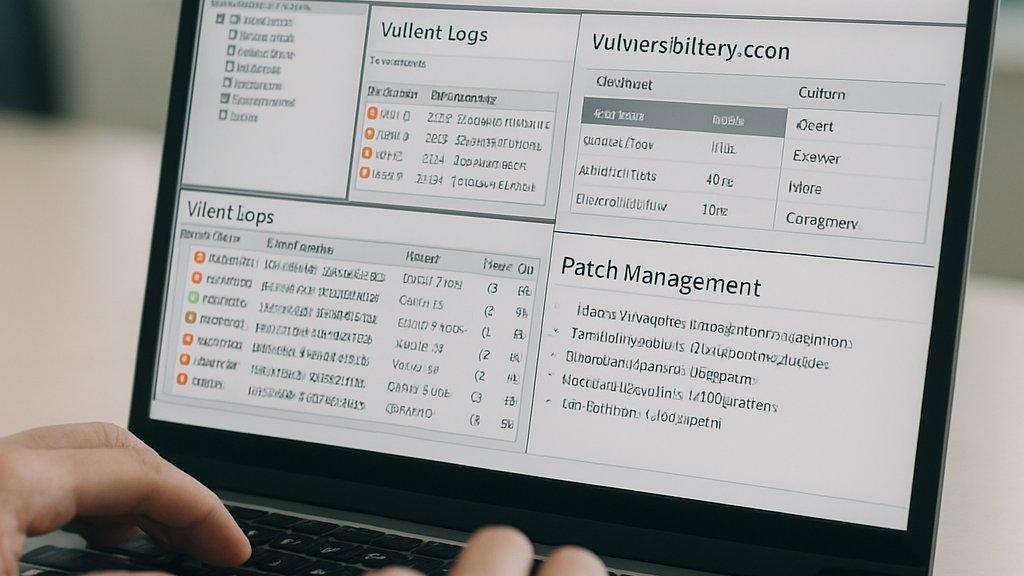
Consequently, organizations must adapt their vulnerability research processes now. However, tools like Daybreak and MDASH promise faster detection, triage, and patching. This article unpacks the launches, engineering choices, and governance stakes. Practical recommendations close the loop.
Exploit Window Rapidly Compresses
Attack economics changed with next-generation language models. Furthermore, adversaries can generate working exploits within minutes. Cloud Security Alliance data confirms the danger. Thirty-two percent of 2025 exploits landed before public disclosure.
Therefore, the exploit window shrinks while patch cycles remain sluggish. Security teams struggle to track emerging security flaws across sprawling codebases. AI Vulnerability Hunting now targets that mismatch with automation and validation.
Compressed timelines elevate business risk. Automated discovery offers a possible reprieve. Next, we examine how OpenAI plans to deliver that reprieve.
Daybreak Launch Key Details
OpenAI presented Daybreak as a controlled scanning service. Meanwhile, it embeds GPT-5.5 and Codex Security in an agentic harness. Defenders request repository scans and receive evidence-backed remediation artifacts.
Furthermore, Daybreak tiers gate model capabilities behind identity checks. Trusted Access for Cyber and GPT-5.5-Cyber enforce stricter safeguards.
Consequently, AI Vulnerability Hunting sits at the product's core architecture.
Industry analysts frame Daybreak as complementary, not a silver bullet. In contrast, manual workflows still handle disclosure coordination and production rollouts.
OpenAI has not yet earned public Windows CVE credit. Nevertheless, the company signals that milestones will arrive after wider adoption.
Daybreak expands automated coverage for security flaws. Governance controls aim to balance dual-use risk. Microsoft took a different but related route, detailed below.
Inside Microsoft MDASH System
Microsoft's MDASH pipeline joined the public conversation through real results. Consequently, 16 novel Windows vulnerabilities reached Patch Tuesday in record time.
MDASH runs seven specialized agents that scan, debate, validate, and patch candidates. Multiple models improve recall while validation stages slash false positives.
Furthermore, private tests planted 21 synthetic bugs and saw zero misses. CyberGym benchmarking scored the system at 88.45 percent.
- 16 new vulnerabilities, including 4 Critical RCEs
- 21/21 synthetic issues detected, zero false positives
- 88.45% score on CyberGym benchmark
These metrics illustrate tangible outcomes for AI Vulnerability Hunting at enterprise scale. This demonstration reinforces AI Vulnerability Hunting as a viable production practice.
MDASH delivered validated patches before attackers mobilized. Its agentic hunting framework proved decisive. Next, we compare shared benefits emerging across both platforms.
Core Agentic Tooling Benefits
Both Daybreak and MDASH embrace agentic hunting to drive consistency. Moreover, the approach links discovery, reasoning, and testing in one loop.
Integrated patch generation reduces handoffs and speeds remediation. Audit trails ease compliance reporting and incident post-mortems.
- Faster triage of security flaws with evidence attachments
- Automated patch validation before developer review
- Lower analyst hours on repetitive vulnerability research tasks
- Scalable AI Vulnerability Hunting across heterogeneous stacks
Furthermore, these benefits help organizations confront rising exploit automation.
AI Vulnerability Hunting gains credibility when output remains actionable and lean.
Agentic pipelines align speed with reliability. Structured validation keeps false positives low. However, governance and risk management still demand attention.
Governance Challenges And Risks
Dual-use remains the loudest concern for policymakers and CISOs. AI can create exploits as easily as patches.
Therefore, OpenAI layers identity checks, rate limits, and logging. Microsoft embeds policy gates around sensitive model outputs.
Nevertheless, exploit windows may still outrun slow patch pipelines. Operational debt can negate agentic hunting gains.
Analysts warn that compressed timelines pressure legacy vulnerability research teams.
Professionals can enhance expertise through certification. The AI Security Compliance™ program covers policy design for advanced systems.
Governance policies must evolve with tooling. Otherwise, security flaws will persist unchecked. Concrete operational next steps address that gap.
Key Operational Next Steps
First, integrate agentic hunting outputs into existing ticket workflows.
Subsequently, set service-level objectives for patch deployment that mirror exploit timelines.
Organizations should track new CVE attributions to validate tool performance.
Meanwhile, collaborate with vendors for shared telemetry and coordinated disclosure.
AI Vulnerability Hunting metrics, such as mean time-to-detect, must feed quarterly reviews.
Finally, invest in staff upskilling through modern vulnerability research courses and labs.
Operational rigor turns promise into protection. Consistent measurement sustains executive support. We close with a strategic recap and call to action.
Emerging agentic scanners now expose hidden Windows weaknesses before attackers mobilize. OpenAI Daybreak and Microsoft MDASH demonstrate that velocity and validation can coexist. Moreover, compressed exploit windows demand disciplined patch processes and clear governance. Organizations that embrace AI Vulnerability Hunting gain defensive speed without expanding headcount. Nevertheless, strategy must integrate policy safeguards, developer workflows, and staff training. Therefore, explore Daybreak pilot programs, monitor MDASH disclosures, and benchmark internal metrics today. Finally, consider earning the AI Security Compliance™ credential to guide responsible deployment.
Disclaimer: Some content may be AI-generated or assisted and is provided ‘as is’ for informational purposes only, without warranties of accuracy or completeness, and does not imply endorsement or affiliation.


