

AI CERTS
18 hours ago
Driver State AI Gets Smarter With New In-Cabin Emotion Data
Therefore, engineers can train context-aware algorithms that anticipate distraction, drowsiness, and mood. This article unpacks the momentum and explains how professionals can leverage these resources.
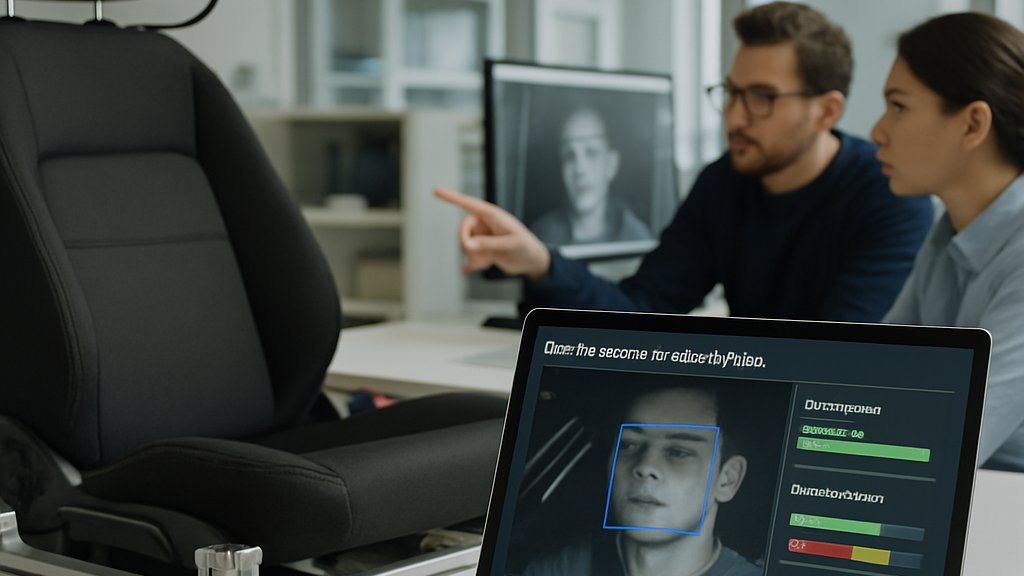
Dataset Momentum Builds Rapidly
Several releases redefine scale and modality. InCarEmo combines RGB, infrared, audio, and dialogue text. DAOS adds object context for action understanding. DriveEmo-FL pioneers privacy-friendly radar with federated learning.
Key statistics appear below for quick reference.
- DAOS: 9,787 clips, 36 actions, 15 object classes, over 2.5 million instances.
- DriveEmo-FL: 50 subjects, 6,000 radar instances, 94.5 % EmoNet accuracy, 9.7 ms model latency.
- Drive&Act benchmark: 12 hours, five camera views, 83 hierarchical labels.
- DMD: 41 hours, 37 drivers, RGB/IR/depth focus on alertness.
These numbers dwarf prior resources. Moreover, each multimodal dataset supports cross-task evaluation, boosting reproducibility in driver analytics research. Driver State AI now benefits from broader cultural and lighting coverage.
However, annotation costs remain steep. Crowd workers struggle with subtle affect cues across cultures. Nevertheless, semi-supervised pipelines are emerging to reduce labeling friction. These advances push the field toward real-world viability.
New datasets unlock model breadth. Consequently, subsequent sections explore fusion strategies and privacy breakthroughs that ride on these corpora.
Multimodal Fusion Boosts Safety
Vision alone falters in night or occluded scenes. Therefore, teams merge audio, depth, radar, and text for robust inference. Multimodal fusion outperforms single streams on emotion and distraction benchmarks by up to 18 % according to InCarEmo authors.
In-cabin emotion cues captured through microphones add vocal tension and speech rate. Additionally, object context from DAOS links handheld phones with risky maneuvers. Such synergy elevates safety monitoring to holistic scene understanding.
Automotive vision engineers now adopt transformer backbones that attend across modalities. Meanwhile, lightweight edge variants fit automotive ECUs. Driver State AI prototypes using these networks report latency under 30 ms, meeting real-time constraints.
Fusion also enriches user experience. For instance, conversational assistants can adjust climate based on detected frustration. Consequently, customer satisfaction metrics rise alongside safety gains.
Fusion advances support privacy methods next. Yet challenges such as sensor misalignment still need targeted research.
Privacy-Preserving Radar Methods Rise
Camera skepticism grows under GDPR. Therefore, DriveEmo-FL explores millimeter-wave radar. Micro-Doppler signatures reveal subtle gestures without producing identifiable images. Moreover, federated learning trains models across vehicles without raw data sharing.
Results demonstrate 94.5 % accuracy with 9.7 ms inference on a Jetson TX2. Consequently, Driver State AI deployments can move to cost-effective edge hardware while respecting regulatory demands.
In contrast, traditional RGB datasets remain valuable for feature pretraining. Nevertheless, radar opens doors in privacy-sensitive markets, including Europe. Multimodal dataset mixing radar and vision further strengthens robustness.
Experts from Fraunhofer suggest modular sensor stacks that switch gracefully when one stream degrades. Such designs align with Euro NCAP roadmaps that emphasize continuous safety monitoring.
Privacy success accelerates commercial interest. The next section details industry moves capitalizing on these technical gains.
Industry Adoption Roadmap Ahead
Smart Eye and Affectiva now bundle emotion sensing with classic driver monitoring systems. Korean OEM design wins announced in 2025 confirm traction. Furthermore, Tier-1 suppliers integrate learning stacks directly on domain controllers, shrinking bill of materials.
Automotive vision teams at several startups cite DAOS and InCarEmo benchmarks when pitching investors. They argue that diverse data proves generalization across vehicle interiors. Meanwhile, fleet operators explore radar-based upgrades to reassure passengers regarding privacy.
Professionals can strengthen credentials through the AI Data Agent™ certification. The program covers multimodal dataset curation and on-edge deployment strategies. Consequently, certified engineers gain an advantage as automakers escalate hiring.
Driver State AI enters pilot production across premium models during 2027 model years. Additionally, regulatory frameworks like UNECE R155 increasingly mandate distraction detection, driving further adoption.
Industry rollout highlights lingering gaps, addressed in the following section.
Remaining Research Challenges Today
Cross-cultural affect recognition still lags. Many labels derive from scripted scenarios, limiting spontaneity. Moreover, occlusion from masks or sunglasses degrades facial cues. Multimodal dataset expansion partly offsets this issue, yet performance drops persist.
Annotation remains costly. Semi-automatic methods require robust teacher models, which depend on prior labels, forming a chicken-and-egg loop. Additionally, sensor synchronization errors introduce temporal drift that confuses fusion networks.
Real-world noise also hurts radar signals during heavy rain. Nevertheless, domain adaptation techniques show promise. Driver analytics pipelines must therefore include continuous calibration routines.
Finally, ethical governance lags behind technical capacity. Transparency and opt-in policies need harmonization across regions. Consequently, ongoing standards work at ISO and Fraunhofer gains urgency.
These challenges underline why coordinated research remains vital. The final section looks forward to likely breakthroughs.
Future Outlook And Recommendations
Dataset creators plan larger longitudinal studies covering weeks rather than hours. Furthermore, generative simulation will synthesize corner cases such as sudden health events. Such expansions will feed Driver State AI with unprecedented edge cases.
Meanwhile, transformer models may soon learn universal in-cabin emotion embeddings. Subsequently, fine-tuning on limited fleet data will cut development cycles. Hybrid radar-vision rigs will balance privacy and fidelity, pushing safety monitoring accuracy beyond 98 %.
Researchers should prioritize open benchmarks that score fairness, latency, and energy. Additionally, industry consortia must publish deployment metrics to foster trust. Multimodal dataset custodians can adopt differential privacy techniques, ensuring compliance.
Professionals should track regulatory drafts and secure relevant training. Moreover, pursuing the linked certification deepens skill portfolios and signals commitment to responsible innovation.
Accelerating progress promises safer cabins and richer user experiences. However, coordinated action across academia, industry, and policy is essential to realize that vision.
Conclusion
Multimodal releases like InCarEmo, DAOS, and DriveEmo-FL propel Driver State AI toward mainstream deployment. Fusion strategies elevate automotive vision robustness, while radar safeguards privacy. Industry adoption accelerates as regulations prioritize safety monitoring. Yet cultural bias, annotation cost, and governance challenges persist. Nevertheless, targeted research and professional upskilling can bridge these gaps. Explore the AI Data Agent™ certification today and lead the next wave of driver analytics innovation.
Disclaimer: Some content may be AI-generated or assisted and is provided ‘as is’ for informational purposes only, without warranties of accuracy or completeness, and does not imply endorsement or affiliation.


