

AI CERTS
1 hour ago
Disney’s AI Ad Creation Beta Transforms Connected TV Advertising
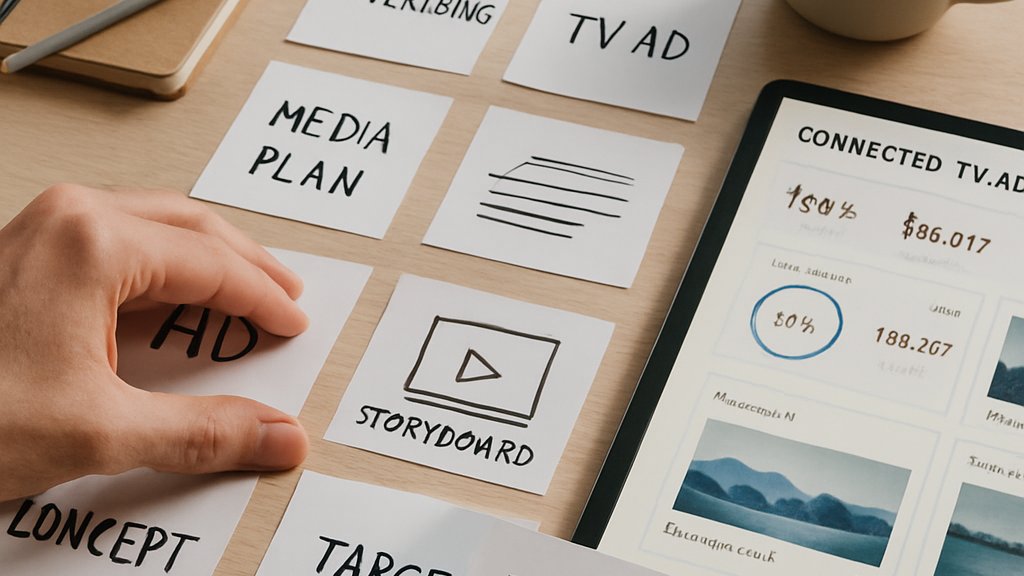
Moreover, six global holding groups—Omnicom, Dentsu, GroupM, Horizon Media, IPG Mediabrands, and Publicis Media—have already entered closed tests. Their feedback will shape rollouts across Disney+, Hulu, and ESPN properties. Marketers watching the pilot want to know how it works, what it costs, and whether risks outweigh promised efficiency.
Disney Bets On AI
During its CES Tech & Data showcase, Disney introduced four connected products that function as one stack. Furthermore, the Ads Agent handles media planning, Experience Genie produces spots, Magic Words tags scenes, and Compass measures outcomes.
Bob Iger framed the push as technological evolution, not flashy experiment. “Innovation has continually shaped entertainment,” he said while announcing the OpenAI partnership worth $1 billion.
The deal grants Sora and ChatGPT Images access to more than 200 iconic characters for generative video. Consequently, advertisers could feature beloved heroes in shoppable streaming promos, pending approvals.
Disney ads revenue slipped three percent in fiscal 2024 Q1. Therefore, leadership hopes smarter tooling will attract over a thousand existing Disney+ advertisers and many newcomers to TV marketing.
These initiatives illustrate aggressive investment despite soft revenue. However, understanding the Ads Agent beta reveals deeper operational change. Next, we examine how the planning engine reduces manual grunt work.
Inside Ads Agent Beta
Ads Agent anchors the broader AI Ad Creation architecture. It ingests a media brief, then autonomously recommends audiences, CPM tiers, and flight timings. Additionally, it suggests creative formats based on placement history.
Agency partner Geoffrey Calabrese called Magic Words integration “a game changer” because emotional metadata refines contextual mapping. Consequently, plans move beyond broad demos toward scene-level relevance.
Early pilots generated hundreds of plan iterations within minutes. In contrast, human teams previously needed several days for similar scope.
That speed may democratize connected TV marketing for smaller brands. Meanwhile, internal documentation shows Disney targeting onboarding time reductions of 60 percent compared with legacy workflows.
Automated planning accelerates buying and improves targeting accuracy. Nevertheless, creative production still decides campaign resonance. The following section dissects the generative engine responsible for producing finished spots.
Generative Video Engine Rollout
Experience Genie generates 15-, 30-, and 60-second connected-TV assets from logos, product images, and copy. Moreover, it enforces brand guidelines automatically, reducing off-spec edits.
The engine sits inside Disney’s AI Ad Creation platform. It uses the OpenAI Sora model fine-tuned on licensed footage. Consequently, visual continuity feels cinematic, not stock-like.
Test agencies reported that one prompt produced nine quality variants in under five minutes. That efficiency exemplifies creative automation at scale.
However, Disney requires human review before scheduling. Rita Ferro told CES audiences that guardrails “allow marketers to buy the way they want” while protecting brand equity.
- Compass already logged more than 100 billion impressions across recent Disney ads campaigns.
- Over 1,000 advertisers joined the Disney+ ad tier during the latest fiscal quarter.
- Beta involves six agency groups across three continents before broader release.
The engine promises blockbuster visuals without blockbuster budgets. Therefore, measurement becomes central to proving incremental value. The next section explains how Compass unifies brand impact data.
Compass Metrics Drive Accountability
Compass completes the AI Ad Creation loop. It combines attention, attribution, and search trends into one Brand Impact Metric. Additionally, external partners such as VideoAmp and Innovid feed exposure logs.
Dana McGraw argued that outcome focus “challenges the current standard” dominated by last-touch clicks. Consequently, TV marketing can claim credit for upper-funnel gains.
Advertisers will view dashboards that compare AI Ad Creation variants against control spots. Moreover, early data suggests uplift correlates with mood matching from Magic Words.
Nevertheless, Disney has not released independent A/B studies. Analysts urge transparency before scaled adoption.
Unified metrics may finally link streaming spend to brand health. However, legal and safety issues could slow adoption. We now assess those unresolved risks.
Legal And Safety Risks
Generative systems raise intellectual-property questions. Previously, Disney and NBCUniversal sued Midjourney over unlicensed training data.
OpenAI’s licensing deal mitigates some exposure, yet moderators must screen user-prompted outputs carefully. Otherwise, offensive Disney ads could damage valuable franchises.
Quality also matters within AI Ad Creation pipelines. Industry commentators warn of “AI slop” that fails to lift brand perception. Consequently, marketers may demand hybrid workflows blending human craft and creative automation.
Moreover, regulators are drafting disclosure rules for synthetic media. Brands need compliance strategies before public launch.
Risk management requires strict guardrails and clear rights frameworks. Subsequently, market forecasts still look optimistic. Understanding those forecasts helps stakeholders prioritize investments.
Broader Market Impact Ahead
Industry press positions Disney as a first mover among major studios. Moreover, the stack competes with Amazon’s creative automation and Netflix’s in-house studio.
If results hold, agencies expect connected TV marketing budgets to shift from production toward data assets. Consequently, margins could improve for holdings that master AI Ad Creation workflows.
Small businesses stand to benefit the most. Furthermore, faster asset production lowers entry barriers that previously favored Fortune 500 budgets.
However, competitors may license their own characters to generative video models, compressing differentiation over time.
Disney’s momentum pressures rivals to answer quickly. Therefore, practitioners must skill-up on emerging tools. The final section outlines immediate actions for brand teams.
Guidance For Brand Teams
Marketers evaluating the AI Ad Creation beta should request clear pricing, guardrail documentation, and lift studies. Additionally, they should pilot campaigns with limited budgets before scaling.
Creative directors must refine prompt engineering to align tone and objectives. In contrast, strategic planners should benchmark performance against human-made Disney ads.
Professionals can deepen expertise through the AI Video Creative™ certification, which covers prompt design and governance. Moreover, mastery will unlock full value from AI Ad Creation initiatives.
- Secure beta access and NDAs.
- Define success metrics with Compass teams.
- Run controlled tests against existing creative.
- Document brand safety findings for leadership.
Structured pilots reduce unknowns and build confidence. Nevertheless, consistent education ensures teams stay ahead. With preparation complete, marketers can embrace the future responsibly.
Disney’s stack links planning, production, placement, and proof into one loop. Furthermore, the combination promises unprecedented speed for connected generative video deployment.
Nevertheless, legal, quality, and moderation gaps demand vigilance. Therefore, brands should pair technical experimentation with clear governance frameworks.
Consequently, those who master AI Ad Creation early may capture share while rivals hesitate. Ready to future-proof your strategy? Enroll in cutting-edge courses and watch this space for deeper coverage.
Disclaimer: Some content may be AI-generated or assisted and is provided ‘as is’ for informational purposes only, without warranties of accuracy or completeness, and does not imply endorsement or affiliation.


