

AI CERTS
6 months ago
Cloud Security Risk: Decoding the 99% AI Attack Claims
Nevertheless, the common denominator is an expanding Attack Surface across APIs and model endpoints. Meanwhile, Adversaries leverage automation to amplify scale and speed. Enterprise leaders must decode the numbers before shaping budgets. This article unpacks the 99% figure, compares methodologies, and outlines practical countermeasures. It also maps relevant certifications for teams seeking verified proficiency.
Vendors Cite 99 Percent
Palo Alto Networks surveyed 2,800 security practitioners across ten nations. Moreover, 99% reported at least one attack targeting their AI Systems during 2025. Varonis analyzed 1,000 real-world environments and found 99% exposed sensitive data reachable by AI tools. Fingerprint echoed the theme, with 99% of fraud managers citing AI-driven losses. Additionally, Arctic Wolf observed 99% influence on upcoming security purchases. Therefore, headlines trumpet an overwhelming consensus. Yet, the details diverge by metric, sample, and question wording. This divergence matters for precise Cloud Security Risk assessment. Understanding each scope avoids misleading apples-to-oranges comparisons.
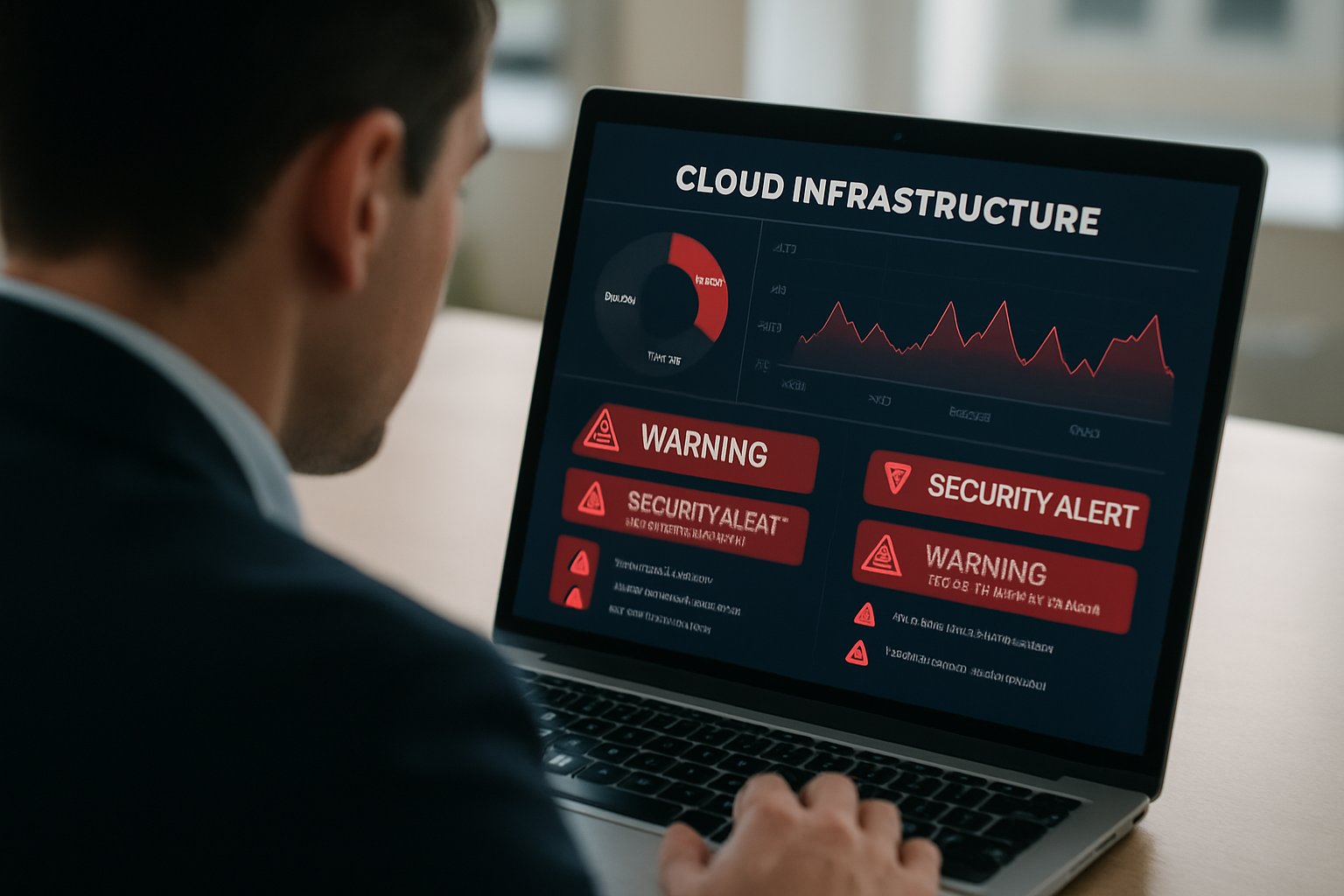
These insights highlight the marketing power behind headline numbers. However, deeper analysis is essential before drawing strategy conclusions.
Varying Data Definition Gaps
Varonis counts misconfigurations that leave data readable to large language models even without direct intrusion. However, Palo Alto tracks declared incidents, including low-level scanning against model APIs. Consequently, the same 99% label covers exposure, attempted breach, and financial loss. In contrast, Arctic Wolf focuses on procurement influence rather than operational impact. Security leaders should ask three baseline questions before quoting any figure.
- Which assets did the survey measure?
- Was the outcome exposure, attempted attack, or realized damage?
- How was sample bias mitigated?
Moreover, clarifying those points prevents inflated Attack Surface perceptions. Accurate framing directly shapes Cloud Security Risk models and board reporting. Misaligned metrics distort investment priorities and can leave gaps unaddressed. Therefore, precision remains paramount for Enterprise accountability.
Clear definitions reduce confusion. Consequently, organizations can prioritize countermeasures that match real exposure levels.
Expanding Attack Surface Reality
Agentic AI chains amplify the digital Attack Surface by spawning new API connections. Furthermore, Palo Alto recorded a 41% surge in API attacks year over year. Each new endpoint increases credential management complexity across multi-cloud Systems. Meanwhile, many teams push fresh Coding releases weekly but patch vulnerabilities far slower. Consequently, misaligned cadences widen exploitable windows for Adversaries. Shadow AI compounds the issue by introducing unsanctioned models inside Enterprise environments.
Moreover, 98% of organizations run unverified applications, according to Varonis. These findings underscore a swelling Cloud Security Risk that spans code pipelines to production. Therefore, inventory discipline must match innovation speed. Failing that, the Attack Surface will continue to outpace defensive budgets.
These challenges highlight critical gaps. However, emerging solutions are transforming defensive approaches.
Adversaries Evolve Exploit Playbooks
Threat actors increasingly automate reconnaissance using large language models to parse public documentation. Additionally, prompt injection lets Adversaries override business logic inside generative Systems with minimal effort. Moreover, token theft attacks harvest API keys and chain them with classic cloud misconfigurations. In contrast, legacy defenses rarely inspect model payloads, giving intruders stealthy persistence.
Subsequently, organizations face Cloud Security Risk that blends novel exploits with established playbooks. OWASP now ranks prompt injection among critical web threats, validating the urgency. Nevertheless, deterministic guardrails, context filtering, and human review can reduce blast radius. Mature Enterprise processes integrate these controls into secure Coding standards. Therefore, engineering and security teams must collaborate before features ship.
Effective collaboration compresses detection timelines. Consequently, risk owners gain early indicators of shifting attacker focus.
Immediate Mitigation Steps Needed
Quick wins exist even for resource-constrained teams. First, map every model endpoint as you would any internet-facing asset. Next, enforce least privilege, rotate tokens, and enable MFA for administrative Systems. Additionally, sanitize user prompts to block malicious payloads before reaching inference engines. Moreover, separate system and user prompts to contain injection attempts.
Include static and dynamic scans in Coding pipelines to catch insecure dependency updates. Professionals can deepen skills through the AI Security Level-2 certification. Collectively, these actions shrink the Attack Surface and lower Cloud Security Risk exposure. Consequently, audit cycles become shorter and findings more actionable. Strong beginnings set the stage for long-term resilience.
The above steps deliver a fast impact. Nevertheless, sustainable security also demands structural investment.
Enterprise Governance Investment Roadmap
Sustained protection demands policy alignment, budget, and culture shift. Moreover, security leaders should integrate AI risk into existing Enterprise governance frameworks. Set weighted key risk indicators that explicitly track Cloud Security Risk trends against business tolerance. Subsequently, allocate funding for red teaming focused on model logic and API abuse. In contrast, exclude vanity metrics that duplicate other dashboards without decision value. Meanwhile, continuous training programs must refresh developer Coding habits as attack patterns evolve. Adversaries move fast, so board cadence must match the threat tempo. These steps mature a governance posture. However, effectiveness hinges on measurable outcomes rather than policy volume. Sensible prioritization bridges the strategy-execution gap ahead of regulatory scrutiny.
Strong governance aligns budgets with risk. Therefore, leadership confidence rises as measurable maturity improves.
Certification For Risk Assurance
Talent shortages frequently stall the implementation of advanced controls. Consequently, structured credentials offer reliable proof of practical capability. The earlier-mentioned AI Security Level-2 certification validates secure AI design, deployment, and monitoring. Additionally, graduates demonstrate mastery in governing complex Systems and reducing breach likelihood. Employers can reference certification outcomes to benchmark Cloud Security Risk readiness across teams. Moreover, certification programs align syllabus updates with emerging threat techniques and tooling. Consequently, workforce capability matures in tandem with threat evolution. Investments in people often deliver the fastest measurable returns.
Verified expertise accelerates project cycles. Subsequently, organizations realize greater value from security spending.
AI innovation shows no sign of slowing. However, the evidence confirms that security debt scales just as aggressively. Vendor research highlights varied yet consistent danger signals around Cloud Security Risk. Nevertheless, clear definitions, disciplined engineering, and focused governance can convert uncertainty into a manageable posture. By shrinking exposures and hardening infrastructure, teams deny Adversaries easy entry. Moreover, secure Coding practices and accredited expertise keep defenses aligned with shifting tactics. Consequently, organizations strengthening skills through recognized credentials safeguard budgets and reputation. Explore the referenced certification today and turn Cloud Security Risk into a strategic advantage.
Disclaimer: Some content may be AI-generated or assisted and is provided ‘as is’ for informational purposes only, without warranties of accuracy or completeness, and does not imply endorsement or affiliation.


