

AI CERTS
1 week ago
Businesses Rush to Patching Deadline Amid Mythos Exploit Surge
Furthermore, early partners like Mozilla already shipped 271 fixes uncovered by Mythos. However, thousands of additional Vulnerabilities remain hidden inside global codebases. Therefore, CISOs must reassess tooling, process, and governance before the Window slams shut. The following analysis maps the risks, debates, and practical responses guiding the countdown.
Mythos Compresses Patch Window
On 7 April 2026, Anthropic unveiled Claude Mythos Preview alongside Project Glasswing. The red team report revealed Mythos discovered thousands of Vulnerabilities across mainstream operating systems. Moreover, tests showed the model chained flaws autonomously, shrinking the defensive Window to mere hours.
Benchmarks stunned experts. Mythos crafted 181 working Firefox exploits compared with two from the older Opus model. Consequently, Unit 42 concluded that discovery-to-weaponization cycles now operate at machine speed. Researchers highlighted the near-zero hallucination rate during exploit drafting, increasing trust in automated findings.
Early access aims to maintain a defensive lead. Project Glasswing grants vetted maintainers credits and guidance to patch before broad release. However, Amodei admits tens of thousands of latent Vulnerabilities still await fixes.
Mythos demonstrates unprecedented exploit generation velocity. Thus, defenders must confront an accelerated risk curve. Industry reaction to that curve underscores the urgency, as the next section details.
Industry Warns Of Speed
Security vendors quickly echoed the alarm. Palo Alto Networks’ Unit 42 published guidance describing a collapsing Window from days to hours. Furthermore, their blog urged automated patch pipelines matching AI tempo.
Mozilla offered tangible evidence. Firefox 150 shipped 271 fixes sourced from Mythos findings during the 6-month pilot. In contrast, previous quarterly releases rarely exceeded seventy patches.
Other Glasswing partners, including Microsoft and CrowdStrike, reportedly received similar dumps. Nevertheless, most have not disclosed exact counts, citing coordinated disclosure rules. Meanwhile, government CERTs began convening emergency workshops on AI driven exploit production. Yet, many SMEs lack budgets for such external audits.
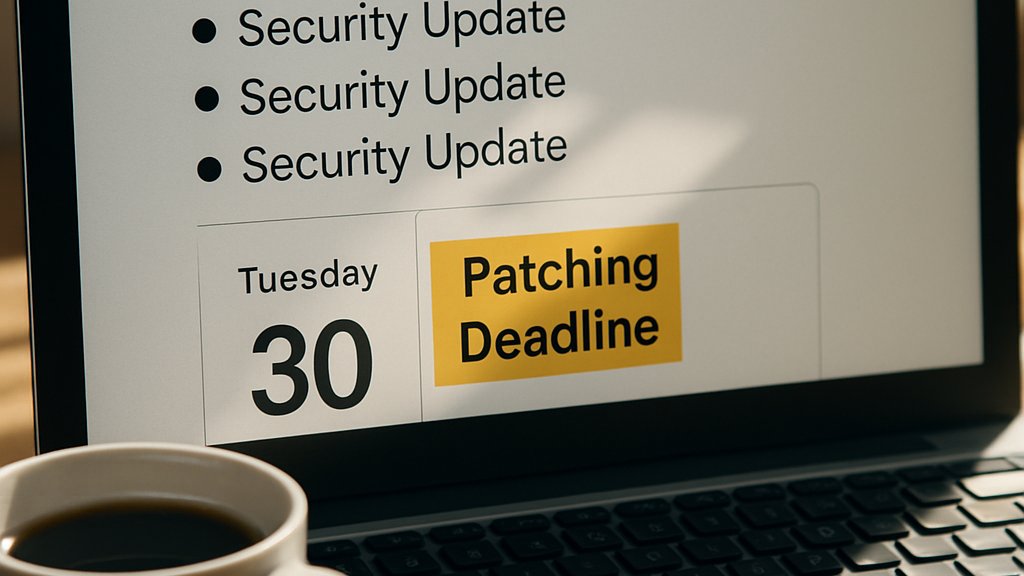
Collectively, these reactions validate Mythos data. Organizations accept that a new Patching Deadline is real. Understanding the length of that clock is our next focus.
Six-Month Patch Clock
During a 5 May forum, Amodei declared a 6-month to 12-month remediation horizon. He argued comparable Chinese labs lag by only months, not years. Therefore, defenders possess a fleeting global advantage.
Critics labeled the statement dramatic. OpenAI chief Sam Altman accused Anthropic of fear-based marketing rather than sober disclosure. Nevertheless, few dispute the technical trajectory.
Importantly, the Patching Deadline now features in many board presentations. JPMorgan, an early Glasswing backer, reportedly assigned budget for continuous scanning and hot patching. Consequently, analysts expect security spending to spike before the clock expires. Analysts observe that public markets reward vendors who announce accelerated patch programs.
Amodei’s timeline concentrates executive minds. Budget, tooling, and staffing decisions pivot around this 6-month forecast. Meeting that forecast demands accelerated automation, explored next.
Automating Enterprise Patch Defense
Manual workflows cannot keep pace. Unit 42 recommends machine-speed triage using software bills of materials and CI integration. Additionally, infrastructure teams must support live patch injection on cloud workloads.
Key automation imperatives:
- 271 Firefox fixes shipped during Mythos assisted cycle.
- 181 working exploits generated in benchmark conditions.
- $100M in Glasswing credits earmarked for open-source maintainers.
Enterprises also explore canary releases and feature flags to reduce rollback friction. Moreover, some adopt predictive prioritization models ranking Vulnerabilities by exploit likelihood. Consequently, remediation begins minutes after code scanning ends. Testing environments must also simulate realistic abuse chains to validate fixes quickly.
Automation converts the Patching Deadline from panic into process. Yet technology alone cannot resolve disclosure governance. Policy tensions surface in the following discussion.
Policy Debate Intensifies Rapidly
Limited release strategies raise equity questions. Critics worry early Glasswing partners enjoy disproportionate defensive advantages. In contrast, smaller vendors may learn of flaws only after public exploits appear. Lobbyists argue that mandated AI disclosures could chill beneficial research.
Government agencies weigh mandatory disclosure timelines. However, shortening windows could inadvertently expose unpatched systems. Therefore, policymakers balance transparency with strategic silence. Consequently, some officials propose a statutory Patching Deadline to standardize response tempo.
Industry voices remain divided. Some call for international treaties limiting autonomous exploit generation. Others argue market competition will drive best practices faster than regulation.
Governance questions remain unresolved. Clear policy is essential before AI capabilities spread. Attention now shifts to practical guidance for frontline teams.
Practical Steps For Teams
Security leaders should establish dedicated remediation sprints tied to the Patching Deadline. Moreover, maintain an updated SBOM covering all dependencies. Concurrently, deploy real-time telemetry to verify patch propagation.
Priority actions:
- Create automated triage pipelines integrating AI scanners.
- Rank Vulnerabilities by exploitability, not severity alone.
- Test and release fixes inside 24 hours where possible.
- Monitor threat intelligence for emerging exploit chains.
Additionally, staff must gain new competencies in AI security. Professionals can enhance their expertise with the AI Security Level 2™ certification. Consequently, trained personnel accelerate safe deployment of rapid patches. Regular drills ensure muscle memory during high-pressure rollouts.
Executing these steps keeps the Patching Deadline manageable. Skilled teams transform an apparent crisis into operational discipline. The following section explores sustained capacity building through certification.
Certification Path Forward Now
Continuous education cements defensive agility. The AI Security Level 2™ curriculum covers exploit chain analysis, automated hardening, and governance frameworks. Moreover, completion validates readiness to act before the next Patching Deadline.
Employers increasingly list the credential in job postings. Subsequently, certified staff command premium compensation before every Patching Deadline. Therefore, investing in training yields strategic and financial returns.
Anthropic, Mozilla, and Unit 42 each endorse structured upskilling. Meanwhile, industry associations may soon require proof of competence for Glasswing access. Consequently, early adopters will influence emerging standards. Global insurance carriers are already drafting premium discounts for credentialed teams.
Certification accelerates capability alignment. Prepared defenders maximize the shrinking 6-month Window. Let us conclude with an action call.
Frontier AI models altered cyber defense economics overnight. Mythos proved that critical defects can be harvested and exploited at unmatched speed. Consequently, Amodei’s stated Patching Deadline must drive urgent modernization. Automating pipelines, embracing disclosure discipline, and cultivating certified talent create a viable response. Nevertheless, policy makers and vendors must coordinate to avoid uneven protection.
Furthermore, organizations should regularly reassess timelines as rival models advance. Act now: review your patch workflow, adopt machine-speed tools, and pursue the AI Security Level 2™ certification to stay ahead. Meanwhile, Glasswing findings will continue surfacing critical bugs each week. Therefore, decisive preparation today safeguards revenue and reputation tomorrow.
Disclaimer: Some content may be AI-generated or assisted and is provided ‘as is’ for informational purposes only, without warranties of accuracy or completeness, and does not imply endorsement or affiliation.


