

AI CERTS
2 hours ago
Autonomous Research Labs Redefine Scientific Discovery
Moreover, governance questions, cyberbiosecurity worries, and workforce implications rush in alongside technical advances. This article unpacks evidence, risks, and skills for thriving within the coming automated era.
Rise of Robot Labs
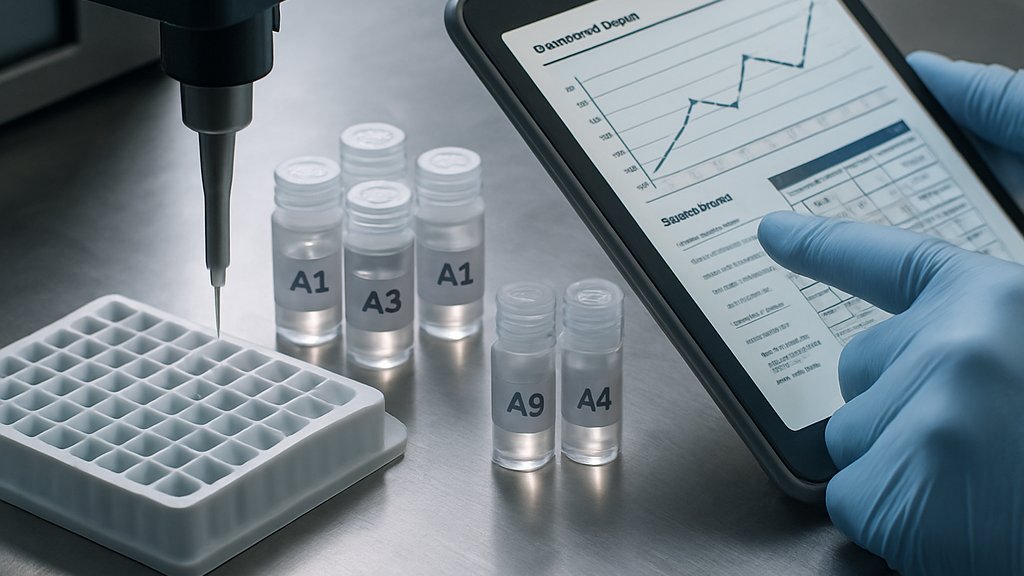
Self-driving laboratories moved from concept to deployed prototypes within three years. Furthermore, a 2025 Nature Chemical Engineering study reported ten-fold data density using flow-driven automata. Industry press increasingly labels these platforms Autonomous Research Labs rather than simple automation islands. Emerging platforms recorded higher reproducibility and sharply reduced reagent waste. Robotic labs have transitioned from isolated workstations to fully networked research cells.
Publication momentum mirrors engineering success. Nature and npj journals added over thirty SDL papers between 2024 and 2026. Consequently, media headlines portray laboratories as inevitable autonomous factories. Yet adoption remains uneven across disciplines.
These numbers confirm widening interest in Autonomous Research Labs, but scale remains early. Next, the architectural framework reveals why some facilities progress faster.
Self Driving Lab Framework
An SDL stitches robotics, instrumentation, and predictive algorithms into a continuous loop. Initially, planners define objectives and safety constraints. Then optimisation software proposes experiments, robots execute protocols, and sensors stream data back to the model. Subsequently, active learning algorithms adjust the plan in real time, enabling autonomous experimentation at scale. These orchestrations harmonise science workflows with digital twins.
- Design hypotheses and constraints.
- Execute protocols with precise liquid-handling robots.
- Measure outputs through multiplexed analytics.
- Decide next steps via Bayesian optimisation.
Such closed loops underpin many Autonomous Research Labs under construction today. Moreover, open standards like SiLA 2 and OPC UA simplify research automation across heterogeneous tools.
The framework highlights technical elegance. However, benefits drive real investment decisions.
Benefits Driving Rapid Adoption
Speed tops the advantage list. Flow systems from NC State screened chemical spaces previously impossible within academic budgets. Additionally, robotic labs operate day and night without fatigue, multiplying data yield.
Reproducibility follows closely. Automated pipetting eliminates hand variance, improving data quality for downstream lab AI models. Consequently, datasets become training fuel for predictive chemistry networks.
Cloud offerings add accessibility. Emerald Cloud Lab lets remote teams run science workflows through web consoles, lowering capital barriers. Moreover, startups like Autoscience market turnkey Autonomous Research Labs subscriptions, merging hardware, software, and funding alignment.
- Ten-fold data density in catalytic searches.
- Up to 30% material savings through continuous flow.
- Near real-time hypothesis updates via lab AI analytics.
- Continuous monitoring across Autonomous Research Labs worldwide.
Collectively, these payoffs underpin accelerating funding rounds. Nevertheless, serious barriers temper uncritical enthusiasm.
Barriers, Risks, And Ethics
Hardware limitations appear first. Fragile biomolecules and hazardous chemistries still resist complete research automation.
In contrast, safety specialists warn of cyberbiosecurity threats. Unattended Autonomous Research Labs raise dual-use fears.
Legal puzzles also loom. Who owns intellectual property when lab AI suggests the winning molecule? Therefore, policymakers debate inventorship and liability frameworks.
Ethicists highlight workforce displacement. Some fear experimental intuition may wither as researchers oversee dashboards instead of flasks. However, Oak Ridge’s Rob Moore argues AI will reshape rather than replace human roles.
Risks remain real yet manageable with layered oversight. The investment climate nonetheless continues moving forward.
Market And Investment Momentum
Venture funding signals confidence. Autoscience secured fourteen million dollars in 2026 for fully integrated Autonomous Research Labs services.
Moreover, Alphabet’s Isomorphic Labs and Emerald Cloud Lab continue attracting multi-year pharmaceutical deals. Consequently, analysts expect a growing services market surrounding research automation platforms.
National laboratories join the surge. Oak Ridge and Argonne pilot robotic labs for materials discovery, partnering with startups on shared instrumentation.
Still, reliable market size numbers remain elusive. Grand View estimates are pending, and private vendors keep annual revenue confidential.
Capital inflows suggest lasting momentum despite measurement gaps. The talent landscape therefore demands new skills and governance literacy.
Skills, Governance, Next Steps
Scientists can future-proof careers by mastering data science, robotics, and safety policy. Additionally, upskilling in Bayesian optimisation supports autonomous experimentation design.
Professionals can enhance their expertise with the AI Researcher™ certification. Such credentials validate competence in lab AI integration and research automation strategy.
Organisations should adopt phased governance. Initially keep humans in the decision loop and codify emergency shutdown protocols. Subsequently, independent audits can test robustness against cyber threats. Documented science workflows also ease regulatory approval.
Meanwhile, open-source consortia work on reference implementations for safe Autonomous Research Labs governance APIs.
Practical upskilling and layered policy reduce many adoption pains. Therefore, the stage is set for responsible scaling of autonomous research.
Autonomous Research Labs now move beyond hype into funded, functioning reality. They collect richer data, enforce tighter reproducibility, and speed hypothesis testing dramatically. However, hardware gaps, safety concerns, and legal puzzles persist. Governance frameworks, independent audits, and continuous human oversight remain essential. Moreover, professionals who master robotics, data, and policy will steer this revolution. Consider earning the linked AI Researcher™ credential to position yourself at the frontier. Explore additional case studies today and join the conversation shaping tomorrow’s laboratories.
Disclaimer: Some content may be AI-generated or assisted and is provided ‘as is’ for informational purposes only, without warranties of accuracy or completeness, and does not imply endorsement or affiliation.


