

AI CERTS
7 days ago
Army Backs Defense AI Edge Platform
Army Contract Signals Demand
The April 28 award arrives through the Army’s xTech SBIR Phase-II pathway. Consequently, GSI will receive just under $2 million to mature its hardware. The money supports a field-ready prototype that survives harsh environments. That ruggedized design will target dismounted sensors, drones, and other Tactical Technology needs. Lee-Lean Shu, GSI’s CEO, said the award is “an important step toward field deployment.”
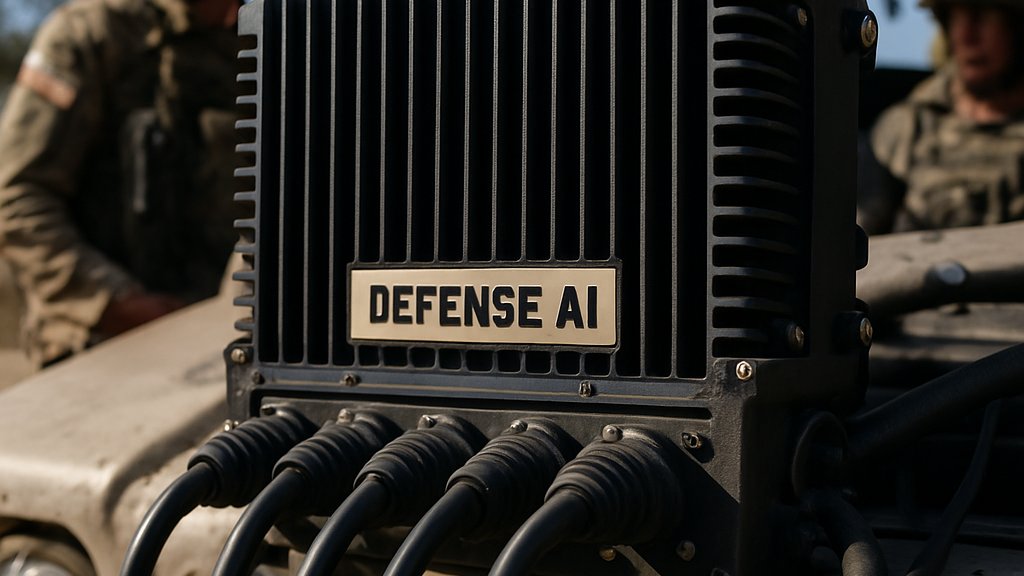
The xTech model accelerates promising startups. Moreover, Phase-II funding aligns with milestone demonstrations. Success could flow into larger production contracts as the FY 2026 budget earmarks $13.4 billion for autonomy. Therefore, many observers see the move as a vote of confidence in alternative architectures for Defense AI.
These factors confirm growing Army interest. Nevertheless, meeting schedule and performance checkpoints remains critical before procurement decisions.
Consequently, attention now shifts to technical execution.
xTech Program Pathway
xTech competitions start with pitches and prizes. Subsequently, winners secure Phase I studies and, if successful, Phase II demos. Funding caps hover near $1.9 million, matching GSI’s award. Furthermore, Army mentors guide integration with units and primes. That structure reduces valley-of-death risk often faced by emerging Tactical Technology suppliers.
Early engagement also streamlines feedback. Consequently, hardware tweaks can occur long before formal acquisition gateways.
These program mechanics shorten timelines. However, rigorous testing still guards taxpayer dollars.
Gemini-II APU Explained
Gemini-II is a compute-in-memory APU that executes operations inside memory arrays. Consequently, data movement drops sharply, cutting energy use. GSI invested about $175 million in APU research and holds 87 related patents. Moreover, internal benchmarks show superior performance-per-watt versus Jetson and Snapdragon parts.
The architecture processes bits in parallel with precise width control. Consequently, small edge devices can run convolutional or transformer models while staying under strict power envelopes. That capability supports Defense AI missions where bandwidth is scarce.
Ruggedized packaging will harden the chip against shock, vibration, and temperature swings. In contrast, many commercial processors lack those protections. The new design therefore aligns with Army environmental standards.
These technical traits could reshape edge inference. Nevertheless, software tooling and integration remain open challenges.
Subsequently, market forces will determine adoption speed.
Market And Budget Context
GSI estimates the edge AI market will grow from $21 billion in 2025 to $120 billion by 2030. Additionally, the specialized segment relevant to Tactical Technology shows an 18–22 percent CAGR. DoD funding trends reinforce that outlook. The FY 2026 request carves out $13.4 billion solely for autonomy systems.
- Edge AI market 2025: $21 billion
- Projected 2030 market: $120 billion
- Specialized edge SAM 2025: $7 billion
- DoD autonomy line: $13.4 billion
Consequently, suppliers offering low-SWaP solutions may capture significant share. Moreover, ruggedized hardware wins an advantage where environmental extremes prevail. Therefore, Gemini-II’s focus on compute-in-memory could resonate with platform integrators.
These numbers signal fertile opportunity. However, crowded competition will pressure margins and differentiation.
Subsequently, understanding risks becomes essential.
Challenges And Competitive Landscape
Compute-in-memory still faces scaling hurdles. Device variability and quantization limits can erode accuracy. Nevertheless, academic reviews suggest continued progress. Mythic, NVIDIA, and Qualcomm also chase the same field. Therefore, GSI must validate claims through peer benchmarks.
Software ecosystems present another obstacle. GPUs enjoy mature toolchains, while APU frameworks remain nascent. Consequently, porting large models demands engineering effort. Radiation tolerance also matters for Defense platforms. GSI’s SRAM heritage helps, yet formal MIL-SPEC qualification takes time.
Non-dilutive SBIR dollars reduce R&D risk. Additionally, early Army stakeholder involvement sharpens requirements. Still, transition from prototype to program-of-record remains uncertain.
These headwinds could slow adoption. However, clear milestones and partnerships can mitigate many issues.
Subsequently, professionals may ask how to prepare for emerging procurement waves.
Future Steps And Certification
Program milestones will cover design finalization, environmental testing, and live demonstrations. Consequently, GSI will need integrator allies to slot hardware into larger systems. Industry professionals tracking Defense AI can deepen expertise through education. Professionals can enhance their expertise with the AI for Government™ certification.
That credential strengthens understanding of acquisition rules, security controls, and mission applications. Moreover, certified practitioners often gain faster access to pilot projects.
These steps build workforce readiness. Therefore, they complement technical advances detailed above.
In summary, the Army contract reflects surging interest in low-power Tactical Technology, ruggedized design, and innovative APU architectures. Consequently, ongoing demos will reveal whether Gemini-II meets battlefield demands.
Disclaimer: Some content may be AI-generated or assisted and is provided ‘as is’ for informational purposes only, without warranties of accuracy or completeness, and does not imply endorsement or affiliation.


