

AI CERTS
1 hour ago
Akamai edge AI pushes distributed inference to the global edge
This article examines how the platform combines RTX servers, Blackwell GPUs, and NVIDIA AI Grid orchestration to deliver gains. Furthermore, we evaluate cost claims, customer adoption, and operational challenges facing distributed computing at scale. Consequently, technology leaders can gauge whether proximity-based inference belongs in their 2026 roadmaps.
Akamai Edge Strategy Unpacked
Akamai edge AI rests on the company’s existing CDN backbone, already handling one petabyte per second of traffic. Moreover, Akamai embedded NVIDIA AI Grid across more than 4,400 sites during March 2026. That rollout federates GPU nodes into a single control plane. Consequently, models can be placed close to users while updated centrally. Akamai COO Adam Karon describes the goal as bringing AI “to the street corner and the hospital bed.”
These moves clarify the architectural intent. However, hardware choices ultimately determine performance, which leads to the next discussion.
Hardware Powers Global Fabric
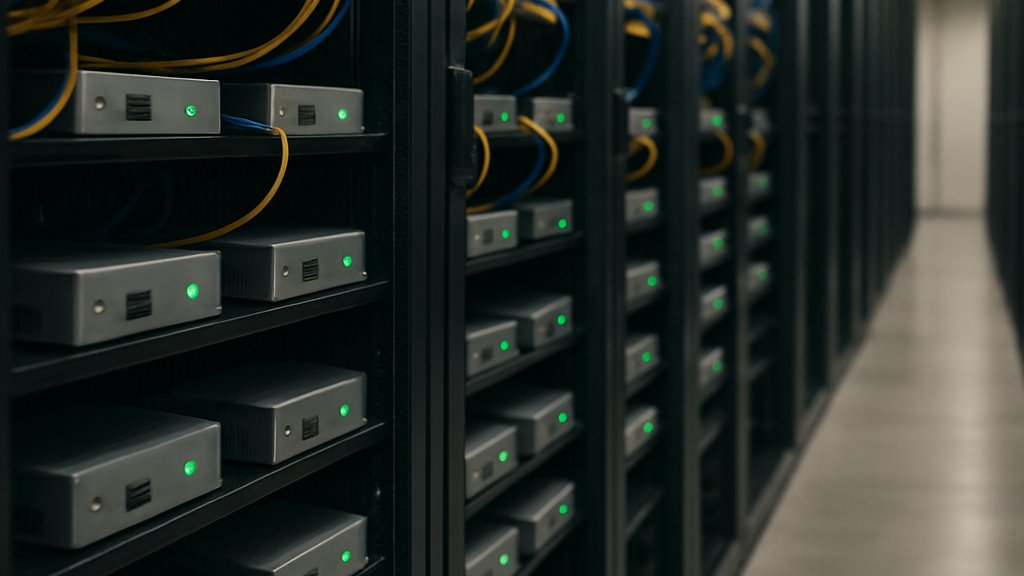
The edge fleet relies on NVIDIA RTX PRO 6000 Blackwell GPUs paired with BlueField DPUs. Each RTX servers enclosure advertises 128 vCPUs, 1,472 GB memory, and eight terabytes of NVMe storage. Subsequently, Akamai ordered thousands of additional Blackwell units to augment the initial stock. According to Akamai, this purchase will create one of the most widely distributed GPU fabrics worldwide.
Moreover, the RTX servers stack was selected to complement Akamai edge AI objectives for local processing. Engineers note that Akamai edge AI benefits from PCIe Gen5 lanes inside each node.
Node Hardware Specs Snapshot
- RTX servers host up to 128 vCPUs per node.
- Memory reaches 1,472 GB for model caching.
- Local NVMe delivers eight terabytes of high-speed storage.
- BlueField DPUs offload networking and security tasks.
Collectively, these specifications aim to balance local compute with efficient energy use. These numbers illustrate raw capability. Nevertheless, the ultimate question involves real performance gains. In contrast, hyperscale racks often centralize eighty GPUs per pod, trading reach for raw density.
Performance Gains And Metrics
Akamai promises up to three-fold throughput improvements and 2.5× lower latency versus hyperscale baselines. Furthermore, marketing materials highlight 86% cost savings for certain large language model workloads. Time-to-first-token and tokens-per-second are the headline service-level objectives. Independent analysts still await third-party benchmarks to validate those figures. In contrast, IDC's sponsored brief accepts the claims for gaming, finance, and live media scenarios.
Pilot results showed median inference response falling under 40 milliseconds. Moreover, Akamai suggests agentic workloads benefit because shorter round trips cut chain-of-thought delays. Testing indicates Blackwell GPUs exceed 500 tokens-per-second on 7B models at the edge.
Key Benefits Summary List
- Lower latency improves real-time user experience.
- Higher throughput reduces unit inference cost.
- Edge placement aids data compliance.
These metrics suggest competitive economics. Therefore, customer traction warrants attention.
Customer Momentum And Deals
Bloomberg disclosed a seven-year, $1.8 billion agreement between Anthropic and Akamai in May 2026. Moreover, Akamai edge AI positions the platform as an attractive alternative during ongoing GPU shortages at hyperscalers. Telcos such as AT&T, Spectrum, and Comcast are piloting similar deployments powered by NVIDIA AI Grid. Consequently, analysts expect partnership announcements to accelerate over the coming quarters. Still, customers will demand proof that distributed computing does not sacrifice reliability. Several startups integrate Akamai edge AI to avoid queuing delays at hyperscalers.
These deals validate early market confidence. However, risk factors remain, as discussed next.
Challenges And Critical Risks
Running synchronized models across thousands of edge nodes introduces operational complexity. Additionally, power and cooling limits at remote sites constrain RTX servers density. Model version drift may cause inconsistent outcomes under heavy traffic. Security professionals also note that more execution points enlarge the attack surface. Nevertheless, Akamai claims its prompt firewall and API shield mitigate many threats. In contrast, critics argue that distributed computing still complicates audit logging and incident response.
These hurdles could impede adoption. Subsequently, architects must weigh benefits against such risks. Furthermore, supply chain delays could slow GPU replacement cycles at remote shelters.
Implications For Enterprise Architects
Enterprise teams evaluating Akamai edge AI should start with workload profiling. Workloads demanding sub-100-millisecond responsiveness, such as agentic assistants and robotic control, gain the most. Meanwhile, batch summarization jobs may stay economical on central cloud infrastructure. Therefore, hybrid placement strategies appear prudent. Architects should also quantify egress fees avoided when requests never exit regional networks.
Professionals can validate skills through the AI Cloud Specialist™ certification. Consequently, teams align technical decisions with recognized best practices. These guidelines simplify early planning. Finally, we consider near-term outlook.
Akamai edge AI has evolved from announcement to operational reality within eighteen months. RTX servers, Blackwell GPUs, and NVIDIA AI Grid now anchor a 4,400-site inference fabric. Consequently, enterprises can target lower latency and cost, yet must master distributed computing complexity. Nevertheless, early deals like Anthropic's $1.8 billion pact validate commercial appetite. Leaders should pilot Akamai edge AI inference against existing cloud baselines and pursue certifications to build internal confidence. Explore the linked program to deepen expertise and prepare for the distributed future.
Disclaimer: Some content may be AI-generated or assisted and is provided ‘as is’ for informational purposes only, without warranties of accuracy or completeness, and does not imply endorsement or affiliation.


