

AI CERTS
1 hour ago
AI Reputation Management Faces Intensifying Backlash
Moreover, the Federal Trade Commission’s 2024 rule now attaches hefty fines to fake or undisclosed testimonials. Originality.ai research further signals that 14.9% of Forbes Business Council posts in 2024 were likely machine written. Consequently, market stakeholders must reassess content workflows, disclosure policies, and risk controls. This article unpacks the recent events, regulatory landscape, and strategic responses shaping AI Reputation Management today. Meanwhile, market forecasts show billions in potential revenue, underscoring the stakes. However, cashing in depends on protecting credibility.
Forbes Dispute Highlights Risk
June 18, 2024, Forbes sent an aggressive copyright demand to AI-search startup Perplexity. The letter accused the tool of republishing Forbes journalism without proper attribution. However, Perplexity’s CEO admitted the feature had rough edges and promised source improvements. Nevertheless, Forbes Chief Content Officer Randall Lane warned that AI summaries now outrank original reporting, harming reputational capital.
The spat highlights a key vulnerability when automated systems fail to credit human work. In contrast, publishers risk audience trust erosion if they appear complicit in unlicensed reuse. Further disputes are expected as large language models scrape the open web at scale. Forbes versus Perplexity demonstrates how fast AI mistakes become headline legal stories. Therefore, early risk auditing is essential before any AI Reputation Management deployment. Meanwhile, regulators worldwide are tightening the screws on synthetic content.
Rising Regulatory Pressures Today
The FTC’s final rule banning fake reviews took effect on October 21, 2024. It empowers regulators to levy civil penalties approaching $51,744 per violation. Moreover, the rule explicitly covers AI-generated testimonials and undisclosed insider endorsements. European regulators are drafting similar guidance, signalling a global compliance wave.
Consequently, brands reliant on automated review generation face material financial and reputational exposure. Legal experts advise strengthening disclosure labels, human moderation, and data provenance logs. Additionally, many Online Reputation Management vendors now market rule-compliant templates and audit tools. Regulators no longer tolerate synthetic praise masquerading as organic opinion. Therefore, penalty avoidance must anchor every AI Reputation Management roadmap. Consumer sentiment reflects these legal changes in real time.
Consumer Backlash Intensifies Online
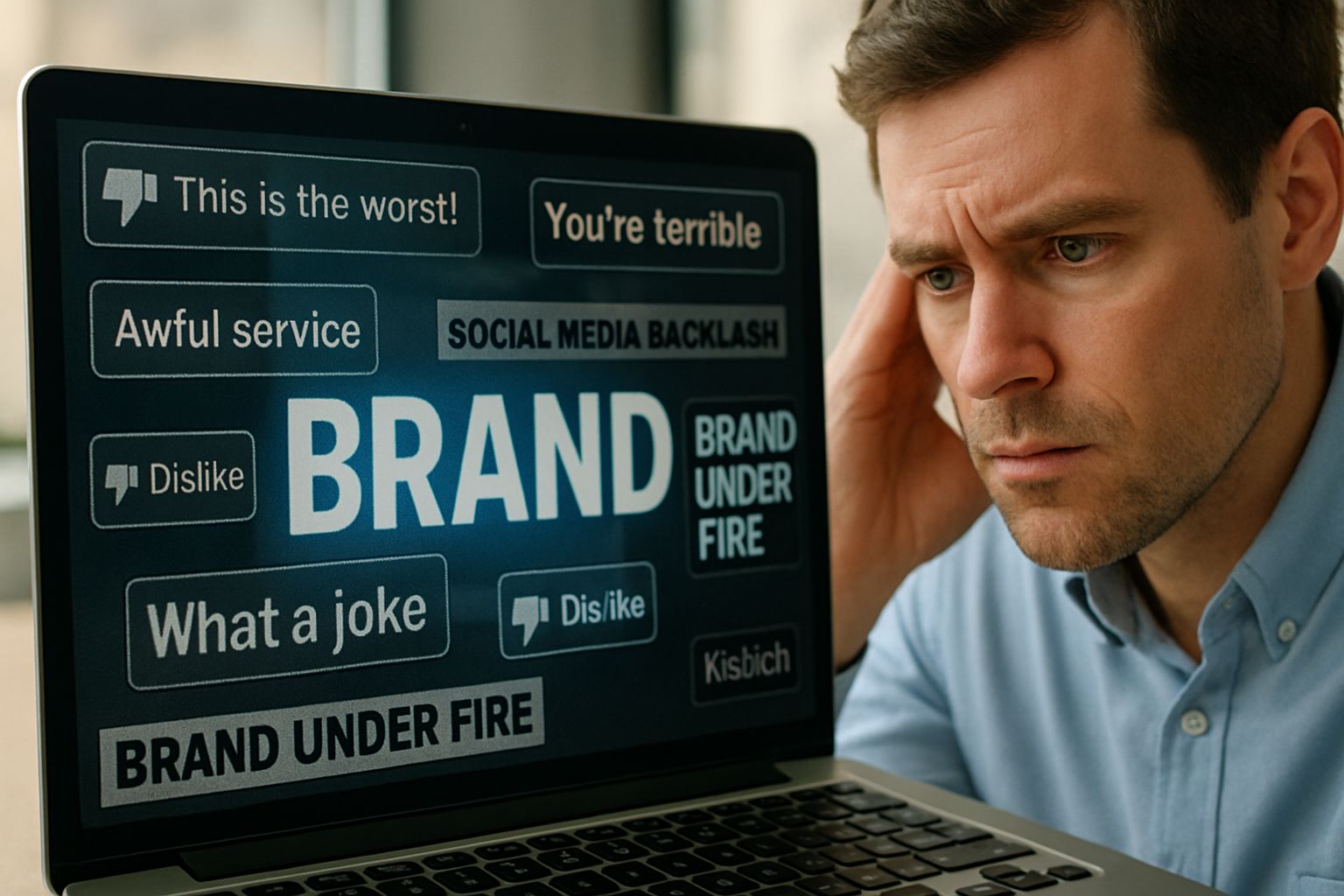
Surveyed audiences increasingly flag robotic language and generic praise as inauthentic. Forbes Councils study sparked social media threads accusing paying contributors of gaming authority. Similarly, retail brands suffered rating drops after bulk posting AI-authored apologies. Moreover, TikTok creators highlight hallucinatory brand claims, amplifying Backlash within hours.
Trustpilot recently removed thousands of suspicious entries, many traced to automated review farms. In contrast, Consumers reward transparent companies that label chatbot assistance clearly. Good governance frameworks appear to dampen outrage and preserve loyal communities. Authenticity gaps ignite Backlash quickly across every digital channel. Consequently, responsive disclosure builds lasting Trust among skeptical Consumers. Yet, market scale remains tempting for executives.
Market Size Projections Shift
Analysts estimate the wider Online Reputation Management market ranges from hundreds of millions to several billions. Mordor Intelligence cites robust double-digit growth driven by software subscriptions and managed services. However, Backlash risks already reshape vendor roadmaps and investor expectations. Boards now ask whether aggressive automation truly delivers Good returns after compliance costs.
- Originality.ai found 14.9% likely AI articles on Forbes during 2024.
- FTC penalties can hit $51,744 for every fake review.
- Analysts expect ORM revenue to exceed $5 billion globally by 2028.
Investors will favor firms combining transparent workflows with verifiable data trails. Therefore, revenue projections hinge on sustainable AI Reputation Management adoption. Accuracy challenges make sustainability elusive.
Hallucination Fuels Accuracy Woes
Large language models often invent citations, dates, or quotes when confronted with sparse context. OpenAI describes these errors as hallucinations and concedes they remain difficult to eliminate completely. Moreover, hallucinations scale reputational damage because confident tone masks fabrication. Forbes fears that misattributed summaries undermine its brand authority in search results.
Consequently, editorial teams increasingly pair detectors with human fact checkers before publishing. In contrast, unattended chatbots continue spewing flawed refund policies or shipping dates, frustrating Consumers. Good process design mandates multi-layer review, storage of provenance metadata, and explicit disclaimers. Hallucinations threaten Trust faster than any single typo. Therefore, rigorous validation is table stakes for AI Reputation Management success. Mitigation frameworks are emerging across sectors.
Best Practice Mitigation Steps
Leading organizations now embed layered governance into content lifecycles. Additionally, teams assign clear ownership for prompt design, human review, and final release. Moreover, detection platforms such as Originality.ai audit contributor submissions before syndication. Brands also log model versions, temperature settings, and feedback loops for forensic reporting.
- Label all AI-assisted content visibly.
- Retain human veto power on public statements.
- Update compliance checklists quarterly.
These steps limit Backlash while reinforcing Reputational resilience. Consequently, well-governed workflows nurture Consumer Trust and Good sentiment. The final section distils critical insights.
Strategic Certification Advantage Now
Stakeholders can strengthen governance with ethics education. Professionals can pursue the AI Ethics Certification to validate responsible practice. Moreover, certified teams earn stakeholder Trust and mitigate Reputational uncertainty. Therefore, AI Reputation Management programmes benefit when leaders embed structured ethics training. Certification signals Good faith efforts toward transparent automation. Consequently, boards regard accredited managers as lower-risk hires. The final section distils critical insights.
AI Reputation Management now sits at a strategic crossroads. Backlash, regulation, and hallucination risks converge, threatening hard-won audience Trust. However, strong governance, transparent labeling, and continuous human oversight can preserve Reputational value. Consequently, companies must align policies with the FTC rule and international standards. Moreover, proactive disclosure calms Consumers and prevents costly crises.
Leaders who invest in ethics training, such as the AI Ethics Certification, signal credible intent and competence. Act now to audit processes, upgrade skills, and build a resilient AI Reputation Management strategy before the next headline hits. Early movers will convert sound AI Reputation Management into lasting market advantage.
Disclaimer: Some content may be AI-generated or assisted and is provided ‘as is’ for informational purposes only, without warranties of accuracy or completeness, and does not imply endorsement or affiliation.


