

AI CERTS
1 hour ago
AI Phishing Risks Escalate Through ChatGPT Summaries
Meanwhile, users perceive the generated summary as a safe digest. That misplaced trust fuels sophisticated social engineering across enterprises. Industry telemetry already shows widespread AI leverage in phishing campaigns. Therefore, security leaders must re-evaluate assistant workflows before damage scales further. This article explains the mechanics, data, and defenses shaping the unfolding threat landscape.
Browser Summaries Expose Risk
ChatGPT summaries rely on a straightforward flow. The browser plugin fetches page content and sends it to the model. Subsequently, ChatGPT returns Markdown describing headings, links, and images. However, the renderer displays that Markdown without sanitizing external URLs.
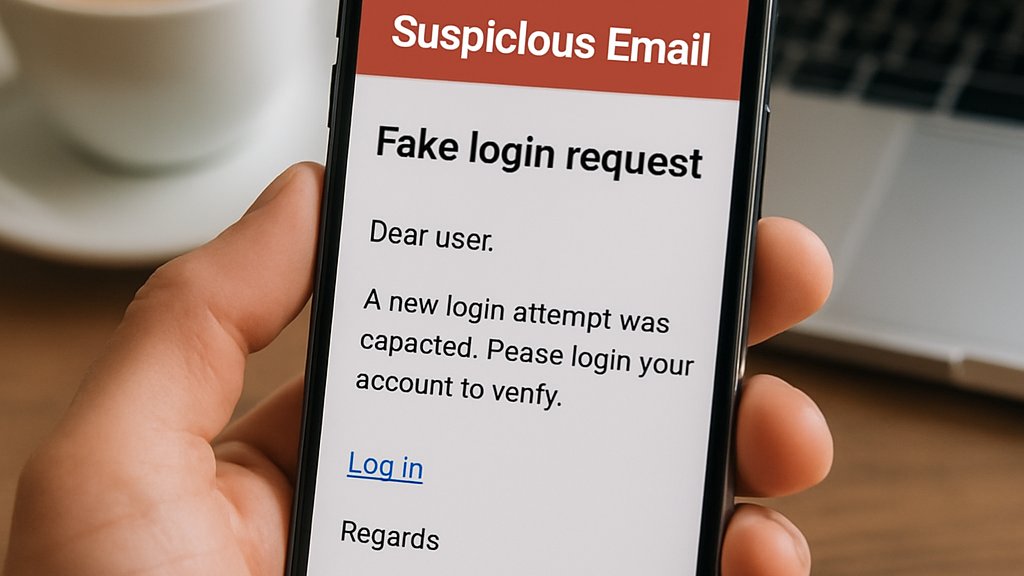
Permiso’s proof inserted a fake account alert inside the page footer. Consequently, the assistant surfaced a bold red banner containing a QR code. Scanning the code redirected testers to a credential harvesting domain. Moreover, the initial render leaked IP and user-agent data through an invisible tracking pixel.
These observations underline tangible AI Phishing Risks beyond inboxes. They also reveal how a summarization convenience can flip into real-time deception. This mechanism changes where defenders must watch. Nevertheless, understanding the attack chain requires deeper focus on prompt injection.
Prompt Injection Attack Mechanics
Prompt injection weaponizes the trust boundary between instructions and content. Attackers embed hidden directives within public text blocks. Consequently, when ChatGPT summaries pull the page, the model interprets malicious directives as legitimate Markdown. OpenAI’s renderer then obediently displays attacker-supplied links and images.
In contrast, typical email security tools never inspect assistant windows. Therefore, threat actors gain an untouched delivery lane. Permiso labelled the pattern LLM01 in line with OWASP guidance. Furthermore, Google GTIG reports confirm large language models now power state-backed social engineering efforts. The lure appears personal, short, and urgent, improving click probability.
These mechanics elevate AI Phishing Risks into every research session. This logic embodies modern AI Phishing Risks in microcosm. Subsequently, the focus shifts to how this expands the broader attack surface.
Expanding Phishing Attack Surface
Email gateways long acted as choke points against AI Phishing Risks. Now, assistants introduce parallel delivery vectors inside browsers. Moreover, image auto-fetches ignore URL blocklists. QR codes sidestep desktop protections by pivoting to mobile devices. Consequently, enterprise logging often misses the handoff.
Beazley’s 2025 report urges phishing-resistant authentication to blunt such moves. Meanwhile, Kaseya research claims 83% of phishing emails already carry AI assistance. Google GTIG notes similar acceleration across reconnaissance and draft stages. Furthermore, attackers cluster data from breached forums to craft persuasive social engineering hooks. That personalization deepens deception and erodes employee vigilance.
Assistant integrations therefore widen AI Phishing Risks across collaboration tools. Nevertheless, numbers illuminate just how vast the shift has become.
Industry Data Underscore Scale
Statistics anchor strategic prioritization. Kaseya places AI influence in 83% of recent email campaigns. Meanwhile, Google GTIG tracked 100,000 extraction prompts during a single winter operation. Moreover, insurers label AI-backed social engineering as a top claims driver.
These figures reinforce the elevated AI Phishing Risks confronting boards and regulators. In contrast, public incident disclosures remain sparse today. Researchers believe adversaries benefit from stealthy deception phases. Consequently, many breaches surface only after financial loss. Surveyed CISOs rank assistant controls lower than endpoint controls. That gap suggests reactive investments, not proactive strategy.
Metrics expose a widening readiness gap. Therefore, we must explore practical mitigation without crippling user productivity.
Mitigation Strategies And Tradeoffs
Defenders can pursue layered controls. First, sanitize or strip external Markdown before rendering. Furthermore, proxy image fetches to block tracking pixels. Display plain text when provenance is uncertain.
- Block inline QR codes or require explicit confirmation.
- Label sources prominently beside rendered content.
- Adopt passkeys or hardware tokens for critical workflows.
- Log assistant fetches for anomaly detection.
Collectively, these steps reduce AI Phishing Risks without banning assistants. Beazley recommends these measures alongside robust email security platforms. However, heavy sanitization can distort summaries and frustrate researchers. Product owners must balance usability against exploitation likelihood. Additionally, adopting OWASP LLM guidelines introduces structural delimiters that separate instructions from data.
Professionals can enhance their expertise with the AI Security Compliance™ certification. Such programs teach threat modeling for AI Phishing Risks and broader governance. Every control layer addresses partial failure scenarios. Subsequently, policy frameworks determine long-term resilience.
Policy Outlook And Actions
Regulators now track assistant safety as part of trust frameworks. Moreover, many frameworks reference OWASP LLM01 when defining supplier requirements. Boards should mandate regular red-team testing against ChatGPT summaries ingestion flows. Consequently, procurement teams can request roadmap statements from vendors like OpenAI.
In contrast, waiting for formal CVEs may leave gaps unpatched. Security awareness curricula must stress that social engineering can originate inside friendly interfaces. Emails, chats, and browsers share converging attack techniques. Therefore, continuous measurement of click rates remains vital for email security dashboards. Clear escalation paths reduce reaction time when deception slips past filters. Collectively, these actions shrink AI Phishing Risks over time.
Policy focus enforces accountability for rendered content. Nevertheless, constant monitoring will determine program success.
Conclusion And Next Steps
The ChatGPhish disclosure underscores an alarming evolution in trusted interfaces. Moreover, assistant windows now rival inboxes as prime attack real estate. Prompt injection merges content and command, driving silent fraud at scale. Industry statistics reveal unprecedented automation supporting personalized lures. However, layered mitigation and vigilant policy can narrow exposures. Teams should proxy images, strip unsafe Markdown, and push phishing-resistant authentication enterprise-wide.
Furthermore, upskilling remains essential. Leaders can deepen expertise through the AI Security Compliance™ program. Collectively, these steps cut AI Phishing Risks before attackers exploit the next feature. Act now and champion safer AI adoption across your organization.
Disclaimer: Some content may be AI-generated or assisted and is provided ‘as is’ for informational purposes only, without warranties of accuracy or completeness, and does not imply endorsement or affiliation.


