

AI CERTS
6 hours ago
AI Memory Stocks Slide Amid Glut Fears And Volatile Demand
July Market Rout Explained
Early July witnessed double-digit intraday drops for Micron and Sandisk. Meanwhile, Korean giants endured multi-day whiplash following Samsung’s record profit announcement. Analysts blamed crowded positioning, stretched valuations, and fresh worries over oversupply risk. Furthermore, ETF data showed some DRAM-focused funds technically entering bear territory. The sudden reversal surprised newcomers to the AI trade but felt familiar to veterans of past silicon cycles. In contrast, broader indices like the SOX also slipped, amplifying fear.
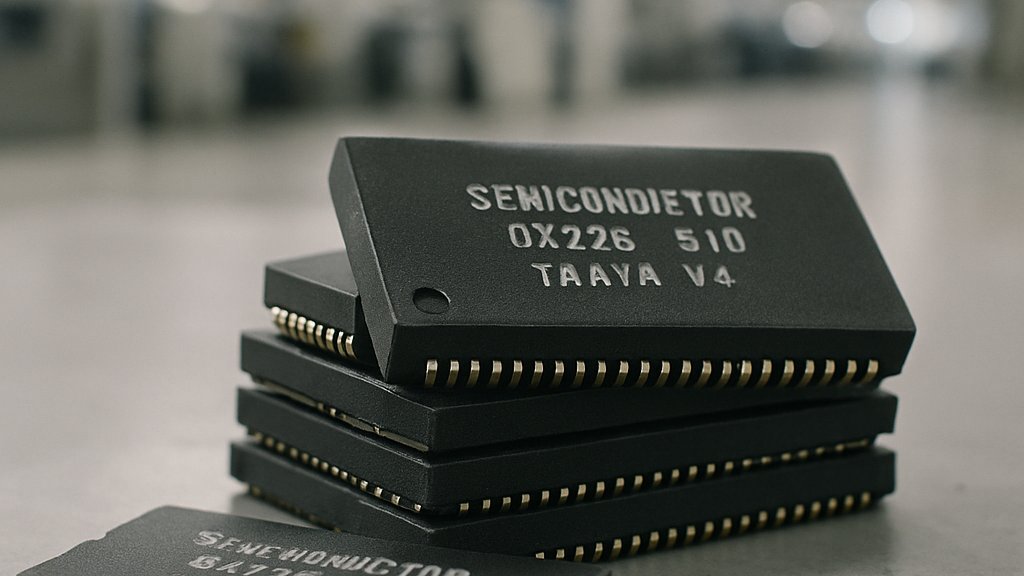
Key statistics underline the move. SIA reported record 2025 semiconductor revenue of $791.7 billion. Nevertheless, DRAM spot prices decelerated to roughly 60% quarter-on-quarter gains in Q2 2026 from 90% in Q1. Therefore, momentum cooled exactly when many funds held peak exposure to AI Memory Stocks. These events triggered aggressive de-risking.
- Micron shares fell 12% on 2 July.
- Sandisk closed 14% lower that session.
- SOX index lost 7% over the week.
These numbers underscore fragile investor sentiment. However, volatility also refreshes valuation entry points. The rout highlights how swiftly memory shares can disconnect from long-term demand narratives. Consequently, participants must track both market psychology and supply metrics.
The selloff’s mechanics set the stage. Subsequently, pricing trends demand a closer look.
Pricing Cycle Signals Seen
DRAM and HBM prices remain the cycle’s heartbeat. TrendForce data shows contract DRAM averaged 58-63% sequential growth in Q2. Additionally, spot prices recently underperformed contracts, hinting at easing tightness. Nevertheless, HBM3 modules still command hefty premiums, supporting vendor margins. Moreover, SK Hynix’s chief warned of the “worst-ever” shortage in 2027. Such statements keep bulls confident despite near-term oversupply risk.
Contract-spot divergence historically flags turning points. Therefore, professionals monitor weekly spreads, inventory weeks-of-supply, and hyperscaler purchasing cadence. In contrast, headline averages can mislead because HBM dynamics differ from PC DRAM. Consequently, the semiconductor outlook hinges on mix rather than aggregate bits alone.
Price swings feed directly into forecasts for AI Memory Stocks. Furthermore, pricing governs free cash flow that funds multi-billion-dollar fabs. Investors must recognize that sustained 50% quarter-on-quarter ASP gains are unsustainable. However, mild deceleration does not equal collapse. Trend watchers should assess slope, not just direction.
Current pricing signals appear mixed. Nevertheless, they do not yet confirm an outright glut. These nuances push the debate toward capacity expansion plans.
Supply Buildout Debate
Micron shocked markets by boosting planned U.S. investment to $250 billion through 2035. Meanwhile, Samsung and SK Hynix ramp domestic and overseas lines. Moreover, Chinese entrants accelerate pilot DRAM projects. Consequently, the supply pipeline looks formidable. Yet, management teams stress that cutting-edge nodes focus on HBM, which uses more wafer area per gigabit.
Bulls argue these projects simply catch up with generative AI demand. Additionally, export controls limit China’s access to advanced HBM tooling, prolonging tightness. Bears counter that history shows capacity announcements often overshoot. Therefore, they flag inevitable oversupply risk by 2028.
Capital intensity also affects balance sheets. Higher depreciation may pressure earnings once shipments normalize. Consequently, cautious funds trimmed exposure to AI Memory Stocks after Micron’s announcement. Nevertheless, long-only managers still expect robust structural demand.
Supply narratives diverge sharply. However, both sides agree that cloud buyers ultimately arbitrate the outcome. Hence, demand visibility deserves scrutiny next.
Hyperscaler Demand Remains Wildcard
Cloud titans—Amazon, Microsoft, Google, Meta, and NVIDIA—drive around 70% of advanced memory bit growth. Furthermore, each company signals multiyear AI infrastructure plans. However, CFO commentary now emphasizes “efficiency” and “utilization” more often. Consequently, order phasing could shift quarter to quarter.
Spotlight rests on GPU attach ratios. Generative AI clusters require HBM stacks several times larger than earlier GPU generations. Therefore, tiny adjustments in rollout schedules swing consumption materially. Meanwhile, AI model launches dictate server DRAM demand. In contrast, consumer PC recovery plays a minor role today.
Prolonged demand keeps memory shares buoyant. Nevertheless, any slowdown would hit sentiment swiftly. Analysts model scenarios where a single hyperscaler pauses for one quarter. Under that case, TrendForce sees contract ASPs sliding 15% sequentially. Such sensitivity explains why AI Memory Stocks react violently to guidance snippets.
Demand opacity complicates forecasting. However, policy developments add yet another layer of uncertainty.
Policy And China Factor
Export restrictions on cutting-edge lithography curtail Chinese HBM ramp ambitions. Consequently, existing suppliers enjoy temporary insulation. However, Beijing accelerates domestic tooling, subsidizing new fabs aggressively. Moreover, U.S. CHIPS Act incentives encourage parallel capacity at home. Therefore, global policy mixes both support and competition.
Additionally, Washington debates extending outbound investment reviews to advanced memory. Such proposals could restrict U.S. capital participation in Chinese DRAM startups. Meanwhile, revised tariffs threaten cross-border supply chains. In contrast, Korean vendors navigate both alliances and major Chinese customer bases. This tightrope elevates geopolitical premium inside investor sentiment models.
Policy turbulence also reshapes the broader semiconductor outlook. Furthermore, currency fluctuations from trade tension affect dollar-denominated ASPs. Consequently, hedging strategies gain importance for funds concentrated in AI Memory Stocks.
Geopolitics thus interacts with prices and capacity. Subsequently, professionals need concrete signals to track going forward.
Key Risk Indicators Monitored
Several real-time metrics help decode the next move:
- Weekly contract versus spot DRAM spreads from TrendForce.
- Hyperscaler capex guidance updates each earnings season.
- Fab equipment shipments reported by ASML and Lam Research.
- Inventory days disclosed by Samsung, Micron, and SK Hynix.
- Regulatory announcements on export controls or subsidies.
Moreover, cross-asset signals—such as credit spreads for equipment makers—often lead equity moves. Therefore, diversified indicator dashboards reduce whipsaw. Professionals can also strengthen skill sets through specialized training. For example, they can validate financial modeling knowledge with the AI Finance™ certification. Consequently, analysts gain confidence interpreting cash-flow impacts for memory shares.
Tracking these indicators sharpens timing around AI Memory Stocks. Nevertheless, strategic context remains essential, which the next section provides.
Strategic Takeaways For Investors
Multiple forces now jostle the market:
- Price momentum moderates yet stays positive.
- Capacity investments balloon, boosting fixed costs.
- Hyperscaler budgets remain fluid and opaque.
- Policy risk oscillates between support and restriction.
- Positioning unwinds magnify daily volatility.
Consequently, portfolio managers should blend top-down and bottom-up analysis. Moreover, they must size positions relative to liquidity rather than conviction alone. In contrast, retail traders often chase headlines, increasing noise. Therefore, disciplined frameworks outperform during shakeouts.
Scenario mapping also helps. Additionally, stress-testing revenue under varying ASP paths clarifies downside. Tools like Monte Carlo simulations integrate price variance and demand elasticity. Meanwhile, option strategies can hedge unexpected shocks. Nevertheless, accumulating quality names during panic often yields attractive returns once cycles stabilize.
Understanding these dynamics empowers professionals monitoring AI Memory Stocks. However, continued education and data access remain vital.
These strategic insights summarize the journey. Subsequently, readers should consolidate key messages.
Conclusion
Memory’s AI supercycle remains alive, yet volatility has re-entered. Furthermore, pricing signals now show a gentle slowdown, not collapse. Capacity announcements promise future abundance, while policy and hyperscaler budgets inject fresh uncertainty. Consequently, investor sentiment swings fast, tugging memory shares along. Professionals who monitor leading indicators, diversify tactics, and refine skills can harness disruption. Therefore, consider enhancing analytical credentials through the linked certification, and stay vigilant as the next chapter for AI Memory Stocks unfolds.
Disclaimer: Some content may be AI-generated or assisted and is provided ‘as is’ for informational purposes only, without warranties of accuracy or completeness, and does not imply endorsement or affiliation.


