

AI CERTS
2 hours ago
Adaptation-First Breakthroughs in Continual Learning AI Research
This article unpacks the trend, dissects two seminal studies, and assesses enterprise relevance. Moreover, we map limitations, open questions, and certification pathways for ambitious practitioners. Readers will see why adaptation-first frameworks could reshape lifelong AI roadmaps. Nevertheless, practical costs and benchmark debates demand balanced evaluation. In contrast, conservative camps still defend frozen backbones for high-volume, non-stationary tasks. Subsequently, emerging hybrid approaches aim to reconcile both philosophies within production boundaries.
Adaptation Trend Rises Fast
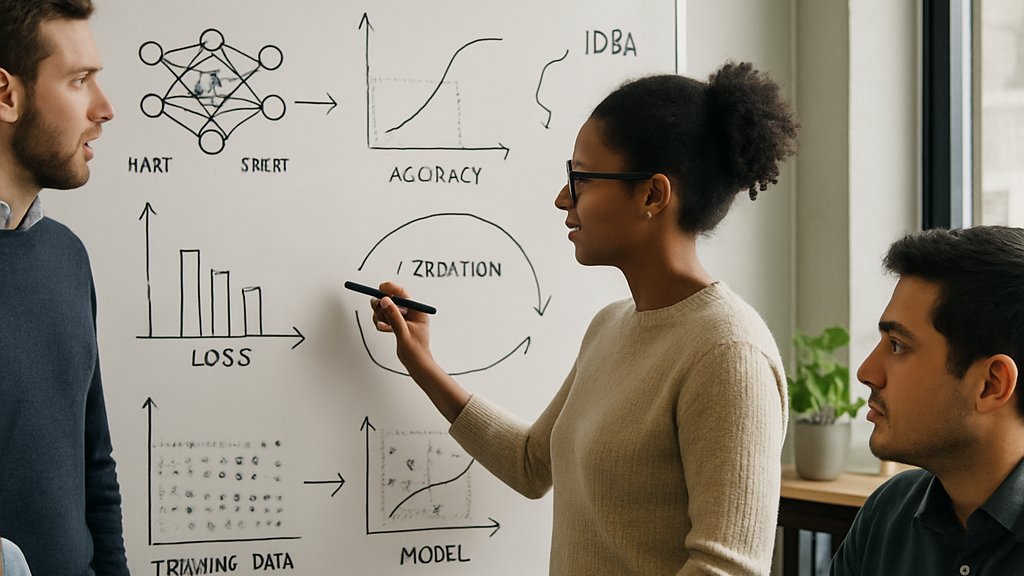
Two flagship papers anchor the adaptation narrative. Adapt before Continual Learning, accepted at AAAI 2026, inserts a brief fine-tuning stage before every task. Re-Evaluating Continual Learning with Few-Shot Adaptation measures recovery after only a handful of labeled examples. Together, they reposition Continual Learning AI as a dynamic process rather than a once-and-done optimization.
Furthermore, multiple ICLR workshops now showcase test-time adaptation, meta-initialization, and adaptation-aware benchmarks. Industry labs, including DeepMind, echo the call for faster plasticity under non-stationary tasks. Consequently, adaptation-first methods enjoy rising citation momentum and community visibility.
Adaptation-first thinking is gaining institutional support and empirical proof. However, balancing it with stability requires deeper tradeoff analysis, addressed next.
Stability Plasticity Tradeoff Explained
Original continual learners feared catastrophic forgetting above all else. Therefore, methods froze core parameters and relied on replay buffers or tiny adapters. Such tactics preserved earlier knowledge yet limited transfer efficiency when domains shifted drastically.
Adaptation-first frameworks invert priorities. They allocate short, compute-light bursts that re-align prototypes within pre-trained transformers. Meanwhile, plasticity rises, and catastrophic forgetting becomes a recoverable nuisance rather than permanent loss.
The dilemma turns into an optimization of adaptation time versus memory overhead. Next, we dive into the studies quantifying that balance.
Key Study Insight Highlights
ACL authors fine-tuned a Vision Transformer backbone for several gradient steps before each incremental block. That plug-and-play hook raised average accuracy across six strong baselines on ImageNet domain-shift suites. Moreover, improvements exceeded six points on challenging ImageNet-A and ImageNet-R subsets. Such agility promotes practical lifelong AI solutions in consumer settings.
In contrast, Inamdar and colleagues injected five labeled images at evaluation time. Standard SGD then restored much lost performance within seconds, showcasing dramatic transfer efficiency gains. Their SAUCE metric captured per-shot adaptation curves, rewarding fast learners.
Both studies confirm that quick adaptation unlocks robust accuracy under non-stationary tasks. However, raw numbers reveal the magnitude more vividly, as the next section details.
Performance Metric Snapshot Data
The bullet list below distills headline results from the two papers.
- L2P with ACL: accuracy jumped from 42.58 to 48.65 on ImageNet-A-Inc20.
- DualPrompt with ACL: score improved from 45.35 to 53.22, gaining 7.87 points.
- RanPAC with ACL: metric rose from 58.16 to 64.45 on ImageNet-R/Inc20.
- ObjectNet validation: DualPrompt plus ACL realized +3.20, while MOS dropped −2.69.
- Few-shot adaptation: five shots restored over 80% lost accuracy across multiple sequences.
Collectively, these figures prove adaptation-first adds measurable value with minimal engineering. Nevertheless, those gains demand extra memory, roughly seven gigabytes in ACL tests.
Metrics depict strong plasticity without severe penalties for most Continual Learning AI baselines. Therefore, practical tradeoffs enter focus, which the next section explores.
Practical Deployment Impacts Examined
Enterprises crave performance yet guard inference budgets. Adaptation-first workflows introduce short compute spikes before or during evaluation. Additionally, ACL authors report seven gigabytes of additional GPU memory for ImageNet experiments. Edge devices may lack that headroom, especially for Continual Learning AI inferencing.
Few-shot adaptation requires labeled examples on demand. Privacy policies or latency constraints can block such data collection in regulated industries. Nevertheless, cloud pipelines with flexible batching often absorb the overhead seamlessly.
Professionals can upskill through the AI Foundation™ certification, mastering resource-aware Continual Learning AI deployments.
Deployment thus hinges on hardware profiles, labeling access, and response latency. Consequently, research gaps warrant closer investigation, addressed next.
Remaining Research Gaps Identified
Replication remains uneven across codebases and hardware. Moreover, hyperparameter sensitivity in ACL can erase gains if tuning budgets shrink. Few-shot protocols still lack consensus regarding allowable labels, timing, and evaluation metrics.
Open benchmarks also ignore predictive CL scenarios where tasks arrive without explicit boundaries. Therefore, future suites must incorporate continuous, non-stationary tasks with predictive horizons.
These gaps complicate direct comparison and slow Continual Learning AI adoption. Nevertheless, actionable guidance already exists, outlined in the final recommendations.
Strategic Recommendations Moving Forward
Teams should benchmark Continual Learning AI adaptation-first methods under their real latency constraints before production approval. Secondly, allocate memory buffers that match worst-case ACL overhead. Meanwhile, adopt predictive CL evaluation to anticipate upcoming, unlabeled shifts.
Developers may hybridize replay with adaptation to hedge against catastrophic forgetting during network outages. In contrast, regulatory environments should prefer offline adaptation schedules aligned with audit windows.
Finally, pursue meta-learning research that boosts transfer efficiency while bounding compute.
A balanced roadmap blends method selection, infrastructure planning, and staff upskilling. Consequently, leadership can sustain lifelong AI value with controlled risk.
Continual Learning AI now stands at an adaptation crossroads that promises faster progress across dynamic datasets. Evidence from ACL and few-shot studies confirms plasticity can rise without crippling stability. However, memory overheads, labeling assumptions, and benchmark variance still temper excitement. Industry teams should pilot workloads, measure transfer efficiency, and adjust hyperparameters before large rollouts. Moreover, predictive CL scenarios and edge deployments require tailored safeguards against catastrophic forgetting.
Professionals who master these nuances can steer lifelong AI initiatives toward sustained competitive advantage. Explore the linked certification and accelerate your Continual Learning AI expertise today. That credential signals readiness to design resilient Continual Learning AI pipelines in demanding environments.
Disclaimer: Some content may be AI-generated or assisted and is provided ‘as is’ for informational purposes only, without warranties of accuracy or completeness, and does not imply endorsement or affiliation.


