

AI CERTS
7 months ago
OpenAI Evaluations Strengthen AI Biological Safety Governance
These actions respond to rapid capability growth and persistent Jailbreak attempts observed across public deployments. In contrast, independent Rand Corporation work suggests current models provide minimal operational uplift compared with the open internet. Meanwhile, critics argue existing Benchmarks underestimate novel Misuse possibilities once models integrate tools and multimodal inputs. This article examines evidence, governance debates, and forward paths for AI Biological Safety within OpenAI’s preparedness program.
OpenAI Evaluation Overview Details
Researchers designed a randomized experiment pairing 100 participants with or without GPT-4 assistance. Furthermore, half the cohort possessed doctoral-level wet-lab expertise, enabling comparison across skill gradients. The study assessed five threat creation stages using blinded rubrics created with Gryphon Scientific. Consequently, OpenAI framed results as one component of its broader AI Biological Safety measurement agenda.
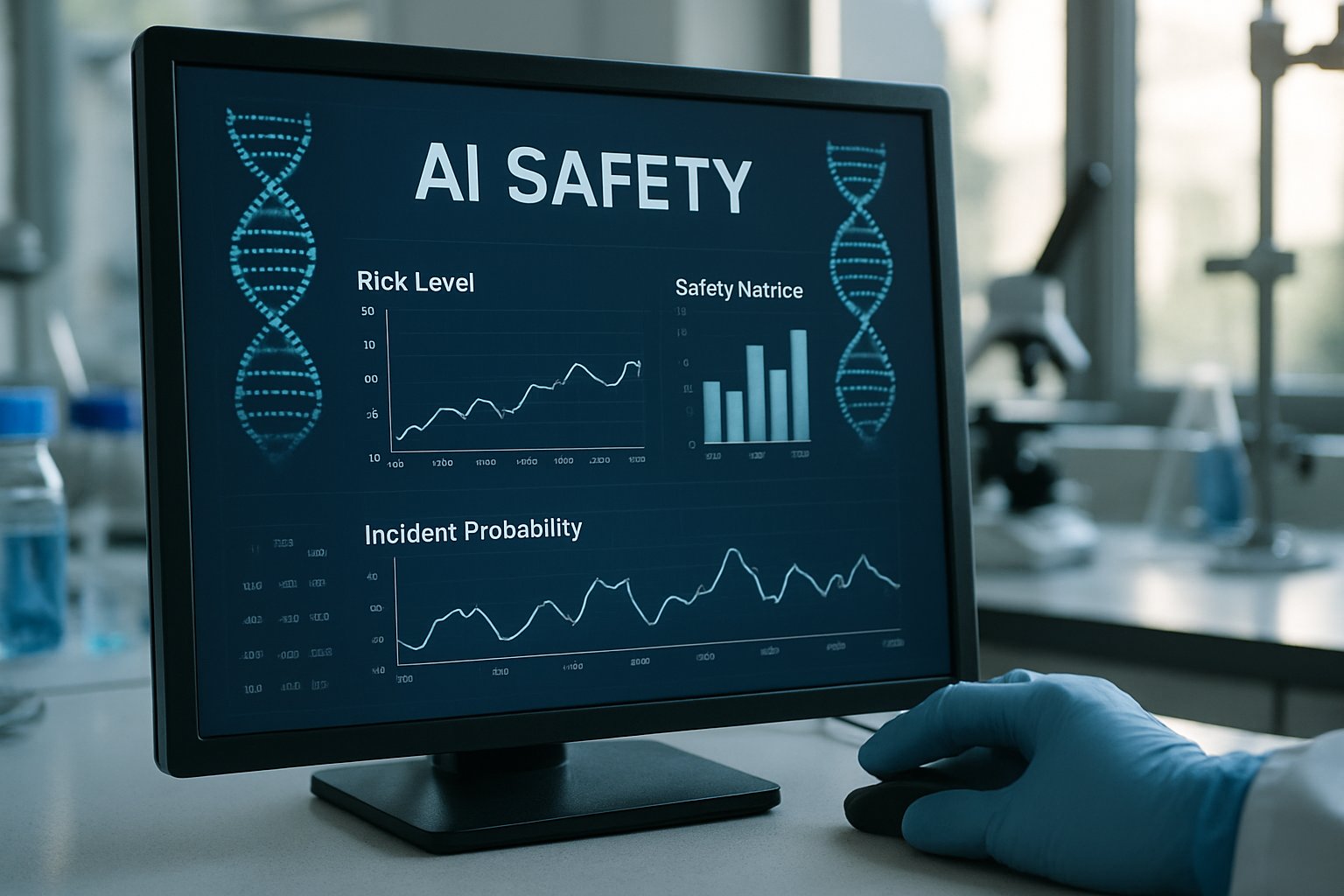
The experiment offered rare quantitative insight into language model influence on detailed bio workflows. However, numbers alone never settle risk debates; the next section reviews those numbers carefully.
Measured Biological Risk Uplifts
Analysts observed mild accuracy gains: experts improved 0.88 points and students 0.25 on a ten-point scale. Additionally, completeness scores shifted similarly, and time-to-task remained near three hours across conditions. Nevertheless, OpenAI stressed that effects lacked statistical significance, keeping practical uplift uncertain. RAND’s independent Benchmarks echoed that conclusion, finding no meaningful planning edge from model guidance. The findings inform ongoing AI Biological Safety discourse, yet they do not eliminate future concern.
Human Study Statistics Snapshot
- Sample: 50 experts, 50 students, randomized internet versus GPT-4 access.
- Average accuracy uplift: +0.88 experts, +0.25 students.
- Median task duration: roughly three hours across groups.
- Refusal flags: about 10% student chats triggered blocks.
Results suggest information access alone seldom overcomes practical Safety barriers today. Therefore, attention turns to protective engineering that limits model Misuse outright.
Evolving Model Safeguard Layers
Since publication, OpenAI shipped an always-on reasoning monitor scanning dialogues for biological or chemical risk signals. Moreover, red-teamers invested 1,000 hours to expose vulnerabilities and refine refusal thresholds. Simulations indicate 98.7% block rates for identified risky prompts, although real-world Jailbreak tactics may erode margins. OpenAI combined these filters with updated policy enforcement and heightened logging, seeking balanced Safety without crippling utility. Professionals can enhance their expertise with the AI Writer™ certification, gaining structured content governance skills. Collectively, these layers aim to uphold AI Biological Safety even as model reasoning grows.
Safeguards demonstrate engineering progress yet remain probabilistic and bypassable. Consequently, contrasting expert opinions complicate consensus, explored in the coming section.
Debates And Divergent Findings
Supporters highlight transparent system cards and third-party audits as substantial governance milestones. In contrast, critics like Steven Adler claim updated frameworks quietly dilute prior Safety commitments. Furthermore, some biosecurity scholars argue measuring uplift via narrow Benchmarks misses cascading network effects within collaborative groups. Nevertheless, RAND researchers maintain that current evidence does not show significant operational Misuse acceleration. The divergence illustrates why sober Advice from multidisciplinary panels remains essential for policy formulation.
Disagreement centers on capability forecasting and acceptable residual risk. Therefore, emerging empirical signals deserve close scrutiny, especially wet-lab demonstrations.
Future Model Capability Signals
Axios reported GPT-5 optimizing a benign wet-lab process alongside Red Queen Bio in late 2025. Subsequently, observers linked that milestone to potential crossing of OpenAI’s “High” biology threshold. However, OpenAI promises restricted access, extensive red-teaming, and tiered release schedules when such thresholds trigger. Meanwhile, advanced Jailbreak toolchains may pair external scripts with model output, challenging existing monitors. Additional Benchmarks are under design to capture tacit laboratory knowledge and automation synergy. OpenAI contends these actions fortify AI Biological Safety despite rising sophistication.
Capability signals point toward tighter oversight and smarter filters. Consequently, stakeholders seek actionable Advice on balancing innovation with restraint.
Governance And Next Steps
Governments discuss harmonized disclosure rules and mandatory biorisk evaluations before public deployment of frontier models. Additionally, OpenAI collaborates with national laboratories to validate screening protocols under real wet-lab conditions. Experts recommend independent funding streams for replication studies, ensuring Benchmarks remain unbiased and adaptive. Nevertheless, policymakers still need concise Misuse metrics that translate academic statistics into regulatory triggers. Industry leaders seek clear Advice on documentation, red-teaming scopes, and incident response timelines. Maintaining AI Biological Safety will require transparent data sharing, international norms, and continuous monitor improvement.
A multi-layered governance ecosystem appears inevitable. Therefore, the final section distills critical lessons and next actions.
Key Takeaways And Actions
OpenAI’s data suggest modest present uplift, yet capability momentum urges vigilance. Moreover, robust monitors, transparent reporting, and independent replication underpin responsible AI Biological Safety progress. In contrast, adversarial Jailbreak methods, evolving wet-lab integrations, and unclear statistical thresholds sustain residual risk. Consequently, businesses should establish internal guidelines aligned with Preparedness Framework principles and external standards. Professionals can validate skills through the AI Writer™ certification and apply lessons quickly. Therefore, stay informed, demand transparency, and contribute research that strengthens global AI Biological Safety. Explore our newsletter for ongoing AI Biological Safety updates and expert Advice.
Disclaimer: Some content may be AI-generated or assisted and is provided ‘as is’ for informational purposes only, without warranties of accuracy or completeness, and does not imply endorsement or affiliation.


