

AI CERTS
9 hours ago
Cache-Aware Prompt Cost Optimization Strategies
Rising API Cost Pressures
Volumes escalate each quarter. Moreover, agentic chains reuse the same thousand-token system prompts across sessions. OpenAI and Anthropic noticed and introduced discounted cache tiers. OpenAI halves costs for cached input over 1,024 tokens. Anthropic charges only 10% of the base rate on cache hits but adds surcharges on writes. Consequently, invoices fluctuate wildly when cache behavior shifts.
Independent work backs vendor claims. The "Don't Break the Cache" study measured 41–80% savings plus latency drops up to 31%. Meanwhile, new workloads keep growing, so savings compound. These forces explain why Prompt Cost Optimization dominates CFO discussions.
These figures highlight financial urgency. Furthermore, they reveal clear levers for engineering teams. Consequently, leaders must master cache dynamics before deeper tweaks.
Vendor Caching Mechanics Explained
Each provider implements distinctive rules. OpenAI requires a 1,024-token prefix. Cached reads cost 50% of usual input. Anthropic offers two write TTLs. A five-minute write costs 1.25× base; a one-hour write costs 2×. Nevertheless, reads charge only 0.1×. Google’s Vertex platform promotes similar discounts, although details remain sparse.
Furthermore, vendors expose granular metrics. For example, OpenAI’s usage.prompt_tokens_details reports cached tokens. Anthropic surfaces cache_read_input_tokens and cache_write_input_tokens. Therefore, teams can monitor real hit ratios, not guess.
Understanding these mechanics underpins every Prompt Cost Optimization attempt. Consequently, engineers should track reads, writes, and TTLs in real time.
Compression Meets Cache Limits
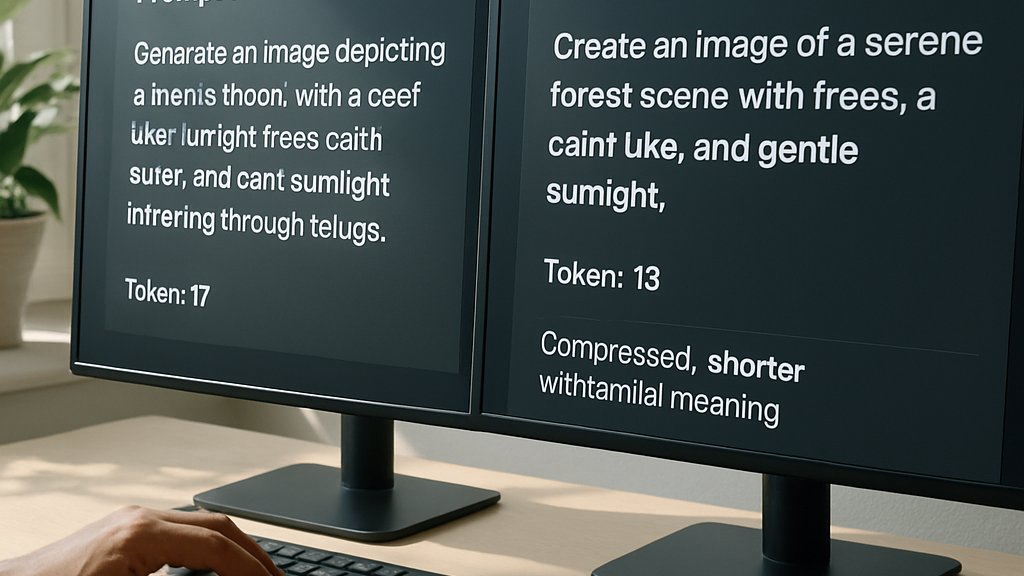
Prompt compression trims token counts through summarization or pruning. Moreover, two broad styles exist. Query-agnostic compression generates one shortened prefix reused across calls. Query-aware compression customizes each request. In contrast, provider caches thrive on stability. Yan Song’s July 2026 CAPC paper proves that naive query-aware schemes often demolish hit rates, erasing savings.
CAPC introduces constraints that ensure compressed prefixes still meet cache thresholds. Consequently, the method achieved 49% savings over cache-only baselines and 90% over vanilla prompts on Anthropic Sonnet 4.6.
These findings confirm that compression cannot be planned in isolation. However, careful alignment delivers outsized inference savings.
Query-Aware Compression Risks
Song’s evaluations showed hit rates plunge when each query alters prefix bytes. Furthermore, some teams accidentally paid more after deploying dynamic compression. Therefore, always test cache metrics while experimenting.
Ignoring this risk jeopardizes any Prompt Cost Optimization project. Consequently, governance checkpoints must verify stable cache keys.
Two-Tier Cost Model Impact
CAPC uncovered a hidden threshold near 3,500 tokens on Sonnet 4.6. Prefix length below that mark enters a cheaper tier. Above it, costs rise sharply. Moreover, vendor documentation hints at similar multi-tier curves elsewhere. Consequently, small compression gains around the threshold unlock disproportionate savings.
Additionally, break-even math differs by TTL. With Anthropic, one read repays a five-minute write. Two reads repay an hour-long write. Therefore, planners must model traffic patterns carefully.
These tier effects amplify the importance of precise length targets. Subsequently, cost model simulations should guide every commit touching prompts.
Practical Engineering Playbook Steps
Follow this checklist to operationalize Prompt Cost Optimization:
- Instrument provider usage fields for reads, writes, and uncached tokens.
- Baseline hit ratios across key endpoints for at least one week.
- Apply query-agnostic or CAPC compression and measure new ratios.
- Run tier-aware cost model simulations before rollout.
- Monitor downstream quality using automated eval sets.
Moreover, professionals can enhance strategic skills with the AI Architect™ certification.
This playbook converts theory into repeatable action. Consequently, teams gain confidence when negotiating budget forecasts.
Break-Even Math Guide
Start with vendor multipliers. Next, estimate average reads per prefix. Consequently, derive expected price per token. Additionally, include latency benefits because faster responses reduce timeout retries. Therefore, your model reflects total system value, not just invoice lines.
A transparent calculator secures stakeholder buy-in. Subsequently, finance leaders will support further optimization sprints.
Avoid Common Optimization Pitfalls
Several dangers lurk. Compression can delete vital instructions, harming output accuracy. ACL 2026 research documents leakage and regressions. Moreover, provider differences mean one strategy may fail elsewhere. Mistral lacks public caching, while OpenAI requires long prefixes.
Additionally, frequent prompt updates cause expensive writes. Therefore, isolate dynamic content below cache boundaries using cache_control markers. Nevertheless, always test on staging traffic first.
Addressing these pitfalls protects hard-won inference savings. Consequently, morale stays high when quality metrics remain stable.
Future Outlook And Gaps
Industry watchers expect cross-provider benchmarks comparing CAPC to older methods. Moreover, vendors may confirm or refute the two-tier hypothesis, clarifying pricing intent. Independent case studies will reveal real dollar impacts outside research labs.
Meanwhile, third-party proxies like PromptCrunch promise plug-and-play optimization layers. Consequently, market pressure will likely push for standardized cache APIs and clearer cost disclosures.
These developments will refine Prompt Cost Optimization playbooks further. Subsequently, staying informed ensures continuous savings.
Conclusion
LLM adoption keeps soaring, but budgets remain finite. However, cache-aware strategies prove that large savings are attainable today. By combining vendor caching rules, two-tier cost insights, and disciplined compression, organizations can achieve reliable inference savings. Moreover, real-time metrics and break-even calculators safeguard quality while guiding decisions. Consequently, forward-looking teams will integrate these tactics into daily development. Explore deeper design skills through the linked certification and start lowering your next invoice now.
Disclaimer: Some content may be AI-generated or assisted and is provided ‘as is’ for informational purposes only, without warranties of accuracy or completeness, and does not imply endorsement or affiliation.


