

AI CERTS
9 hours ago
Auditable Trust Tiers Reshape AI Lifecycle Governance
This article analyses those shifts, maps key drafts, and offers practical steps for enterprise assurance. In contrast, many firms still rely on manual checklists that cannot scale or satisfy looming audit deadlines.
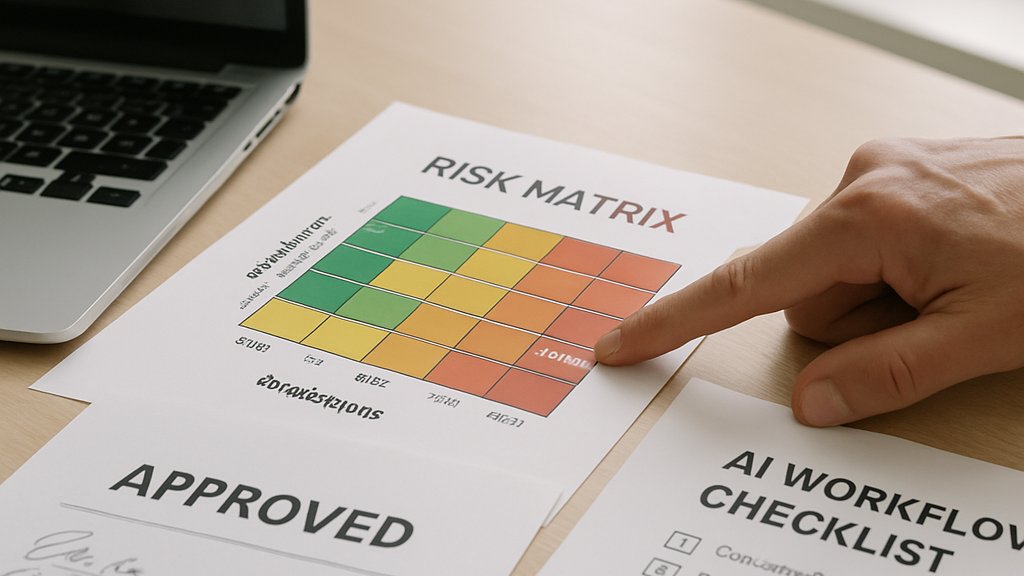
Deloitte reports only 21% hold a mature agent governance model, underscoring the readiness gap. Meanwhile, 47% lack visibility into employees using generative tools, according to Protiviti. Therefore, organizations must adopt evidence-oriented policy controls before August 2026 enforcement dates arrive. The following sections explain how tiered trust, audit trails, and actionable metrics deliver provable confidence.
Evolving AI Lifecycle Governance
Historically, governance models addressed data, training, and deployment in isolated silos. Subsequently, cross-functional teams realised that agents continuously learn, adapt, and self-compose outside those static checkpoints. Consequently, a single pipeline linking design, controls, monitoring, and retirement became necessary.
AI Lifecycle Governance provides that connective tissue through policies, metrics, and machine-readable artifacts. Moreover, the NIST AI Risk Management Framework embeds lifecycle checkpoints and references continuous testing, evaluation, verification, and validation. The framework encourages documented decision rationales plus automated evidence hooks at every stage.
In contrast, episodic audits miss transient behaviours, leaving blind spots that erode enterprise assurance. Therefore, leaders now map status indicators and trustworthiness levels directly to lifecycle milestones. These advances integrate people, process, and technical evidence into one continuous fabric. However, regulators are intensifying pressure to prove performance, fairness, and safety.
Regulators Demand Proving Trust
The EU AI Act sets explicit transparency and record-keeping duties for high-risk systems from two August 2026. Article 50 requires machine-readable marking and tamper-evident logs for every decision path. Moreover, U.S. regulators reference NIST guidance and expect comparable rigor.
Consequently, firms must demonstrate AI Lifecycle Governance effectiveness rather than rely on marketing claims. Regulators increasingly ask for graded trustworthiness levels that map to permissible actions and evidence intensity. For example, the IETF Agent Trust Transport Protocol draft lists five levels, from L0 through L4.
Higher tiers demand cryptographic identities, deterministic provenance, and mandatory audit trails. Meanwhile, supervisory authorities plan random inspections using machine validators instead of human paperwork. Therefore, evidence must be portable, signed, and available for offline verification. Noncompliant agents risk fines, forced recalls, or public disclosure notices that damage brand trust.
Regulatory momentum thus accelerates investment into automated attestations. Consequently, industry standards are racing to harmonise how trust gets scored and communicated.
Standards Define Tiered Trust
Standards bodies recognise that uniform schemas cut compliance duplication across regions. The IETF drafts propose a numeric ladder, L0 to L4, spanning the AI lifecycle. Moreover, each rung dictates telemetry scope, signing requirements, and reviewer escalation frequency.
NIST companion profiles align the ladder with AI Lifecycle Governance stages and sector specifics. Consequently, organizations can map trust tiers to business risk and adjust policy controls dynamically. Open-source projects such as ChainMemory and Decision Ledger already implement JSON schemas matching the drafts.
Furthermore, vendor platforms offer signed audit trails anchored on hash chains or distributed ledgers. In contrast, some proprietary solutions limit verifier independence by requiring cloud callbacks. Therefore, procurement teams should request offline verification demonstrations before purchasing. Experts emphasise that trust cannot be claimed; it must be demonstrated through reproducible artifacts.
Converging standards reduce ambiguity yet still leave implementation chores. Next, we explore concrete techniques for capturing defensible evidence.
Implementing Robust Audit Evidence
Building trustworthy agents begins with deterministic input capture and signed execution contexts. Subsequently, every output, intermediate state, and human override should write into immutable storage. Cryptographic hash chaining prevents deletion or reordering without detection.
Furthermore, evidence bundles must link to model, data, and environment fingerprints for full traceability. The evidence logs collected feed dashboards measuring latency, error rates, and conformance with policy controls. Teams can codify expected thresholds as guard clauses within continuous integration pipelines.
Moreover, “audit as code” patterns store evidence schemas alongside the application repository, ensuring versioned governance. Machine evaluators can thus replay events and regenerate signatures without vendor assistance. Professionals can enhance their expertise with the AI Legal Agent™ certification.
This program deepens knowledge of evidence obligations, policy controls, and contractual positioning. Consequently, talent equipped with certification accelerates enterprise assurance maturity. Nevertheless, evidence depth drives storage costs and privacy risks, which we examine next.
Balancing Cost And Privacy
Full-fidelity logs quickly multiply, especially for complex agent chains calling external tools. A single L4 interaction may generate hundreds of signed artifacts across the AI lifecycle. Consequently, engineering teams must weigh granularity against retention mandates and infrastructure budget.
Selective disclosure techniques, including zero-knowledge proofs, can supply assurance without leaking sensitive payloads. Moreover, encryption at rest combined with policy-driven redaction helps meet data protection law. Storage cost also drops when compression and deduplicated object stores are enabled.
Nevertheless, teams should maintain original hashes even when payload bodies are pruned. The goal remains maintaining verifiable audit trails while respecting privacy and budget. These trade-offs require cross collaboration among security, legal, and finance leaders.
Consequently, assigning ownership within AI Lifecycle Governance prevents disputes during incident response. Balanced strategies unlock continuous compliance without exploding operational spend. However, even perfect storage does little unless organisations operationalise the collected evidence.
Operationalizing Agent Trust Tiers
Moving from log capture to action requires binding trust scores to AI lifecycle decision gates. Developers can query cumulative violations and automatically downgrade trustworthiness levels after repeated anomalies. In contrast, consistent performance unlocks promotion and broader autonomy.
Moreover, human approvers should be able to inject comments that also appear in audit trails. Dashboards visualise live tier distribution across the enterprise, informing board-level risk appetite discussions. Consequently, AI Lifecycle Governance becomes measurable through simple key performance indicators.
Typical metrics include average audit latency, evidence completeness ratio, and percentage of actions requiring escalation. Furthermore, policy controls can pause agents automatically if metrics drop below target thresholds. Such feedback looms large for enterprise assurance teams facing quarterly committees.
These mechanisms close the loop between evidence collection and operational decision making. As maturity grows, some firms integrate trust scores into contract SLAs with suppliers. Consequently, trust becomes a quantifiable market signal rather than aspirational slogan.
Next Steps For Leaders
Leadership teams should begin with a readiness assessment covering visibility, tooling, and documentation gaps. The following checklist summarises core priorities before August 2026 deadlines.
- Instrument agents to produce signed evidence logs at every trust level along the AI lifecycle.
- Map trustworthiness levels to policy controls and allowed actions.
- Adopt machine-readable evidence schemas compatible with IETF drafts.
- Define KPIs such as audit latency and evidence completeness.
- Upskill teams through the AI Legal Agent™ certification for enterprise assurance.
Moreover, integrate findings into board reporting to secure continued investment. Deloitte advises piloting one agent with end-to-end controls before scaling organisation-wide. Consequently, early lessons surface tooling gaps, process friction, and cost drivers while risk remains limited.
These actions build momentum toward sustainable AI Lifecycle Governance. Nevertheless, external audits should validate internal confidence annually. Finally, share anonymised evidence with industry consortia to promote harmonisation and reduce duplicated effort.
Executives who operationalise these steps gain demonstrable competitive advantage. Meanwhile, laggards may scramble under escalating enforcement.
Proven, visible trust will decide which agents scale across industries. AI Lifecycle Governance unifies design through retirement, delivering consistent evidence for regulators and customers. Moreover, coupling trustworthiness levels with policy controls converts abstract risk talk into measurable KPIs.
Implementing tamper-evident audit trails strengthens enterprise assurance. Nevertheless, privacy and cost considerations demand thoughtful architecture. Consequently, leaders should launch a focused pilot and document AI Lifecycle Governance metrics early.
Professionals can accelerate readiness by earning the AI Legal Agent™ certification and applying lessons immediately. Therefore, invest now, refine continuously, and demonstrate AI Lifecycle Governance before the 2026 deadline arrives.
Disclaimer: Some content may be AI-generated or assisted and is provided ‘as is’ for informational purposes only, without warranties of accuracy or completeness, and does not imply endorsement or affiliation.


