

AI CERTS
9 hours ago
ToolSciVer Elevates Scientific Claim Verification With Tools
Moreover, the open-source code and evaluation recipe arrived simultaneously on GitHub. This article unpacks the method, results, and implications for evidence-driven peer review. Additionally, we examine remaining challenges and suggest next research steps for industry teams. Readers will gain a concise yet technical overview of ToolSciVer’s architecture and training pipeline. Subsequently, we highlight benchmark statistics demonstrating stronger multimodal validation and efficiency. The analysis references original figures to maintain scientific evidence rigor. Finally, we point professionals toward relevant certifications that deepen expertise in AI research.
Landscape Before Tools
Before ToolSciVer, researchers measured model skill on SciVer and MuSciClaims, two demanding multimodal datasets. However, baseline systems rarely linked claims to the exact cells, curves, or regions providing scientific evidence. Consequently, verification F1 often stalled below 0.80 despite larger vision-language backbones. In contrast, human reviewers excel because they deploy tailored reading strategies and flexible visual reasoning. These gaps framed the urgent need for improved Scientific Claim Verification that respects diverse evidence formats.
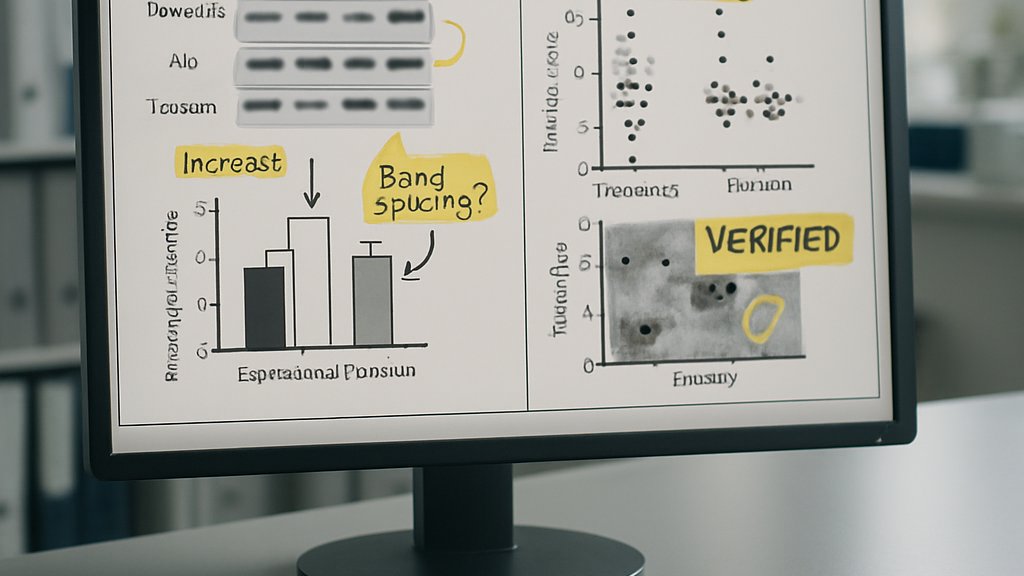
Tool-free models missed vital details and lagged behind human analysts. However, novel tool-augmented approaches promised a turning point, leading directly to our next discussion.
Scientific Claim Verification Today
Scientific Claim Verification now refers to automated judgments on whether paper statements are supported, refuted, or unclear. Moreover, modern tasks demand multimodal validation across text, tables, charts, and complex figures. ToolSciVer operationalizes this definition through a dialogue-style agent that can request external vision tools. Meanwhile, the agent must still output a concise rationale plus a final label to preserve research integrity.
The wider task therefore balances reasoning accuracy, clarity, and evidentiary compliance. Understanding these requirements clarifies why ToolSciVer’s architecture looks beyond generic prompts toward specialised tools.
Inside ToolSciVer Method
ToolSciVer equips a base VLM with three type-aware helpers: Table Focus, Chart Parse, and Region Zoom. Additionally, each helper extracts structured scientific evidence so the language model reasons over explicit numbers. Region Zoom supplies high-resolution crops, supporting detailed visual reasoning in multi-panel figures. Moreover, ToolSciVer enforces a strict JSON call format to avoid runtime crashes and encourage efficiency. The composite reward merges answer correctness, length control, and a seff term that penalises redundant tool calls.
These modules form the interactive backbone enabling precise Scientific Claim Verification in visual contexts. Consequently, training must teach selective invocation, which the next section explores.
GRPO Training Explained
Group Relative Policy Optimization, or GRPO, samples multiple rollouts, calculating advantages relative to group medians. Subsequently, the algorithm applies a clipped objective with KL regularisation to stabilise updates. Furthermore, the seff efficiency reward guides exploration toward shorter answers and fewer tool invocations. This balance keeps Scientific Claim Verification accurate without generating multi-page reasoning traces. In contrast, traditional PPO or instruction tuning ignores efficiency, while earlier tool-augmented RL baselines still incur GPU cost.
GRPO therefore marries reward shaping and relative baselines for efficient, robust learning. The practical impact emerges clearly in benchmark results shown below.
Benchmark Results Overview
ToolSciVer achieved 98% relevant evidence acquisition on tables, 93% on charts, and 79% on multi-panel images. Moreover, overall accuracy climbed from 76.96% to 81.20% on SciVer and 73.47% to 78.61% on MuSciClaims. Meanwhile, average tool calls dropped from 1.05 to 0.74 per example, showing synergy between precision and efficiency. Across five backbone families, ToolSciVer outperformed non-tool chain-of-thought and previous tool-augmented RL baselines.
- Scientific Claim Verification F1: +4.2 points on SciVer.
- Tool calls per example: −30%.
- Average token length: −51%.
These metrics confirm substantial gains in Scientific Claim Verification performance, efficiency, and research integrity. Consequently, attention shifts toward practical integration in publishing workflows.
Deployment Considerations Ahead
Adopting ToolSciVer demands GPUs capable of multi-turn inference for large vision-language models. However, open Apache-2.0 code and reproducible scripts reduce engineering overhead for enterprise labs. Additionally, tool reliability remains a concern because OCR failures cascade into wrong judgments. Teams should therefore monitor seff efficiency signals and log malformed interactions for rapid debugging. Rigorous multimodal validation during staging helps preserve research integrity once the system operates live.
Careful engineering mitigates failures while sustaining Scientific Claim Verification accuracy in production. Next, we look beyond deployment toward longer-term scientific advances.
Future Research Directions
Open questions remain about generalising to noisy preprint PDFs and non-English publications. Moreover, external reviewers request human-in-the-loop interfaces that blend automated visual reasoning with expert intuition. Subsequently, authors plan to benchmark against forthcoming datasets covering microscopy images and chemical diagrams. Further collaboration could integrate tool-augmented RL agents into document editors for real-time feedback. Professionals can deepen their understanding by pursuing the AI Researcher™ certification.
Consequently, certified practitioners may lead future improvements in Scientific Claim Verification technology. Emerging studies will test robustness, ethical safeguards, and global accessibility. Nevertheless, current momentum suggests rapid progress toward trustworthy automated literature review.
Closing Thoughts Ahead
ToolSciVer demonstrates that specialised visual tools and disciplined RL training can elevate Scientific Claim Verification beyond prior baselines. Furthermore, evidence shows stronger accuracy, higher scientific evidence retrieval, and lower computational overhead. However, deployment success depends on careful multimodal validation, proactive logging, and constant tool maintenance. Researchers, publishers, and AI engineers should therefore experiment with the open source repo and share findings. Finally, consider formal training such as the previously mentioned AI Researcher™ certification to stay competitive.
Disclaimer: Some content may be AI-generated or assisted and is provided ‘as is’ for informational purposes only, without warranties of accuracy or completeness, and does not imply endorsement or affiliation.


