

AI CERTS
7 hours ago
AI Semantic Reasoning reshapes multi-level meaning
Why Meaning Still Matters
Technologists once equated performance with understanding. However, failures in compositional generalization exposed that illusion. Melanie Mitchell therefore argues that machines still lack human-like abstraction skills. In contrast, philosophers such as David Chalmers question the very entities we engage when chatting with chatbots.
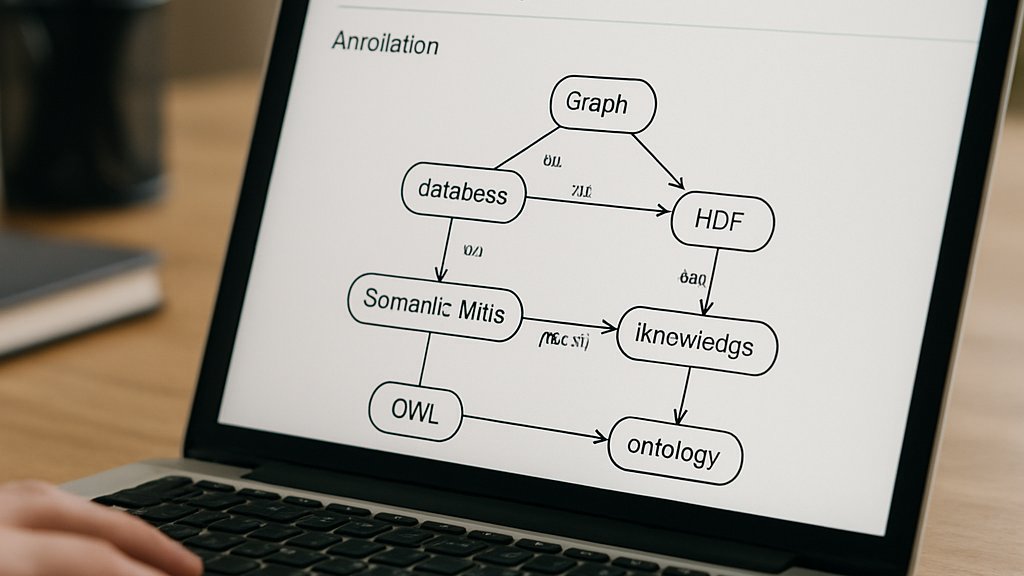
These perspectives push the industry toward richer semantic abstraction. Meanwhile, knowledge-graph vendors report growth forecasts exceeding 30% CAGR, underscoring commercial urgency.
The debate clarifies stakes. However, adoption hinges on practical representations, which the next section explores.
Key takeaway: Thought leaders stress meaning over metrics. Transition: Layered structures offer a concrete path forward.
Layers Enable True Abstraction
Researchers now pursue multi-level pipelines that separate surface form from deeper concept graphs. The Semantic Units Framework, for example, treats scientific statements as first-class objects with provenance metadata. Furthermore, renewed work on Abstract Meaning Representation extends sentence-level graphs across modalities.
Vector Symbolic Architectures also resurface, blending distributed embeddings with algebraic binding. Consequently, these approaches promise scalable system reasoning that supports logical queries and compositional reuse.
Notably, Microsoft’s Semantic Kernel exposes memory and vector abstractions through an agent SDK. Enterprises therefore gain tooling for model interpretation and retrieval-augmented tasks without reinventing infrastructure.
The section illustrates how architecture decisions ground AI Semantic Reasoning in practice. Yet, scientific validation remains critical, as the next discussion shows.
Key takeaway: Structured layers transform statistical learners into explainable engines. Transition: Empirical alignment evidence strengthens the argument.
Evidence From Brain Alignment
February 2026 work revealed that middle transformer layers with higher intrinsic dimension predict neural recordings more accurately. Moreover, abstraction correlates with semantic richness and brain predictivity, indicating measurable meaning.
Similarly, a 2025 Nature vision study found that injecting human-aligned multi-scale structure improved out-of-distribution robustness. Consequently, AI theory now treats hierarchical semantics as a route to biological plausibility.
These findings bolster AI Semantic Reasoning claims while informing benchmark design. Nevertheless, researchers still lack consensus metrics to quantify compositional depth.
Key takeaway: Alignment data links abstraction to cognition. Transition: Market adoption mirrors academic momentum.
Enterprise Market Signals Surge
Market reports place the global knowledge-graph segment between USD 1.5 B and 3.5 B in 2026. Moreover, forecasts reach nearly USD 10 B by 2032. Microsoft.SemanticKernel package downloads further illustrate expanding demand for semantic tooling.
Business leaders cite several immediate benefits:
- Faster deployment of trustworthy conversational agents
- Improved data lineage for regulatory compliance
- Enhanced model interpretation through graph-based context
- Greater cross-system interoperability
Professionals can enhance their expertise with the AI Foundation Essentials™ certification. Such credentials prepare teams to embed foundational AI principles within enterprise stacks that rely on AI Semantic Reasoning.
Key takeaway: Economic data confirms semantic layers add value today. Transition: Yet, serious hurdles still impede universal rollout.
Operational Gaps Still Persist
Conceptual proposals often outpace engineering reality. For instance, the Semantic Units Framework currently lacks a standard serialization, limiting interoperability. Additionally, few benchmarks test true compositional semantics, leaving project teams without clear KPIs.
Grounding poses another barrier. Abstract graphs must map reliably to sensorimotor or factual references; otherwise hallucinations multiply. Consequently, current system reasoning remains brittle under cultural idioms or domain-specific jargon.
AI Semantic Reasoning therefore faces an operational gap between elegant papers and production code. The following section addresses ethical dimensions that arise during this transition.
Key takeaway: Missing standards and grounding slow progress. Transition: Representational choices also shape governance outcomes.
Governance And Ethical Stakes
Representations embed worldview assumptions. Therefore, unnoticed biases can enter decision pipelines through ontological design. Researchers warn of “epistemic laundering,” where complex abstractions mask contested judgments.
Moreover, explainability regulations now emerge worldwide. Enterprises must demonstrate how semantic abstraction informs outcomes. Consequently, teams need transparent model interpretation strategies alongside technical safeguards.
Adopting AI Semantic Reasoning thus intertwines with accountability. Standardized audits, provenance tags, and public documentation all become essential.
Key takeaway: Governance demands transparent semantics. Transition: Actionable steps can guide responsible deployment.
Next Steps For Teams
Product leaders should separate three competence layers: token prediction, structured semantics, and grounded abstractions. Subsequently, they can map use cases to appropriate evaluation metrics.
Teams may also pilot knowledge-graph integrations, request demos from graph vendors, and monitor emerging abstraction benchmarks. Furthermore, interviewing academic authors can clarify implementation timelines.
Finally, upskilling remains pivotal. The earlier linked certification builds foundational AI skills that support system reasoning initiatives based on AI Semantic Reasoning.
Key takeaway: Clear roadmaps accelerate impact. Transition: We conclude by revisiting the core message.
Conclusion
Multi-level semantics redefine capability, alignment, and accountability within modern models. Moreover, empirical studies and market signals validate investment in semantic abstraction, AI theory, and robust model interpretation. Nevertheless, standards, grounding, and governance remain open challenges. Therefore, organizations should pilot structured layers, track benchmarks, and pursue targeted education. Embracing AI Semantic Reasoning today positions teams for tomorrow’s intelligent, trustworthy systems. Act now and explore the referenced certification to gain a strategic edge.
Disclaimer: Some content may be AI-generated or assisted and is provided ‘as is’ for informational purposes only, without warranties of accuracy or completeness, and does not imply endorsement or affiliation.


