

AI CERTS
2 hours ago
AI Source Attribution Benchmarks Reshape Citation Integrity
AI Source Attribution Landscape
Early work treated citation reliability as a side issue. In contrast, today’s AI Source Attribution research sits center stage. Moreover, dedicated datasets—ALCE, CiteME, and REASONS—quantify performance across domains. Meanwhile, archival scans like GHOSTCITE expose real-world failure rates reaching 1.61% in 2025. Consequently, journal editors and standards bodies call for automated checkpoints.
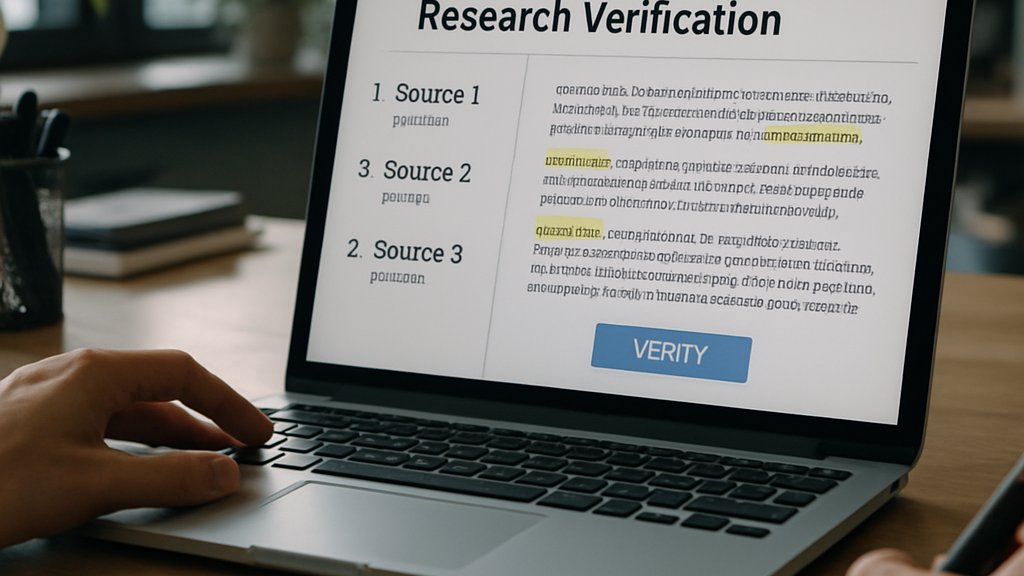
The push spans academia and startups alike. Furthermore, commercial platforms such as Perplexity and Consensus embed live citation verifier modules that flag suspicious links. Nevertheless, evaluation fragmentation persists across attribution and generation tasks, complicating comparisons. These tensions define the field’s current identity. Therefore, understanding them is pivotal before diving into recent numbers.
Citation Benchmark Landscape Evolves
Benchmarks drive scientific progress by forcing comparable scores. Consequently, researchers released several new suites over the past year. CiteCheck delivered a physics-focused set of 982 citations, reporting 88.9% accuracy through retrieval-grounded verification. Meanwhile, CiteGuard reached 68.1% accuracy on the broader CiteME benchmark, nearly closing the gap to 69.7% human performance.
Benchmark authors also stress research quality essentials like transparent labeling and cross-domain sampling. Additionally, the AAAI student abstract proposed a three-way label taxonomy—valid, partial, hallucinated—to capture nuanced metadata drift. Such rubric models improve granularity, yet reviewers debate metric consistency. Nevertheless, macro-F1 and exact-match scores now appear together in most papers, aiding synthesis.
Key recent statistics include:
- REASONS: Retrieval augmentation lowered hallucination 41.9% while generation F1 hit 68.1.
- CiteME: LLM attribution accuracy ranged 4.2–18.5%; agentic search lifted scores to 35.3%.
- GHOSTCITE: Model hallucination rates spanned 14.23–94.93% across domains.
These numbers underscore rapid gains yet lingering risk. However, benchmarks alone cannot guarantee production reliability. That challenge leads naturally to detection pipelines.
Hallucination Rates Now Revealed
Quantifying hallucinations demands precise measurement. Therefore, teams built pipelines that combine retrieval, comparison, and rule sets. CiteCheck’s hybrid engine searches OpenAlex, then applies structured prompts to judge evidence overlap. Moreover, the framework classifies outcomes into exact, minor, or major mismatches. Consequently, it catches fabricated titles, wrong years, and misattributed authors with impressive reliability.
Nevertheless, high variability remains. In contrast to physics, humanities references suffer from sparse digital coverage, degrading recall. Additionally, partial validity—when only a page number drifts—trips many algorithms. Such subtleties matter for research quality audits and rigorous fact checking. Hence, several groups now train specialized rubric models to score each metadata field independently.
Wide hallucination ranges alarm publishers. Furthermore, archival evidence shows fabricated citations creeping into accepted papers. Consequently, conference organizers discuss mandatory pre-submission scans. These worries set the stage for pipeline innovation.
Detection Pipelines Rapidly Advance
Modern detectors blend retrieval-augmented generation with rule-based scoring. Additionally, agentic workflows loop until enough evidence appears. Therefore, accuracy improves without exploding costs. CiteGuard illustrates the approach, integrating a citation verifier step inside each retrieval round. Moreover, its modular design lets developers swap search indices or prompt templates easily.
Pipeline architects also optimize latency. In contrast to heavyweight search agents, CiteCheck streams partial verdicts, enabling early user warnings. Such responsiveness benefits journalists performing deep research under deadline pressure. Meanwhile, academic labs tune hyperparameters using reproducible rubric models, aligning system outputs with reviewer expectations.
Despite these wins, evaluation gaps persist, especially for multilingual corpora. Consequently, funding proposals now prioritize diverse datasets and common taxonomies. These developments transition us to outstanding obstacles.
Critical Evaluation Gaps Persist
Current benchmarks skew toward STEM abstracts, leaving legal and medical texts underrepresented. Moreover, language coverage tilts English. Consequently, research quality metrics may overestimate global readiness. Additionally, differing label schemes hinder meta-analysis. Therefore, groups like FaithJudge advocate unified rubrics and public leaderboards comparing attribution and generation together.
Scalability also presents risk. Large publishers process thousands of references weekly. However, real-time verification still carries compute costs. Nevertheless, unsupervised clustering and caching promise relief. Furthermore, near-correct citations challenge automatic fact checking; minor typos slip past strict match thresholds. Rubric models that score similarity field-wise can reduce false alarms.
These challenges highlight critical gaps. However, emerging solutions are transforming the market landscape.
Wider Industry Impact Growing
Enterprise adoption accelerates as compliance teams embrace automated citation verifier stacks. Moreover, investors view AI Source Attribution as a risk-mitigation service. Consequently, startups bundle verification APIs with analytics dashboards that track research quality trends. Meanwhile, governments examine policy levers to curb scholarly misinformation.
Journal production managers also implement batch audits. Additionally, reviewer dashboards surface flagged references, streamlining editorial fact checking. These moves mirror cybersecurity’s shift toward continuous scanning, reinforcing citation hygiene. Nevertheless, skilled talent remains scarce. Organizations therefore value professionals certified in verification workflows and deep research methodology.
Growing demand points directly to specialized training routes, discussed next.
Strategic Certification Pathways Ahead
Verifiers benefit from structured curricula covering retrieval, prompt design, and rubric models. Consequently, forward-looking practitioners pursue micro-credentials that validate these abilities. Professionals can enhance their expertise with the AI Writer™ certification.
The coursework explores AI Source Attribution principles, advanced citation verifier configuration, and domain-specific fact checking. Moreover, learners perform capstone projects auditing deep research reports, thereby applying rubric models in practice. Additionally, networked cohorts exchange benchmark findings, accelerating community knowledge.
Certification signals commitment to high research quality. Furthermore, hiring managers increasingly list such credentials as preferred qualifications. Consequently, early adopters secure career advantages as verification tooling becomes mainstream.
These educational pathways close our exploration and prepare readers for concrete next steps.
Consequently, broader deployment will hinge on standard metrics, automated audits, and well-trained specialists.
Conclusion
Benchmarks, detection pipelines, and industry demand collectively reshape the future of AI Source Attribution. Moreover, recent results—88.9% CiteCheck accuracy and 68.1% CiteGuard performance—demonstrate tangible progress. Nevertheless, multilingual gaps, partial-match complexity, and scale challenges persist. Consequently, robust rubric models, consistent datasets, and certified talent remain essential.
Individuals can therefore elevate their impact through targeted education and practical experimentation. Additionally, organizations should integrate real-time citation verifier systems to safeguard research quality. Explore emerging tools, monitor benchmark leaderboards, and pursue certification to stay ahead. The scholarly record will thank you.
Disclaimer: Some content may be AI-generated or assisted and is provided ‘as is’ for informational purposes only, without warranties of accuracy or completeness, and does not imply endorsement or affiliation.


