

AI CERTS
2 hours ago
Dexterous Robotics Benchmark DexVerse Raises the Bar
This article dissects DexVerse’s design, baseline results, and implications for general-purpose manipulation policy development. It also compares the platform with earlier multi-task benchmark efforts and outlines pressing open questions. Throughout, we highlight opportunities for practitioners to validate ideas and upskill through specialized certifications. By the end, readers will grasp why this Dexterous Robotics Benchmark may steer the next wave of embodied AI.
Why DexVerse Really Matters
Historically, dexterous studies fixated on narrow tasks or single grippers. In contrast, DexVerse targets generalization by bundling a carefully curated multi-task benchmark of 100 scenarios. Furthermore, the platform emphasises multi-embodiment evaluation by supporting three arms and six robot hands inside one simulator. Therefore, a single manipulation policy can now be audited for transfer across morphology, task family, and visual domain shifts. These design decisions align with industry calls for adaptable service robots rather than bespoke lab curiosities.
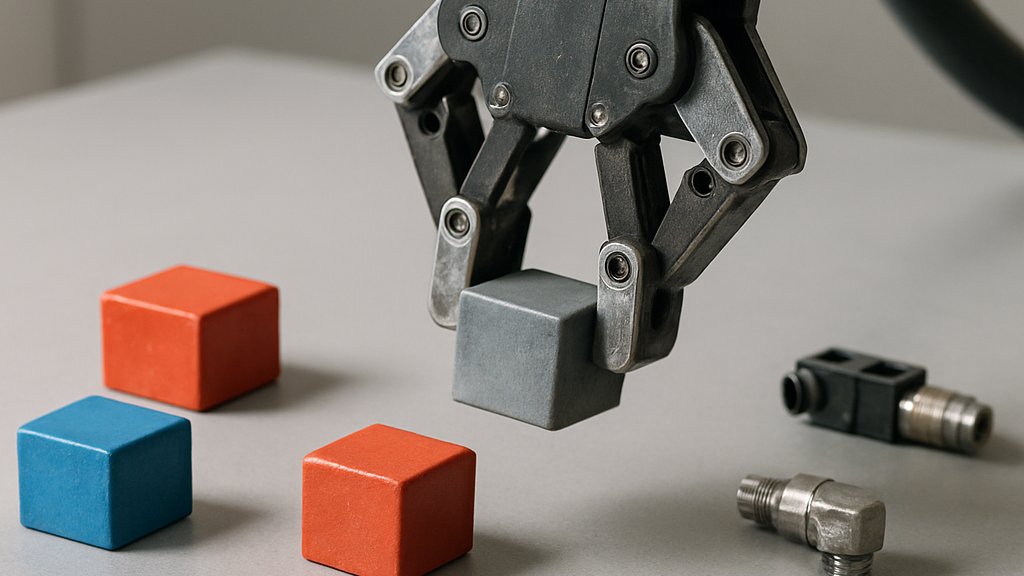
DexVerse raises the evaluation bar through breadth and embodiment diversity. Consequently, it defines a Dexterous Robotics Benchmark suitable for emerging foundation control models.
Task Breadth And Depth
The DexVerse Dexterous Robotics Benchmark organises its 100 tasks into eight interaction categories. Moreover, the taxonomy spans primitive grasps, functional tool use, articulated-object handling, and long-horizon sequences. Researchers can easily filter scenarios to study pick-and-place, non-prehensile pushes, or contact-rich bimanual operations.
Key numeric highlights include:
- 3,180 human demonstrations collected via VR teleoperation.
- 50 trajectories per short-horizon task ensure statistical confidence.
- Configurable textures and lighting produce strong visuomotor perturbations.
- Baseline table covers 19 representative tasks with 50 rollouts each.
Additionally, presets allow instant multi-embodiment swaps for ablation studies. Assets include parametric robot hands meshes for rapid scaling to unseen hardware. Additionally, the Isaac Lab integration lets users add new assets through simple YAML files. This modularity transforms DexVerse into an extensible evaluation suite rather than a static dataset.
The rich taxonomy supports targeted diagnostic studies and system-level stress tests. However, the scale also complicates benchmarking workflows, as the next section explains.
Multi Embodiment Testing Gains
Multi-embodiment coverage separates DexVerse from predecessors like DexArt or Bi-DexHands. Developers can train on the Shadow Hand then validate on Allegro without retracing dataset collection. Consequently, cross-morphology transfer metrics become first-class citizens, revealing brittleness in many existing manipulation policy designs. The authors report a mean success of 0.34 across 19 tasks despite extensive off-policy data. In contrast, human teleoperators achieved near-perfect performance, confirming that hardware limits are not the bottleneck. These findings reinforce the need for algorithms that reason about contact geometry instead of memorising joint torques.
Cross-body testing delivers actionable insights into generalization gaps. Therefore, every serious Dexterous Robotics Benchmark should adopt comparable embodiment diversity moving forward.
Visuomotor Robustness Under Scrutiny
Visual variation inside the Dexterous Robotics Benchmark challenges policies that implicitly overfit to textures or camera angles. Moreover, parameters controlling HDRI backgrounds, lighting temperature, and noise levels can be swept programmatically. Developers therefore gain a systematic method to quantify real-world domain shift sensitivity before deploying physical hardware. Baseline results show steep performance drops when lighting changes, despite identical state observations remaining available. Consequently, multimodal architectures combining RGB, depth, and proprioception may fare better under these perturbations. Professionals can deepen expertise via the AI+ Robotics Engineer™ certification.
Visual perturbations remain a silent failure mode for today’s policies. Nevertheless, DexVerse supplies levers for measuring and mitigating such weaknesses across the evaluation suite.
Baseline Results Expose Challenges
The project team benchmarked four popular algorithms across 19 tasks. Despite varied architectures, best mean success plateaued at 0.34, with many tasks near zero. However, certain bimanual lifts achieved perfect scores, indicating uneven difficulty distribution. Meanwhile, simple single-hand grasps like GraspCup fluctuated between 0.16 and 0.50 success. These statistics suggest data coverage is not the only limiting factor. Consequently, algorithmic biases, reward shaping, and action representations warrant deeper scrutiny.
Baseline gaps create fertile ground for innovation and replication studies. Subsequently, researchers can iterate quickly using the same Dexterous Robotics Benchmark scripts and logging tools.
Comparisons To Prior Benchmarks
DexVerse builds upon lessons from DexArt, which emphasized articulated objects but skipped embodiment diversity. Moreover, Bi-DexHands focused on bimanual manipulation yet lacked extensive visual variation. In contrast, DexVerse merges task, embodiment, and appearance factors within one cohesive evaluation suite. Therefore, it occupies a unique niche for testing generalist control stacks. Industry efforts like DexBench target humanoid platforms, but their tasks remain coarse compared with DexVerse primitives. Consequently, many laboratories now adopt the Dexterous Robotics Benchmark DexVerse as the cornerstone multi-task benchmark for simultaneous skill assessment.
Comparative analysis underscores DexVerse’s holistic scope. Nevertheless, collaboration among benchmark maintainers could yield standardized metrics and shared manipulation policy baselines.
Open Questions And Roadmap
Several practical issues still need resolution before DexVerse reaches full maturity. First, the authors plan to release the complete 3,180-trajectory dataset on Hugging Face soon. Secondly, real-robot validations are pending, leaving sim-to-real performance estimates uncertain. Moreover, the required NVIDIA Isaac stack can complicate replication for teams without compatible GPUs. Nevertheless, community forks already explore PyBullet and Mujoco ports, signaling healthy ecosystem growth. Researchers eager to contribute should monitor the project’s GitHub issues and propose additional robot hands or task variants.
Open questions invite collaborative advancement and rapid iteration. Consequently, active engagement will shape the next Dexterous Robotics Benchmark release cycle.
DexVerse illustrates how a rigorous multi-task benchmark, enriched with multi-embodiment diversity and an expansive evaluation suite, can accelerate progress in dexterous manipulation. Moreover, low baseline scores confirm that robust manipulation policy research remains an open frontier. Nevertheless, transparent metrics, visual stress tests, and plentiful robot hands demos offer fertile testing grounds. Forward-looking teams should adopt the Dexterous Robotics Benchmark, contribute tasks, and measure progress with disciplined protocols. Finally, professionals can future-proof their careers by pursuing credentials like the AI+ Robotics Engineer™ certification linked above.
Disclaimer: Some content may be AI-generated or assisted and is provided ‘as is’ for informational purposes only, without warranties of accuracy or completeness, and does not imply endorsement or affiliation.


